

LAGOS GOVT UNVEILS 2025–2030 INDUSTRIAL POLICY TO DRIVE MANUFACTURING, ECONOMIC GROWTH
Read Time:3 Minute, 44 Second
By Aishat Momoh. O.
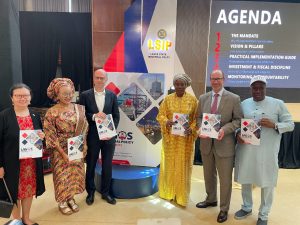
…… Policy targets job creation, MSME growth, infrastructure upgrades, and global competitiveness through strategic partnerships and sustainable industrial development.
The Lagos State Government on Thursday launched its 2025–2030 Industrial Policy, a five-year roadmap aimed at positioning the state as Africa’s leading industrial and manufacturing hub.
The policy was unveiled at the Lagos Continental Hotel, Victoria Island, as part of efforts to accelerate industrialisation, boost local production, and strengthen the ease of doing business in the state.
Speaking at the event, the Commissioner for Commerce, Cooperatives, Trade and Investment, Folashade Ambrose-Medebem, described the initiative as the most comprehensive industrial agenda developed by the state, noting that it was the product of extensive stakeholder consultations.
According to her, the policy is designed to drive growth across key sectors, including agro-processing, light manufacturing, healthcare, creative industries, digital trade, and the blue economy, further reinforcing Lagos’ position as Nigeria’s economic nerve centre.
A major component of the policy focuses on addressing critical infrastructure challenges, particularly power supply and logistics, which have long constrained industrial growth. The government also plans to strengthen industrial clusters and expand major projects such as the Imota Light Industrial Park.
The policy places significant emphasis on supporting Micro, Small and Medium Enterprises, with the introduction of a ₦10 billion funding programme aimed at improving access to affordable finance and enhancing business sustainability.
Expanding on the vision behind the policy, Ambrose-Medebem described it as inclusive, green, and sustainable, with a strong focus on prosperity and job creation.
“I’m delighted to stand here today as we launch this Industrial Policy. It is inclusive, green, and sustainable, focusing on prosperity and ensuring we address all levels of businesses across the formal sector,” she said.
She explained that the framework is built on six strategic pillars, each backed by targeted implementation plans to ensure measurable impact. According to her, the policy development process involved rigorous internal reviews by the state executive council, broad consultations with business organisations, and further validation by institutions such as the Nigeria Economic Summit Group.
Ambrose-Medebem added that a post-implementation framework had been established to ensure accountability, continuity beyond political tenures, and real economic impact.
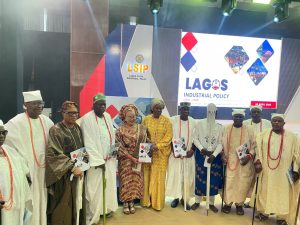
Representing Governor Babajide Sanwo-Olu at the event, Barrister Abimbola Salu-Hundeyin commended the Commissioner and her team for what he described as a painstaking and highly collaborative effort in producing the policy document.
“A policy of this scale is not the labour of a single individual. What we are presented with today is the outcome of months of consultations, executive scrutiny, and technical refinement at the highest level,” he said.
He also acknowledged the contributions of key partners, including financial institutions and development organisations, noting that their support reflects strong confidence in Lagos’ industrial future.
According to him, the policy signals the state government’s resolve to reposition Lagos’ industrial sector in response to evolving global dynamics, including shifting supply chains, technological advancements, and increasing demand for efficiency and innovation.
“To remain competitive, Lagos must do more than adapt, we must lead. This policy is our response to that imperative,” he stated.
He noted that the industrial policy is aligned with the state’s THEMES+ agenda and the Lagos State Development Plan 2052, aimed at building a globally competitive megacity driven by innovation, productivity, and industrial excellence.
The governor’s representative further highlighted key focus areas of the policy, including regulatory reforms to improve the ease of doing business, enhanced access to finance, workforce development, and the promotion of innovation and sustainable industrial practices.
He added that the policy would support small and medium-scale manufacturers to scale operations and integrate into regional and global value chains, while also attracting both local and foreign investment into priority sectors.
“The benefits of this policy are far-reaching. It will create jobs, enhance productivity, diversify the economy, and strengthen resilience,” he said.
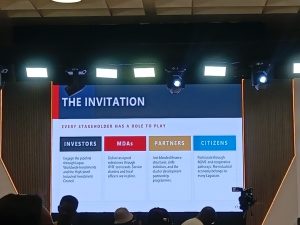
He also emphasised the importance of partnerships, noting that successful implementation would depend on collaboration between government, private sector players, financial institutions, development partners, and other stakeholders.
Describing the policy as more than a document, he said it represents a blueprint for long-term industrial transformation and a call to action for all stakeholders.
“This is an invitation to build a stronger, more competitive, and more prosperous Lagos. The plan is published. The work begins,” he concluded.
The state government expressed confidence that the policy would attract investment, create jobs, and stimulate long-term economic growth across Lagos.


Happy
0 %

Sad
0 %

Excited
0 %

Sleepy
0 %

Angry
0 %

Surprise
0 %
 0
0
 0
0