
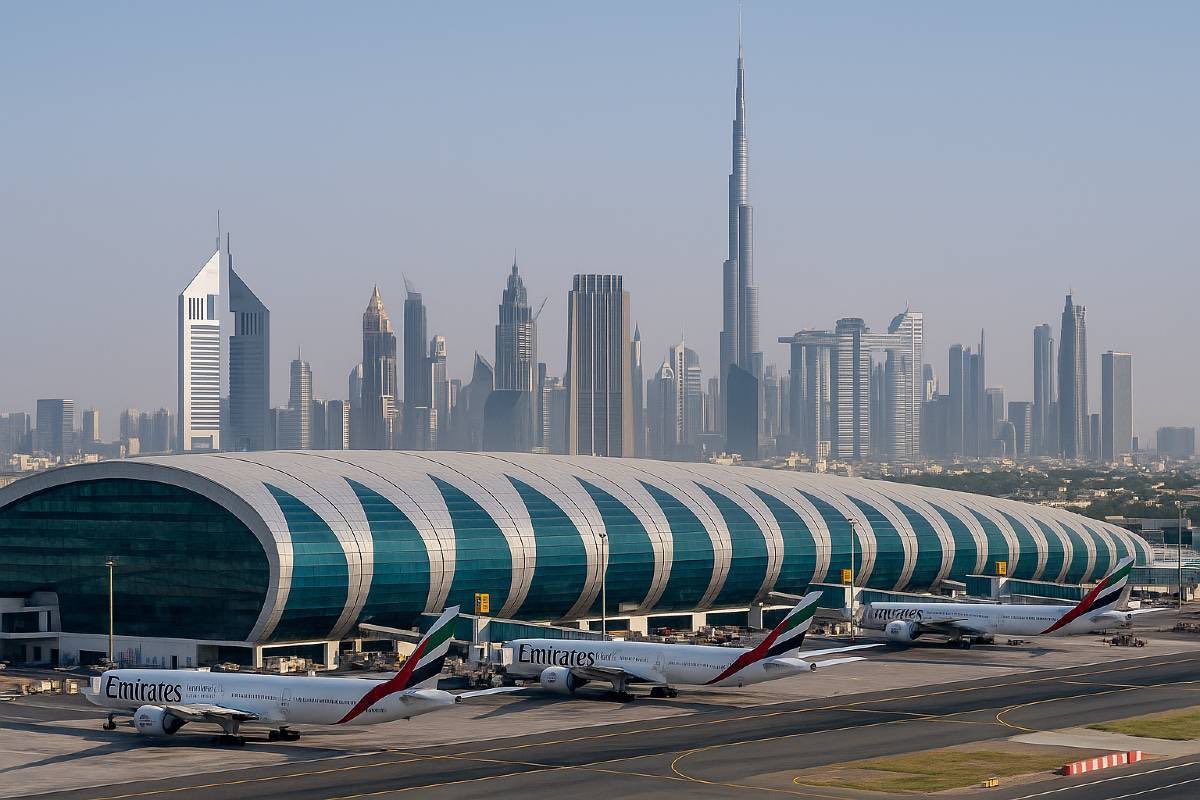
DUBAI INT’L AIRPORT SHUTS DOWN AFTER IRANIAN MISSILES CROSS AIRSPACE, OVER 280 FLIGHTS CANCELLED
Read Time:1 Minute, 46 Second
Agency report
Dubai, UAE – Dubai International and Al Maktoum International airports suspended all operations on February 28, leading to the cancellation of over 280 flights and delays affecting at least 250 more, according to an official statement from Dubai Airports.
It was gathered that the unprecedented disruption occurred after Iranian ballistic missiles were reported flying through the airspace, forcing the hub that handles more international passengers than any other in the world to temporarily go dark.
The scale of the disruption affected airlines across the globe: Emirates and Etihad grounded flights entirely, Qatar Airways suspended all flights to and from Doha following the closure of Qatari airspace, and Air India halted all flights to the Middle East indefinitely.
Other major carriers, including Turkish Airlines, Lufthansa, Air France, British Airways, Virgin Atlantic, Japan Airlines, Norwegian Air, LOT Polish, Scandinavian Airlines, and Iberia, were either grounded or forced to reroute flights. Low-cost carriers like Wizz Air suspended operations to Israel, Dubai, Abu Dhabi, and Amman until March 7.
Dubai, which serves as the largest connecting hub between Asia, Europe, Africa, and the Middle East, experienced widespread impact on international travel.
Flights from Mumbai to London, Singapore to Frankfurt, and Nairobi to New York, among others, were either canceled, delayed, or rerouted along significantly longer paths to avoid the closed airspace.
IndiGo announced suspensions to Almaty, Baku, Tashkent, and Tbilisi until March 28, effectively erasing a month of Central Asian connectivity.
The disruption has had severe economic consequences. Airlines are incurring additional fuel costs due to longer flight routes, while the broader UAE economy—heavily dependent on tourism, trade, finance, and logistics—has been affected.
The closure came after Iranian missile strikes caused civilian casualties in Abu Dhabi, heightening security concerns in the region.
Industry analysts warn that the ripple effects of this incident will be felt globally, as Dubai’s aviation and economic networks play a critical role in connecting the Middle East with Asia, Europe, Africa, and the Americas.
The UAE has absorbed a direct act of aggression on its airspace, while Iran’s actions have effectively disrupted the region’s key economic hub.


Happy
0 %

Sad
0 %

Excited
0 %

Sleepy
0 %

Angry
0 %

Surprise
0 %
 0
0
 0
0