
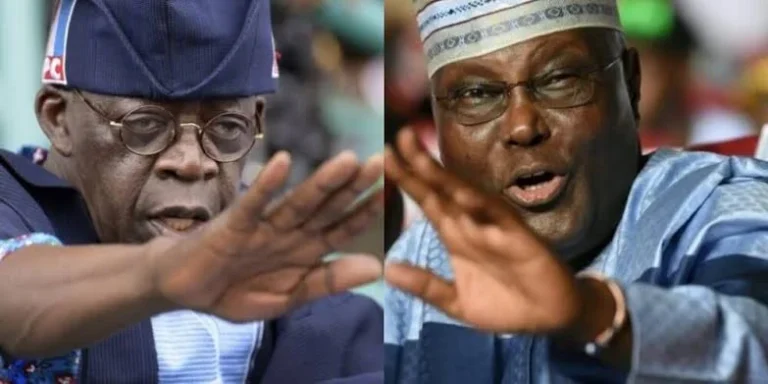
ATIKU TO TINUBU: ISSUE IS NOT ME, BUT NIGERIANS’ RISING COST OF LIVING
Read Time:2 Minute, 8 Second
By: Fasasi Hammad
Former Vice President Atiku Abubakar has criticised President Bola Tinubu over his rejection of proposals aimed at reducing energy costs, accusing the administration of subjecting Nigerians to prolonged economic hardship while promising relief ahead of the 2027 general elections.
Atiku, through his Senior Special Assistant on Public Communication, Phrank Shaibu, said the issue was not a personal disagreement between him and Tinubu but the growing inability of millions of Nigerians to afford basic necessities.
Shaibu stated this in a statement issued on Tuesday titled, “Tinubu, the issue is not Atiku — it is why Nigerians can no longer afford to live.”
He said Atiku would not engage the President in a personal confrontation but would continue to advocate policies designed to ease the burden of rising living costs on Nigerians.
According to Shaibu, Atiku’s focus was on ordinary Nigerians, including mothers struggling to feed their families, civil servants whose salaries are consumed by transportation costs, farmers spending more to move their produce to markets and students increasingly pushed into debt to remain in school.
He said the daily experiences of millions of Nigerians were at odds with the economic prosperity being portrayed by the government.
The statement followed Tinubu’s recent comments on economic policy, in which the President criticised Atiku’s proposals for lowering energy costs and ruled out a return to fuel subsidy.
Shaibu questioned why the administration was only now promising cheaper transportation, increased food production and greater support for vulnerable Nigerians after more than three years of economic hardship.
He asked why Nigerians had to endure years of hardship before the government recognised the need for economic growth to translate into tangible benefits for households.
Shaibu also questioned why measures proposed by Atiku were being criticised when introduced by him but presented as progressive when announced by the government.
He argued that lowering energy costs would have a wider impact on the economy by reducing transportation and production expenses, which would ultimately bring down the prices of food and other essential commodities.
According to him, the Atiku Economic Recovery Plan would provide targeted support for Nigerian crude supplied to domestic refineries through a capped and transparently budgeted framework.
He said the proposal would also include mechanisms for tracking crude supplies, monitoring refined petroleum products and ensuring that savings were passed on to consumers.
Shaibu explained that reducing fuel costs would ease transportation expenses, which would in turn lower the cost of moving agricultural produce such as tomatoes, rice, yam and livestock, as well as manufactured goods across the country.


Happy
0 %

Sad
0 %

Excited
0 %

Sleepy
0 %

Angry
0 %

Surprise
0 %
 0
0
 0
0