
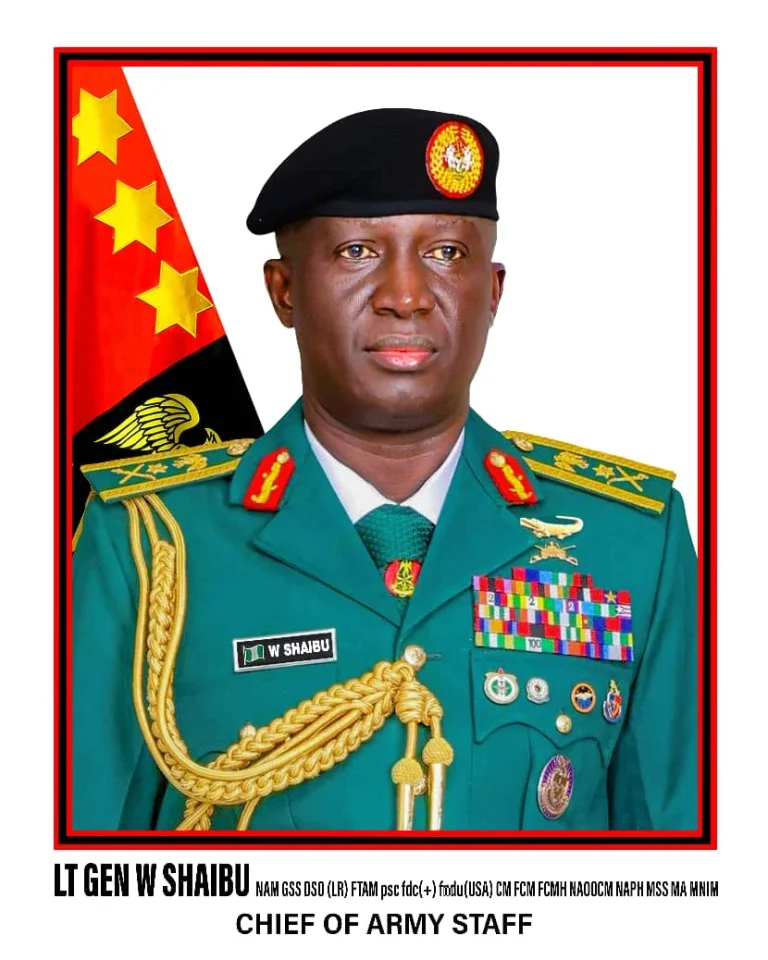
COAS TASKS ARMY COMMANDERS ON STRONGER LEADERSHIP, INNOVATION TO TACKLE INSECURITY
Read Time:1 Minute, 33 Second
By; Sunmola Ganiyat
The Chief of Army Staff, Lt. Gen. Waidi Shaibu, has urged senior Nigerian Army commanders to demonstrate strategic foresight, professional competence and exemplary leadership in tackling the country’s increasingly complex security challenges.
Shaibu gave the charge on Wednesday while opening the Second Senior Command and Leadership Seminar 2026 at the Headquarters of 1 Division Nigerian Army in Kaduna.
The seminar, themed “Strategic Leadership for Effective Command in an Evolving Security Environment,” is aimed at enhancing the leadership capacity of senior commanders, sharing operational experiences and developing practical responses to contemporary security challenges.
The COAS said military success goes beyond battlefield superiority, noting that credibility, public confidence and effective leadership are equally essential.
He urged commanders to remain intellectually agile, operationally innovative and morally courageous while making sound decisions in uncertain situations.
Shaibu also highlighted the growing influence of misinformation, disinformation and information warfare, warning that hostile actors were increasingly exploiting these tools to undermine public confidence in the military.
He therefore directed commanders to incorporate the information environment into campaign design, operational planning and military activities, stressing the need for timely and credible communication.
The Army chief further emphasised the importance of discipline and professionalism, directing commanders to ensure strict compliance with Rules of Engagement, respect for human rights, protection of civilians and accountability.
On the expansion of the Nigerian Army from eight to 12 divisions, Shaibu described the development as both an opportunity and a major leadership responsibility.
He said commanders must ensure that the newly established formations develop into cohesive, credible and combat-ready units.
The COAS urged participants to apply lessons from the seminar to improve command, campaign planning, operational effectiveness, mentorship and institutional performance.
He also tasked commanders with building cohesive teams, developing future leaders, encouraging innovation and strengthening engagement with communities and other legitimate stakeholders within their areas of responsibility.


Happy
0 %

Sad
0 %

Excited
0 %

Sleepy
0 %

Angry
0 %

Surprise
0 %
 0
0
 0
0