
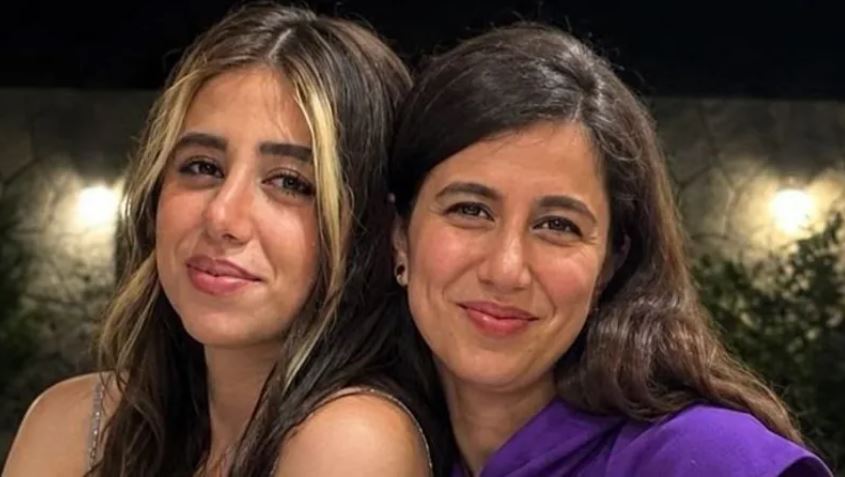
IRANIAN TWINS FACE DEATH, 25-YEAR JAIL TERMS OVER ANTI-GOVERNMENT PROTESTS
Read Time:3 Minute, 43 Second

By ‘Balogun Ibrahim
A 21-year-old Iranian woman, Taraneh Rahimi, has been sentenced to death, while her twin sister, Romina, has received a 25-year prison sentence over their alleged involvement in anti-government protests in Iran.
The sisters were arrested in late January 2026 after taking part in demonstrations that erupted across the country over economic hardship and opposition to Iran’s clerical leadership.
According to the BBC on Thursday, their cousin, Masoud Nourmohammadi, who spoke to BBC News Persian, said the sisters suffered severe beatings and other forms of mistreatment while in detention.
He alleged that Taraneh, 21, now struggles to walk after her legs were beaten, while an untreated head injury reportedly resulted in an ear infection that affected her balance.
Nourmohammadi further claimed that during their mother’s first prison visit, the sisters’ faces were so swollen and bruised, and their hair had been pulled out, that she could only identify them by their voices.
He also alleged that Taraneh was forced to sign a confession after interrogators threatened to rape Romina in her presence if she refused to cooperate.
The sisters have denied the allegations against them, while their family maintains that their confessions were extracted through torture and intimidation.
According to information cited by the BBC, Taraneh was convicted of moharebeh, an offence under Iran’s Islamic Penal Code that attracts the death penalty.
A sentencing document partially reviewed by the BBC reportedly stated that the charge involved drawing a bladed weapon with the intention of endangering people’s lives.
However, Nourmohammadi disputed the allegation, insisting that there was no evidence that Taraneh possessed a bladed weapon or committed the offence.
Her twin sister, Romina, was sentenced to 25 years in prison for aiding and abetting moharebeh, according to Mai Sato, the United Nations Special Rapporteur on human rights in Iran.
The sisters were among several defendants prosecuted over demonstrations in Isfahan, where a member of Iran’s Islamic Revolutionary Guard Corps was killed during the unrest.
Their lawyers have reportedly filed complaints alleging torture and sexual abuse during interrogation. However, the family has expressed further concerns about the investigation, claiming that it is being supervised by an official accused of involvement in the alleged abuses.
The case comes amid growing international concern over the increasing number of women receiving death sentences in Iran.
According to Sato, six women have been sentenced to death in connection with the January protests this year.
Three other women have reportedly received death sentences in separate cases involving allegations of blasphemy, espionage and corruption on Earth.
Human rights organisations have described the cases as politically motivated, while Amnesty International has raised concerns over a sharp increase in executions and death sentences involving protesters and government critics.
Sato said at least 39 people had already been executed in connection with the January demonstrations.
However, Iran’s Embassy in London has rejected allegations of torture and disputed claims that authorities are increasingly using the death penalty against peaceful protesters.
The embassy maintained that death sentences linked to the January unrest involved serious criminal offences, including intentional murder and moharebeh.
It also insisted that peaceful protest remains a legitimate and protected right under Iranian law.
Iranian authorities have blamed the United States and Israel for encouraging the unrest, accusing armed groups and rioters of contributing to the violence.
The demonstrations began in late December 2025 following widespread economic grievances before escalating into nationwide protests against Iran’s leadership.
The unrest became the country’s largest demonstrations against the clerical establishment since the 1979 Islamic Revolution.
The subsequent security crackdown reportedly resulted in thousands of deaths.
The US-based Human Rights Activists News Agency (HRANA) said it had documented more than 7,000 fatalities during the crackdown, although it believes the actual figure could be considerably higher.
Iranian authorities, however, put the death toll at 3,117, including members of the security forces.
Despite the uncertainty surrounding the sisters’ fate, their family continues to hope that their sentences will be overturned.
Nourmohammadi described Taraneh as a young woman who loves horses and dreams of establishing her own horse-breeding centre.
He said relatives continue to remind her of the ambition to keep her hopeful while she remains in detention.
Romina, on the other hand, enjoys music and often asks relatives to play songs for her during telephone conversations.
For their family, these little gestures have become an important source of encouragement as the sisters face an uncertain future behind bars.


Happy
0 %

Sad
0 %

Excited
0 %

Sleepy
0 %

Angry
0 %

Surprise
0 %
 0
 0