
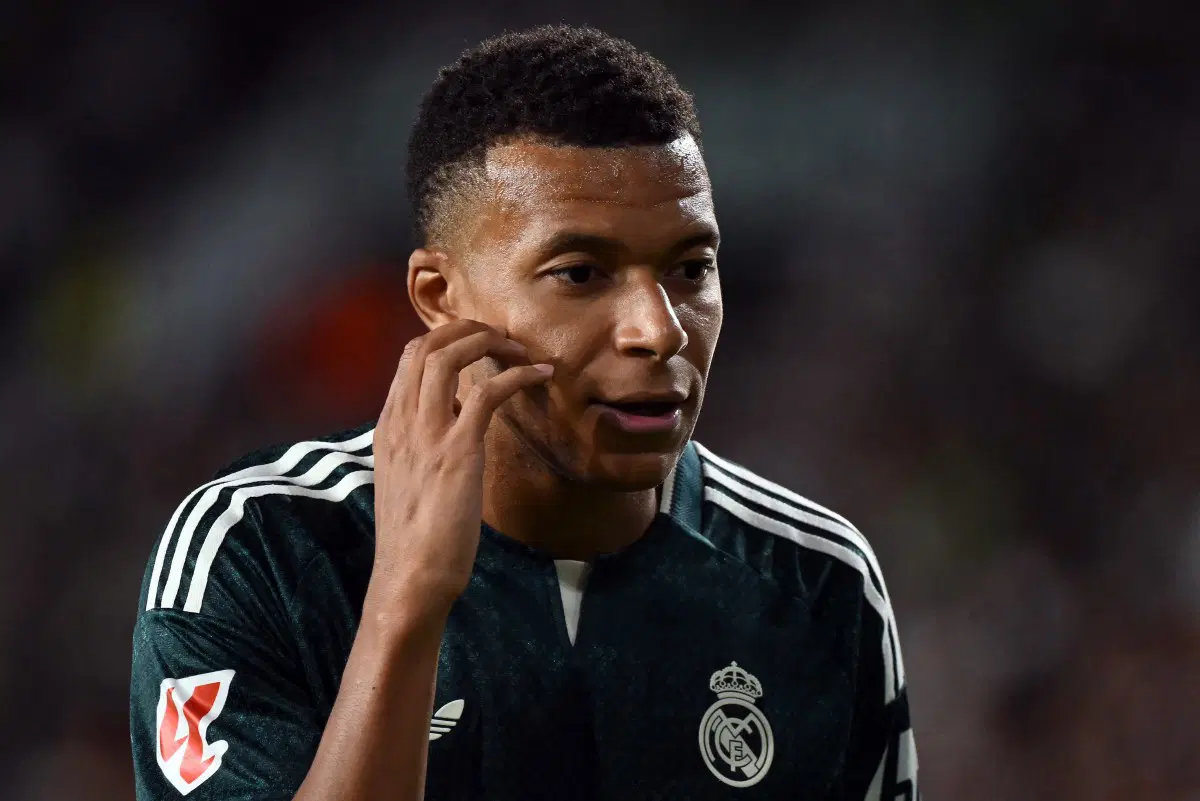
MBAPPE, REAL MADRID APOLOGISE TO CHINA OVER MAO REMARKS
Read Time:3 Minute, 48 Second
Agency Report
Kylian Mbappe, Real Madrid and La Liga have apologised over the French striker’s remarks about former Chinese leader Mao Zedong, but experts warn that rebuilding their reputations in China could take considerable time.
The Real Madrid forward, regarded as one of the world’s leading footballers, became embroiled in controversy after a video emerged showing him appearing to mock Mao.
In the video, Mbappe spoke about finding an internet meme amusing, featuring his face edited onto the image of a man he described as “some guy, think he’s a Chinese dictator”.
Mao remains officially revered in China as the leader of the communist revolution and founder of the People’s Republic of China. Although historians have blamed him for millions of deaths, publicly ridiculing the former leader remains a sensitive issue in the country.
Mbappe’s remarks have made him the latest foreign sports figure to provoke public anger in China, with major Chinese brands reportedly severing ties with the 27-year-old and state broadcaster CCTV suspending broadcasts of Spanish La Liga matches.
Chinese state media and social media users criticised the footballer, although many were not informed of the exact remarks that triggered the controversy.
Given China’s position as the world’s second-largest economy and its commercial importance to international sports, Mbappe, Real Madrid and La Liga issued apologies within two days of the incident.
A spokesperson for China’s Foreign Ministry said the government had taken Mbappe’s apology seriously.
However, veteran sports commentator Yan Qiang told AFP that the controversy had already inflicted considerable damage on the football organisations involved.
“Viewed from a calm, objective and emotion-free standpoint, this is clearly a very damaging incident,” Yan said.
He added that the controversy had seriously affected the image of La Liga and Real Madrid in China.
According to him, the rapid spread of information through social media often fuels public anger, making apologies insufficient to immediately resolve such controversies.
He noted that although apologising was preferable to remaining silent, the gesture did not necessarily mark the end of the matter.
The controversy surrounding Mbappe follows a pattern of foreign sports organisations and athletes facing backlash in China over politically sensitive comments.
In 2019, China effectively severed ties with the National Basketball Association (NBA) after Daryl Morey, then general manager of the Houston Rockets, tweeted in support of pro-democracy protesters in Hong Kong.
While NBA executives defended Morey’s right to freedom of expression, La Liga quickly distanced itself from Mbappe’s remarks.
The NBA was subsequently removed from CCTV broadcasts for more than a year, although its pre-season games returned to China last year.
Debby Chan, a lecturer at the Australian National University, described the NBA controversy and the latest incident involving Mbappe as examples of Chinese consumer nationalism, in which online reactions and state media coverage combine to create widespread outrage.
NBA Commissioner Adam Silver previously disclosed that the dispute had cost the league hundreds of millions of dollars.
Spanish football also faces significant financial consequences from the controversy, given China’s importance to international broadcasting and commercial partnerships.
A source within La Liga told AFP that China and the United States account for the majority of the league’s international broadcasting rights revenue, valued at €748 million for the 2024–2025 season.
Real Madrid also has considerable commercial interests in China. According to the club-affiliated newspaper Marca, between 10 and 15 per cent of its jersey and merchandise sales come from the Chinese market.
The Spanish club also maintains sponsorship relationships with Chinese companies, including Hisense, sports betting firm Kaiyun Sports and Linglong Tire.
Adam Zhang, founder of Beijing-based Key-Solution Sports Consulting, said a swift and sincere expression of remorse was an important first step towards resolving the dispute.
He explained that the response could influence whether Chinese authorities maintain the suspension of La Liga broadcasts and how long the restriction remains in place.
However, Yan expressed doubts about whether Mbappe could fully restore his reputation in China, where his image has featured prominently on drinks bottles and in advertising campaigns.
He warned that any decline in the footballer’s commercial influence could affect sponsorship opportunities and cause further losses for both Real Madrid and La Liga.
Yan said the long-term consequences remained uncertain, adding that the immediate outlook was unfavourable.
He stressed that the future actions and conduct of Mbappe, Real Madrid and La Liga would be crucial to rebuilding their reputations and restoring their relationships with Chinese audiences.


Happy
0 %

Sad
0 %

Excited
0 %

Sleepy
0 %

Angry
0 %

Surprise
0 %
 0
 0