
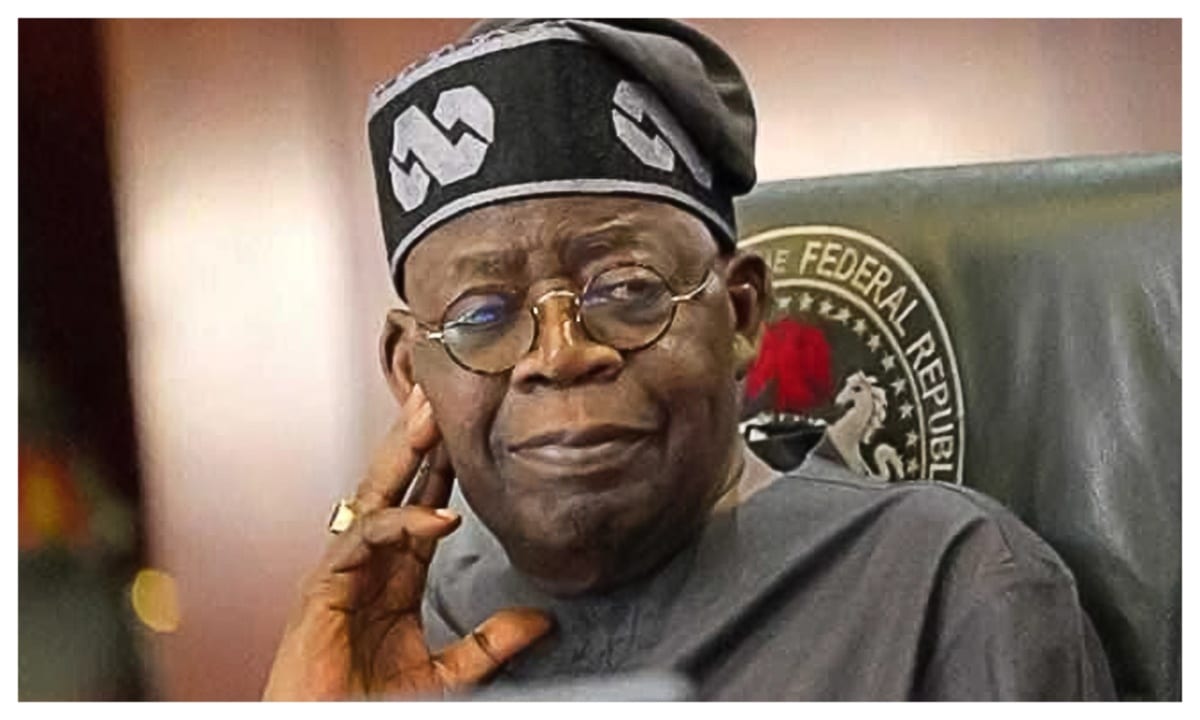
TINUBU MUST GO MOVEMENT GAINS MOMENTUM IN NORTHERN NIGERIA AHEAD OF 2027
Read Time:3 Minute, 45 Second

By: Fasasi Hammad
The Tinubu Must Go Movement (TMG) is gaining attention in Northern Nigeria amid growing concerns over the rising cost of living, insecurity and demands for improved governance ahead of the 2027 general elections.
One of the movement’s co-founders, Barrister Hamza Nuhu Dantani, told the media that the campaign was driven by the economic challenges confronting Nigerians and the need for greater government accountability.
Dantani clarified that the movement was not motivated by personal animosity towards President Bola Tinubu but by concerns over his administration’s policies and their effects on ordinary citizens.
“We do not hate President Tinubu as a person. Our concern is with his administration, its policies, and their impact on the lives of ordinary Nigerians,” he said.
He identified rising petrol prices, the increasing cost of essential commodities and persistent insecurity as some of the major issues fuelling the campaign.
READ MORE…
NSCDC SUSPENDS OFFICER OVER ALLEGED SHOOTING AT ABUJA MARKET
According to him, the movement is demanding economic relief, improved security, accountability and a government that prioritises the welfare of citizens.
Dantani stressed that TMG must remain peaceful and focused on its objective of promoting better leadership and a brighter future for Nigeria.
He added that the group would continue to hold governments accountable, irrespective of their political affiliations.
The co-founder maintained that the movement would also demand change from any future administration that failed to fulfil its campaign promises, insisting that its activities would remain peaceful and within the law.
“Our loyalty is not to any individual or political party; it is to the Nigerian people and the future of our country,” he said.
He described TMG as a campaign for accountability, good governance and meaningful change, arguing that Nigerians deserved leadership capable of addressing their concerns.
Political analyst and National Vice-President of the Nigerian Political Science Association, Professor Murtala Muhammad, said the movement appeared to be attracting support among some young people in Northern Nigeria.
However, he noted that TMG would need to establish a strong grassroots presence and address the everyday challenges facing residents to turn its growing visibility into sustained political support.
Muhammad told the media that the campaign was emerging against the backdrop of economic hardship, insecurity, unemployment, poverty and declining purchasing power.
“TMG appears to have gained considerable acceptance among a segment of the youth population in Northern Nigeria, reflecting evolving political consciousness, prevailing socioeconomic realities, and growing demands for accountable governance,” he said.
He cautioned that increased public attention alone was insufficient to establish the movement’s political strength.
According to him, its influence would depend on its organisational structure, geographical reach, grassroots mobilisation and ability to demonstrate meaningful electoral support.
On whether TMG could help opposition parties defeat the ruling All Progressives Congress (APC) in 2027, Muhammad said the movement could contribute to political realignment but might not be able to dislodge the governing party on its own.
He explained that electoral outcomes in Nigeria depend on several factors, including public dissatisfaction, credible alternatives, effective mobilisation, coalition-building, candidate credibility and the ability to translate political sentiments into votes.
Muhammad added that TMG could influence elections in closely contested constituencies if it succeeded in mobilising dissatisfied voters, attracting undecided citizens and encouraging cooperation among opposition groups.
“If TMG can mobilise disillusioned voters, attract undecided constituencies, and facilitate strategic cooperation among opposition forces, it could significantly influence electoral calculations in competitive constituencies,” he said.
He stressed, however, that the movement would need to transform public dissatisfaction into a coordinated and electorally viable political force to make a significant impact.
The political analyst cautioned against attributing any decline in President Tinubu’s or the APC’s popularity in Northern Nigeria solely to the Tinubu Must Go Movement.
He said political attitudes across the region were influenced by several factors, including economic performance, insecurity, the cost of living, relations between federal and state governments, established political networks and the credibility of opposition parties.
Muhammad noted that TMG could provide an additional platform for Nigerians dissatisfied with the government to express their concerns. However, he said further evidence would be needed to determine its actual influence on the APC’s support base.
He identified credible opinion polls, constituency-level assessments and systematic analyses of voting intentions as essential tools for measuring the movement’s political impact.
“The fundamental question is whether the movement can convert existing discontent into sustained political mobilisation capable of reshaping the North’s electoral landscape in 2027,” he said.


Happy
0 %

Sad
0 %

Excited
0 %

Sleepy
0 %

Angry
0 %

Surprise
0 %
 0
 0