
NAVY DISRUPTS CRUDE OIL THEFT AS 182,000 LITRES FOUND IN RIVERS CREEKS
Read Time:1 Minute, 32 Second
By: Fasasi Hammad
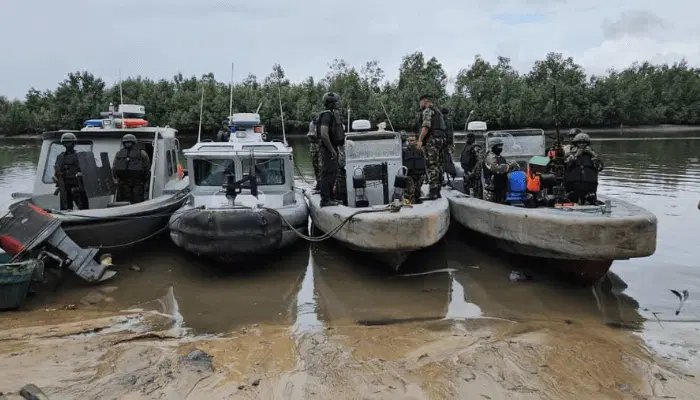
The Nigerian Navy has discovered approximately 182,000 litres of substance suspected to be stolen crude oil in Bethel Creeks, Rivers State, in another operation aimed at disrupting illicit crude oil storage and transfer activities in the area.
The Director of Information, Navy Captain Abiodun Folorunsho, disclosed this on Tuesday, saying the discovery was made by Forward Operating Base (FOB) Bonny on September 22, 2026.
According to him, the operation followed actionable intelligence concerning suspicious activities around the creeks.
“The discovery was made by FOB Bonny on 22 September 2026 during a follow-up operation based on actionable information concerning suspicious activities around the creeks,” Folorunsho said.
He explained that the operation uncovered eight dugout pits, five of which contained the suspected stolen crude oil, while the remaining three were empty.
“Hoses associated with the movement of crude oil were also discovered and subsequently handled in accordance with established procedures,” he added.
Folorunsho noted that the latest discovery came barely two weeks after FOB Bonny recovered approximately 87,000 litres of suspected stolen crude oil at four newly activated illegal refining sites around Aworkiri on September 8, 2026.
He said the earlier operation also uncovered 19 dugout pits and other infrastructure, indicating efforts to establish facilities for storing and handling stolen crude oil.
According to him, the successive discoveries demonstrate the Nigerian Navy’s increasing focus on disrupting the storage and transfer infrastructure used by criminal operators to sustain crude oil theft.
“The successive discoveries highlight the Nigerian Navy’s expanding focus on denying criminal operators the storage and transfer infrastructure required to sustain crude oil theft, rather than allowing illicit activities to become re-established after previous disruptions,” he said.
He added that the latest operation had further restricted the availability of crude oil and supporting infrastructure for illegal exploitation in the area.


Happy
0 %

Sad
0 %

Excited
0 %

Sleepy
0 %

Angry
0 %

Surprise
0 %
 0
0
 0
0