
SANWO-OLU ADVOCATES SPECIAL STATUS FOR LAGOS, CITES ECONOMIC IMPORTANCE
Read Time:2 Minute, 57 Second
By: Balogun Ibrahim
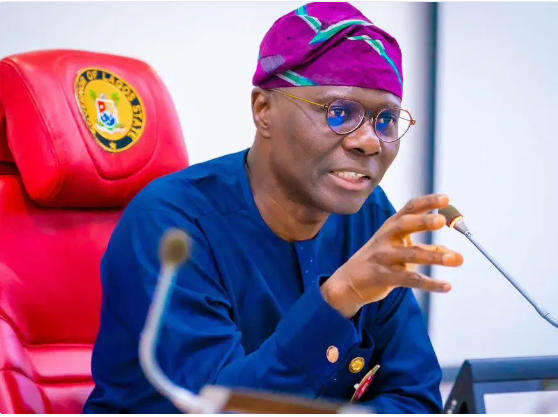
Governor Babajide Sanwo-Olu has reiterated his appeal for Lagos State to be granted a special federal status, citing the enormous national responsibilities the state continues to shoulder despite ceasing to be Nigeria’s capital more than 30 years ago.
The governor made the call on Saturday while speaking at the inaugural Geo-economic Optimisation Summit organised by the Citadel School of Government in Lagos. The event was themed, “From South-West Nigeria to the Globe: Lagos as a Geo-economic Hub.”
Sanwo-Olu argued that Lagos remains the country’s economic powerhouse and continues to carry significant national obligations, including hosting key federal institutions and accommodating a rapidly growing population.
“We remain committed to advocating for a special status for Lagos because of its history as a former federal capital, its strategic role in Nigeria’s economy, and the enormous responsibilities that come with being home to nearly one-tenth of the nation’s population,” he said.
READ MORE…
IRAN SEEN AS WINNER OF REGIONAL CONFLICT BY MOST ISRAELIS, POLL REVEALS
Reflecting on his administration, the governor noted that he has 343 days remaining in office and pledged to use the period to further advance development initiatives across the state.
“Today marks my 2,579th day in office. With 343 days left, I am determined to maintain the same level of dedication and energy that has guided my administration from the outset,” he stated.
Sanwo-Olu also unveiled a long-term vision aimed at transforming Lagos into a global centre for human capital by 2052. According to him, the state is positioning itself as a preferred destination for international companies seeking skilled professionals in technology, innovation, and the creative sector.
He highlighted Lagos’ economic significance, noting that the state contributes roughly one-third of Nigeria’s Gross Domestic Product and ranks among Africa’s largest metropolitan economies, with an estimated purchasing power output of $257.59 billion.
The governor added that Lagos attracts more than 65 per cent of Nigeria’s foreign direct investment and serves as a base for several of Africa’s leading technology unicorns.
“Lagos remains Africa’s foremost hub for startups and innovation. We possess the talent, creativity and entrepreneurial spirit needed to compete on the global stage,” he said.
Sanwo-Olu further pointed to major infrastructure developments—including the Lekki Deep Sea Port, Dangote Refinery, Lagos International Financial Centre, and the Lagos-Calabar Coastal Highway—as critical projects that will enhance the state’s global competitiveness.
He also disclosed that Lagos is collaborating with neighbouring South-West states to strengthen regional economic integration, particularly in infrastructure, energy, and agriculture.
Earlier, the founder of the Citadel School of Government, Pastor Tunde Bakare, advocated greater devolution of economic and political authority to states, arguing that Nigeria’s highly centralised governance structure hampers development.
Bakare maintained that Lagos demonstrates the potential of sub-national governments to drive economic growth when equipped with sufficient autonomy and strong institutions.
“Nigeria’s development aspirations cannot be fully realised under a system that concentrates excessive power and resources at the federal level,” he said.
He stressed that empowering states to leverage their unique strengths is essential for national progress, adding that sustainable development requires vision, discipline, and continuity in governance.
In his remarks, the Executive Director of the Citadel School of Government, Omoaholo Omoakhalen, said the summit was created to encourage practical policy conversations on regional economic transformation. He noted that Lagos was selected as the launch point because of its resilience, innovation, and economic influence.


Happy
0 %

Sad
0 %

Excited
0 %

Sleepy
0 %

Angry
0 %

Surprise
0 %
 0
0
 0
0