
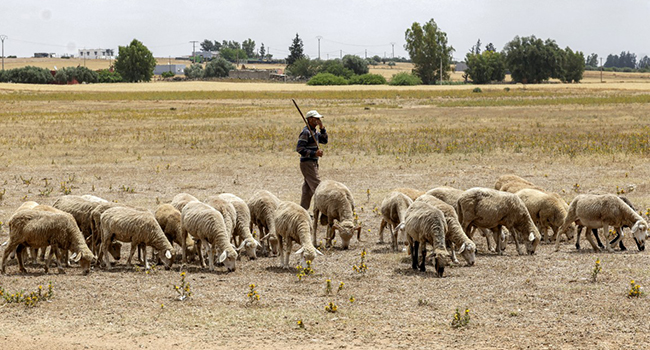
WORLD NEWS: MOROCCO URGES EID AL-ADHA SACRIFICE BOYCOTT AMID SEVERE DROUGHT AND LIVESTOCK SHORTAGE
Read Time:2 Minute, 34 Second
By Aishat Momoh. O.
As the Islamic festival of Eid al-Adha nears, many Moroccans are grappling with an unprecedented request from the monarchy: skip the traditional sheep sacrifice.
The appeal, made by King Mohammed VI earlier this year, comes as Morocco faces its seventh consecutive year of drought, with severe consequences for the agricultural sector and national livestock supplies. The king, citing both “climate and economic challenges,” urged citizens to forgo the ritual slaughter to ease the pressure on dwindling livestock and rising feed costs.
Fatima Kharraz, 52, from Rabat, said the royal guidance resonated with her family’s economic reality. “We don’t feel the usual excitement,” she said. “Prices were already high last year… We couldn’t have afforded it.”
Although the sacrificial ritual is not obligatory in Islam, it is a deeply rooted tradition for many families in Morocco and across the Muslim world. The government’s call to pause the practice has reshaped the atmosphere across the country.
At the weekly livestock market in Khemisset, near the capital, cattle and horses stood in place of the typical herds of sheep just days before the holiday, highlighting the depth of the crisis.
Agriculture Minister Ahmed Bouari revealed in March that Morocco, home to 37 million people, typically slaughters up to six million sheep during Eid al-Adha. However, the country’s livestock numbers have dropped by over a third since the last official count in 2016, according to the agriculture ministry.
The decline is driven by poor rainfall, which has reduced grazing pastures and driven up animal feed costs, resulting in sky-high prices for livestock. Breeders say sheep that would normally sell for less now fetch as much as 7,000 dirhams ($760), forcing some families to consider loans to uphold the tradition.
“I left my sheep at home because they’d be impossible to sell,” said Marouane Haizoun, a 24-year-old cattle seller at the Khemisset market. Horse and sheep breeder Mustapha Mastour echoed the sentiment, adding that most sales this year are either nonexistent or prohibitively expensive.
In place of whole animals, many households are opting for more affordable alternatives such as lamb liver and small meat cuts — key ingredients in traditional Eid dishes. While demand for meat has spiked, experts warn it will do little to restore livestock numbers.
To address the crisis, the Moroccan government recently unveiled a 6.2 billion dirham ($675 million) relief plan that includes subsidies for animal feed and partial debt relief for herders. However, breeders like Haizoun and Mastour voiced concerns over fair distribution, alleging that large-scale livestock owners often benefit the most.
Despite widespread economic and cultural disruption, the royal appeal has drawn widespread public support. “I support the decision,” said Mona Hajjami, a shopper at the Khemisset market. “Still, it’s normal to feel a void without an atmosphere of grilled meat.”
As social media buzzes with misinformation — including false claims about drone surveillance and penalties for noncompliance — the prevailing mood in Morocco remains one of reluctant acceptance in the face of environmental hardship and economic necessity.


Happy
0 %

Sad
0 %

Excited
0 %

Sleepy
0 %

Angry
0 %

Surprise
0 %
 0
0
 0
0