
KANO RISES TO FOURTH PLACE IN CLIMATE GOVERNANCE, SAYS COMMISSIONER
Read Time:1 Minute, 50 Second

By: Fasasi Hammad
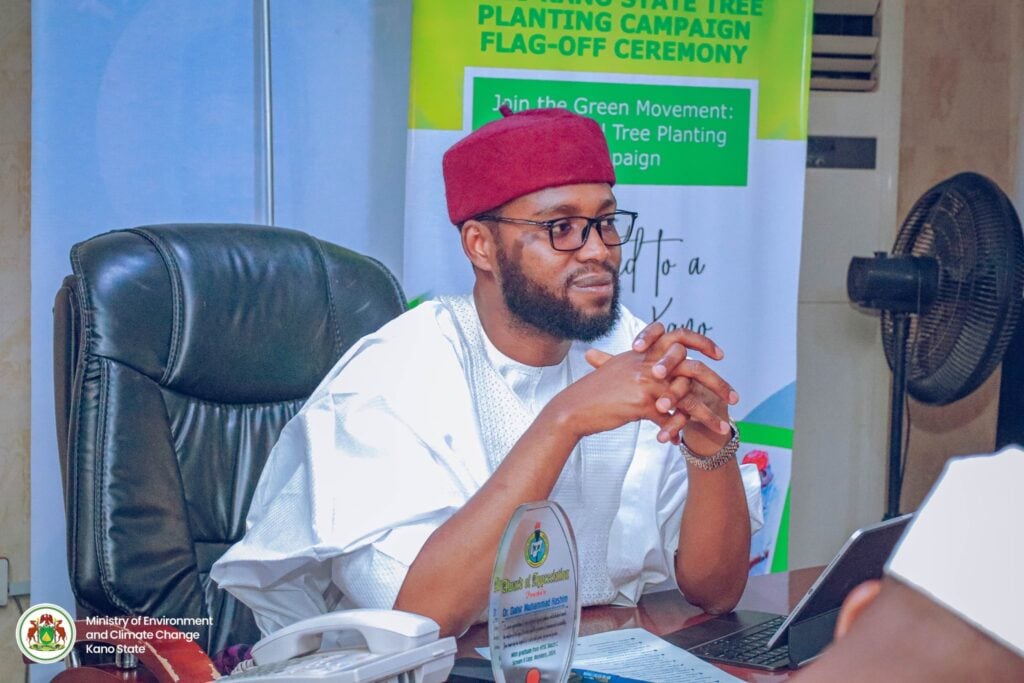
Dahiru Hashim, Kano State Commissioner for Environment and Climate Change, has announced that the state has moved from 35th to fourth place in Nigeria’s climate governance ranking within just one year.
Speaking on Wednesday at an event in Kano marking his one-year anniversary in office, Hashim attributed the achievement to focused leadership, deliberate institutional reforms, and sustained collaboration among government agencies and development partners.
“In 2024, Kano was ranked 35th out of 36 states—a troubling data point at the time. I did not know then that I would soon have the opportunity to help change that story,” he said.
Hashim noted that Kano’s current ranking demonstrates how effective systems and coordinated governance can deliver measurable results when adequately supported.
“This progress is not the achievement of a single individual or office. It is the result of institutions being allowed to function and people committing to their responsibilities,” he said.
The commissioner emphasized that the state is determined to consolidate its gains and aims to achieve the top position in the next climate governance ranking cycle. He credited Governor Abba Kabir Yusuf’s leadership for positioning the environment sector at the center of public welfare, safety, and sustainable development.
“Governor Yusuf restored direction and coordination across institutions while reinforcing a governance culture grounded in merit, accountability, and responsibility,” Hashim said.
Over the past year, the ministry focused on restoring systems, improving coordination, and implementing practical interventions in sanitation, flood mitigation, erosion control, water access, afforestation, and climate policy development. Hashim commended ministry staff and agency workers for their dedication, describing their contributions as critical to the state’s achievements.
He also acknowledged support from development partners, including the UK Foreign, Commonwealth and Development Office (FCDO) through the Partnership for Agile Governance and Climate Engagement (PACE) project, UNICEF, and others.
Hashim stressed that community participation remains central to sustainable environmental and climate action, noting that feedback and cooperation from urban and rural residents informed planning and implementation.
The commissioner added that a publication unveiled at the event documented the reforms, institutional improvements, and lessons learned over the past year, providing a reference point to sustain the state’s progress.


Happy
0 %

Sad
0 %

Excited
0 %

Sleepy
0 %

Angry
0 %

Surprise
0 %
 0
0
 0
0