
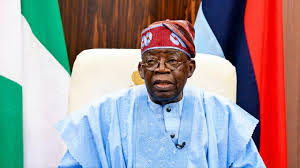
2027: PRESIDENT URGES ENHANCED COLLABORATION BETWEEN EXECUTIVE AND LEGISLATURE
Read Time:3 Minute, 17 Second
By: Muftau Fatimo
Details have emerged on the reasons behind President Bola Tinubu’s closed-door meeting with National Assembly leaders at the Presidential Villa, Abuja, on Tuesday.
The meeting, held just days after the President hosted federal lawmakers for Iftar, was reportedly intended to foster stronger collaboration between the executive and legislative branches ahead of the 2027 general elections.
Sources familiar with the discussions told the media that President Tinubu emphasized the importance of closer cooperation between both arms of government to ensure governance stability and reinforce democratic institutions.
Attendees at the meeting included Senate President Godswill Akpabio, Deputy Senate President Barau Jibrin, Senate Leader Opeyemi Bamidele, Speaker of the House of Representatives Tajudeen Abbas, Deputy Speaker Benjamin Kalu, and Imo State Governor Hope Uzodinma.
The meeting took place shortly after plenary sessions were held at both chambers of the National Assembly.
READ MORE :
ADC ANNOUNCES OFFICIAL TIMETABLE FOR 2026 NATIONWIDE CONGRESS AND NATIONAL CONVENTION
A source privy to the closed-door meeting said the engagement also came amid growing disagreements between members of the executive and the legislature.
The insider, a federal lawmaker who spoke on condition of anonymity, said the President expressed concern over recent tensions between both arms of government, particularly disagreements that had played out during plenary sessions in the Senate and the House of Representatives.
According to the source, issues relating to budget implementation and constitutional amendment debates had created an impression of disunity within government and needed to be addressed.
He said, “Preparations for 2027 are expected to begin soon. The President met with the leadership of the National Assembly and reminded them of the need to put their houses in order.
“Do not forget that a few weeks ago, plenary sessions were rowdy over differences in governance matters and constitutional amendment issues. As the nation moves closer to an election year, these are issues that must be handled in the best possible way.”
Although disagreements between the executive and the legislature are not unusual in democratic systems, the tensions witnessed in recent weeks have raised concerns among political observers about their potential impact on governance and legislative productivity.
Some of the reported disagreements focused on budget implementation issues and the ongoing deliberations over proposed constitutional amendments before the National Assembly.
Political analysts suggest that with the 2027 general elections approaching, both the executive and legislative branches are likely aiming to prevent prolonged conflicts that could negatively influence public perception of governance.
Interactions between the presidency and National Assembly leadership are thus viewed as part of broader efforts to promote smoother coordination during the remaining tenure of the current administration.
Meanwhile, the House of Representatives has dismissed suggestions that the meeting was convened because of tensions within the federal legislature.
Speaking with the media, the spokesman of the House, Akin Rotimi, described the engagement as routine, noting that consultations between the Presidency and parliamentary leadership were a normal feature of democratic governance.
He said the meeting provided an opportunity for both arms of government to exchange views on issues of national interest and strengthen cooperation on policy matters.
“It is routine for the leadership of the National Assembly to meet with President Bola Tinubu to confer on matters of national importance and to strengthen coordination between the executive and legislative arms of government.
“Such engagements are a normal part of democratic governance and provide an avenue for consultation on legislative priorities, policy implementation, and issues affecting the nation,” he said.
Regular interactions between the Presidency and the leadership of the National Assembly have been a recurring feature of the current administration, particularly as the government seeks legislative backing for key reforms and policy initiatives.
As political activities are set to ramp up ahead of the 2027 general elections, analysts note that these consultations could help sustain stability within the government and foster alignment between the executive and legislative branches on key national matters.


Happy
0 %

Sad
0 %

Excited
0 %

Sleepy
0 %

Angry
0 %

Surprise
0 %
 0
0
 0
0