
EU ENVOY HIGHLIGHTS WOMEN’S ROLE IN DEVELOPING NIGERIA’S GREEN ECONOMY
Read Time:3 Minute, 17 Second
By: Balogun Ibrahim
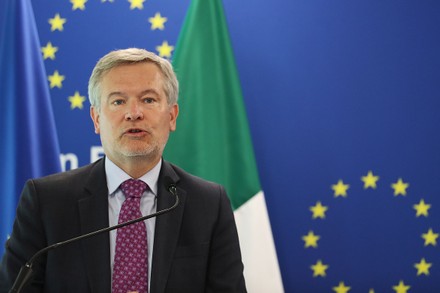
The Ambassador of the European Union to Nigeria and ECOWAS, Gautier Mignot, has emphasized that women are vital to developing Nigeria’s green economy.
Mignot called for increased investment and greater inclusion to empower women to expand their contributions to climate action and sustainable growth.
He highlighted that Nigeria has significant untapped potential, especially among women, who already play key roles in the economy but continue to face systemic barriers.
The envoy made the remarks on Tuesday night in Abuja during the Women Leading Climate Action, Green Economy Dialogue, organized by Amanda Archibong-Doukouré.
“This evening marks a crucial and timely discussion. The question before us—what will Nigeria’s green economy look like—is both simple and profound, as the answer will shape not only the future of Nigeria’s economy but also the resilience of its communities, the inclusiveness of its growth, and the country’s contribution to global climate action.
“Nigeria is a nation with vast untapped potential, and perhaps the greatest untapped potential lies in women and their capabilities,” Mignot said.
He emphasized that women account for over 70 per cent of Nigeria’s informal economy and between 50 and 70 per cent of smallholder agricultural labour, while also playing pivotal roles in markets and regional value chains.
“Despite their central role, women remain underrepresented in critical areas such as access to finance, investment pipelines, and leadership and decision-making spaces that shape the green economy,” the EU ambassador said.
He noted that women are already driving Nigeria’s green economy but questioned whether enough is being done to support them.
“If we ask who will build Nigeria’s green economy, the answer is clear: women are already doing it. The real question is whether we are enabling them to lead, scale, and benefit from it,” Mignot added.
He also emphasized the need for inclusive financing frameworks, highlighting that many women-led businesses remain small or informal due to structural barriers.
“Financing the green economy is not just about mobilizing capital; it is about ensuring inclusion… creating diverse investment pipelines, accessible financial systems, and ecosystems that connect entrepreneurs to opportunities,” he said.
He reiterated the European Union’s commitment to supporting Nigeria through programs focused on expanding renewable energy, climate finance, sustainable value chains, and women-led enterprises.
The event convener, Amanda Archibong-Doukouré, noted that women-led businesses driving climate action at the grassroots level are largely excluded from formal financing systems, despite their pivotal role in Nigeria’s emerging green economy.
Archibong highlighted that while Africa, and Nigeria in particular, is undergoing a major energy transition and unlocking new market opportunities under the African Continental Free Trade Area, structural barriers continue to restrict access to capital for women-led enterprises.
“We are standing at a defining intersection. The opportunity is immense, yet the businesses closest to delivering real climate impact—especially at the household and community level—are not the ones receiving financing,” she said.
She emphasized that women lead key segments of the green economy, including last-mile distribution, agro-processing, clean energy adoption, and circular economy systems, but remain “largely invisible to formal investment pipelines.”
Archibong also pointed to the so-called “missing middle,” a gap between grant-funded startups and investment-ready enterprises.
“There is strong activity at the level of enterprise support and large-scale investment, but in between, many businesses are too advanced for grants and not yet structured for investment. That is where many women-led green enterprises are positioned today,” she explained.
The dialogue takes place amid rising calls for inclusive climate action and sustainable development as Nigeria seeks pathways toward a low-carbon economy.
Development partners, including the European Union, have increasingly stressed the importance of women’s participation in green sectors, noting that limited access to finance, markets, and decision-making platforms continues to constrain women-led businesses, despite their prominent roles in agriculture, trade, and small enterprises.


Happy
0 %

Sad
0 %

Excited
0 %

Sleepy
0 %

Angry
0 %

Surprise
0 %
 0
0
 0
0