
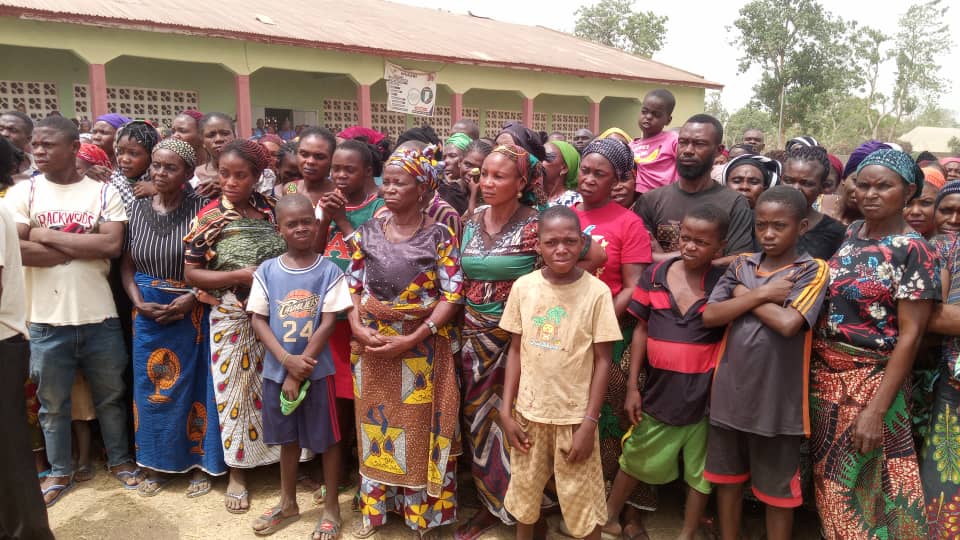
TARABA TIV WOMEN RAISE CONCERNS OVER KILLINGS, DISPLACEMENT, AND FARMLAND LOSS
Read Time:1 Minute, 37 Second

By: Muftau Fatimo
Women from Tiv communities in Takum and Donga Local Government Areas of Taraba State have raised alarms over a surge in attacks that have left many widowed, homeless, and cut off from their farmlands.
The women, representing affected communities such as Adu, Gbundu, Demevaa, Tor-Damisa, and New Gboko, appealed over the weekend to President Bola Ahmed Tinubu and Taraba State Governor Agbu Kefas to urgently deploy security forces to restore peace and allow residents to return to their homes.
Speaking for the group, their leader, Mrs. Msughshima Tersugh, described the situation as critical, noting that repeated attacks since October last year have displaced families and destroyed their main sources of livelihood.
“We have lost our husbands, our homes, and our farms. Our children are hungry, and we do not know how long we can survive like this,” she lamented.
Tersugh blamed the violence on suspected armed groups, claiming that homes were burned and farmlands devastated during the attacks. She warned that the ongoing insecurity makes it impossible for displaced residents to return to their communities, especially with the onset of the rainy season.
READ MORE :
TARABA TIV WOMEN RAISE CONCERNS OVER KILLINGS, DISPLACEMENT, AND FARMLAND LOSS
According to her, the inability to farm this season poses a severe threat to food security and the survival of families already struggling with displacement.
“We are appealing to the governor and the President to provide security so we can return to our farms. Farming is our only means of survival,” she added.
The women warned that inaction could exacerbate hunger and spark a humanitarian crisis in the affected communities.
They urged the Taraba State Government to immediately deploy sufficient security personnel to protect lives and property, enable their return, and prevent further suffering.
Tersugh emphasized that missing the current farming season could have long-term repercussions, cautioning that food shortages may worsen without urgent intervention.


Happy
0 %

Sad
0 %

Excited
0 %

Sleepy
0 %

Angry
0 %

Surprise
0 %
 0
0
 0
0