NEWS: KENYA POLICE FIRE TEAR GAS AT PROTESTERS
Read Time:3 Minute, 0 Second
Agency Report
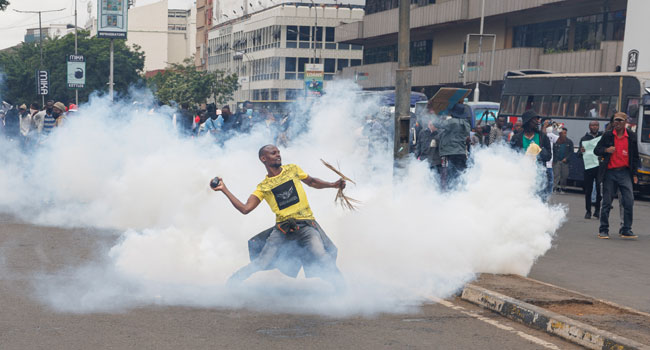
Kenyan police fired tear gas. Thursday in the heart of Nairobi, tiny groups of protestors gathered for what was described as a new day of action against embattled President William Ruto.
Riot police monitored the streets of the central business district; barricades were erected on main thoroughfares; and many stores were closed, but just a few hundred demonstrators showed up, chanting “We are peaceful.”
The East African nation, one of the most stable in the region, has been rocked by weeks of sometimes fatal protests against Ruto’s two-year-old administration, driven primarily by young Kenyans from Generation Z.
While Ruto presided over the swearing-in of a new cabinet, police threw tear gas into the downtown business district, detaining many people.
However, the streets appeared to be rather calm, with only a few individuals going about their daily business.
Television images from the Indian Ocean city of Mombasa showed traffic flowing normally with no signs of violence, and Kisumu, a western lakeside city, was also said to be peaceful.
Stephens Wanjiku, a 29-year-old fashion stylist, said she has been marching since the demonstrations began in mid-June to demand “good governance and accountability.”.
“I have been beaten,” Wanjiku, sporting a bright blue robe, ski goggles and multiple masks, told AFP in Nairobi, saying police brutality should be a “thing of the past, we should not be seeing it in 2024”.
Kenya’s acting police commander, Gilbert Masengeli, warned on Wednesday that “criminals” planned to infiltrate the demonstrations and recommended people to avoid protected zones such as the main international airport and Ruto’s official house, as well as to exercise caution in congested areas.
What began as peaceful youth-led protests against disputed proposed tax increases has grown into a larger campaign against Ruto and what many regard as wasteful government spending and corruption.
According to rights groups, at least 60 people have been killed since the protests began, with police accused of using excessive force, including live bullets, and dozens more missing.
While the rallies have become smaller in recent weeks, posters shared online called for fresh demonstrations Thursday, dubbed “Nane Nane” or Eight Eight in Swahili, to signify the date, August 8.
Organisers have in the past accused “goons” of hijacking their plans for peaceful action and of stoking violence.
In a bid to tackle the worst crisis of his presidency, Ruto has taken a series of measures to address public anger including scrapping the tax hikes, rejigging his cabinet and making deep budget cuts.
He said Thursday’s installation of a new “broad-based” cabinet — which includes four opposition stalwarts but also a number of previously sacked ministers — represented the start of a “new chapter” for Kenya’s governance and development.
Ruto took office in September 2022 after winning a closely fought and divisive election against veteran opposition leader Raila Odinga, pledging to work for Kenya’s poor and downtrodden.
But he has found himself caught between the demands of international lenders to shore up government finances to enable it to service its massive $78-billion debt, and ordinary Kenyans who are struggling with a cost-of-living crisis.
While economic growth has remained relatively strong, estimated by the central bank at 5.4 per cent this year, a third of the country’s 52 million people live in poverty.
Edwin Kagia, a 24-year-old man trying to eke out a living selling masks, said Ruto should be given a chance.
“We have to wait. Right now what Kenya needs today… is to give our president time,” he told AFP.
AFP


Happy
0 %

Sad
0 %

Excited
0 %

Sleepy
0 %

Angry
0 %

Surprise
0 %
 0
0
 0
0