
NIGERIA CUSTOMS GROUNDS 60 PRIVATE JETS OVER UNPAID IMPORT DUTIES
Read Time:4 Minute, 30 Second
By Aishat Momoh. O.
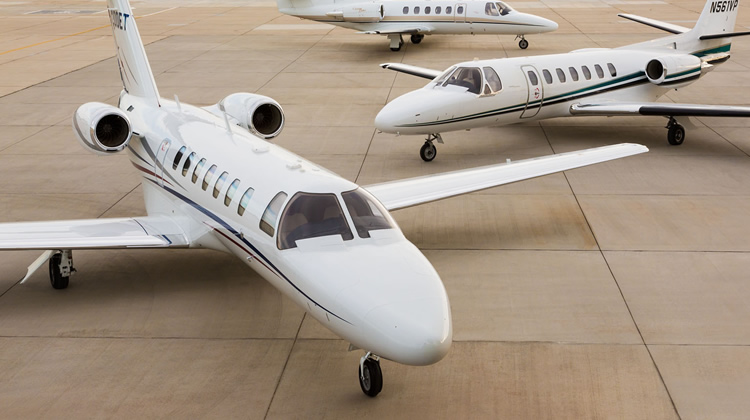
The Federal Government, through the Nigeria Customs Service (NCS), has commenced the grounding of at least 60 private jets across major Nigerian airports in a sweeping move to recover unpaid import duties worth billions of naira.
The enforcement operation, which began quietly on Monday, is targeting jets owned by bank executives, multinational oil firms, and other high-net-worth individuals. Affected aircraft include luxury models such as Bombardier BD-700 Global 6000, Global 6500, and Global 7500.
Customs officials sealed aircraft hangars at the Murtala Muhammed International Airport in Lagos and the Nnamdi Azikiwe International Airport in Abuja. The move follows the expiration of a verification and payment window that ran from October 14 to November 14, 2024.
Customs spokesperson Abdullahi Maiwada confirmed the action, stating that the agency had given ample time for jet owners to regularise their documentation and pay duties. “We just have to enforce. We have to collect revenue for Nigerians so that it will be used for Nigerians,” Maiwada said.
He added that the agency would continue to enforce compliance until all outstanding obligations are met. “We are hopeful and we know they will comply,” he stated.
Meanwhile, sources revealed that several jet owners have begun lobbying top government officials, including reaching out to the Presidency, to intervene. A major Nigerian bank has reportedly pledged to settle its outstanding dues by next week, while an energy firm with three jets has entered negotiations with the NCS.
A memo dated June 4, 2025, and signed by Deputy Comptroller-General C.K. Niagwan on behalf of the Comptroller-General of Customs, indicated that the NCS had authorised the temporary unsealing of some aircraft. The document said this was to enable operators to submit relevant documents and engage in discussions on resolving their outstanding payments.
The NCS first announced the verification exercise in 2024, warning that jets with unpaid duties would be grounded. Although initial enforcement was delayed due to court proceedings, the service has now resumed its action without issuing a fresh notice.
The circular expressed that the unsealing was solely to facilitate compliance, adding that this did not constitute a waiver of any statutory obligations. Meanwhile, our correspondent learnt the unsealing was only for a few of the grounded jets.
A former deputy director of engineering of the defunct national carrier, Nigerian Airways, Frank Oruye, called on both operators of private jets and the Nigeria Customs Service to adopt global best practices in their activities.
He appealed to customers to pay what was due to the government, and also called on Customs to be professional in their dealings.
He said, “For a conducive aviation sector to be created, it’s essential for stakeholders to fully understand what it takes. Everything should not end in ‘gra-gra and rofo-rofo’. Investors and importers should be ready to foot all local taxes and customs duties.”
READ ALSO:
TINUBU CAUTIONS POLICE OFFICERS ABOUT WIDESPREAD ABUSE AND INTIMIDATION
While recalling the disagreement that ensued between the defunct Nigeria Airways and Customs during the airline’s lifetime, Oruye stated that “NCS should endeavor to follow global best practices in fixing duties.”
He added, “I recall that we had difficulties with Customs when I was at Nigeria Airways in the 70s through the 90s. There’s a class of aircraft components known as Rotables. They are high-cost items ranging from electrical and hydraulic Pumps and motors to avionics components. In the course of their operating lives, they need to be removed from the aircraft for scheduled maintenance or repairs at approved foreign bases. Let’s imagine a generator whose price is $50,000.
“After operating in Nigeria for two years, it was sent abroad for repairs, which cost $1,500. Upon its return to Nigeria, NCS would be targeting duties based on $50,000, ignoring that it had been duty-paid at its first entry to Nigeria. Advanced nations don’t burden their airlines with such debilitating levies.”
Also, retired Group Captain John Ojikutu stated that most of the grounded aircraft were foreign-based, a development he described as a security threat to the country.
Ojikutu blamed both Customs and the Nigeria Civil Aviation Authority for allowing an “unclear number of aircraft” to fly in the country.
While recalling how he grounded aircraft belonging to the late Kashimawo Abiola, for running afoul of regulatory laws, he appealed to the NCAA to live up to expectations.
“All these things happening now didn’t happen before. In the first place, why are foreign-registered aircraft flying in the country? Who permitted them? When I was at the airport, I seized Abiola’s aircraft twice! Why are people behaving this way nowadays? In Demuren’s days, such wouldn’t have happened. I had the authority to monitor foreign airlines. They can’t fly without security clearance, and aside from the customs airport, which is the point of entry, they can’t fly to more than one airport.
“All these things happening are risky, not even now that we don’t know the people in charge of the insurgency. To now fly foreign aircraft without clearance is a threat to national security. Both customs and the NCAA should be blamed for allowing them to fly such aircraft in the country. Let the NCAA check its regulations. There should be a regulation for such an act.”


Happy
0 %

Sad
0 %

Excited
0 %

Sleepy
0 %

Angry
0 %

Surprise
0 %
 0
0
 0
0