
UPDATED: LAGOS UNVEILS WEE POLICY ROADMAP TO EMPOWER WOMEN ECONOMICALLY, FOSTER INCLUSIVE GROWTH (PHOTOS)
Read Time:7 Minute, 37 Second

By: Sefiu Ajape
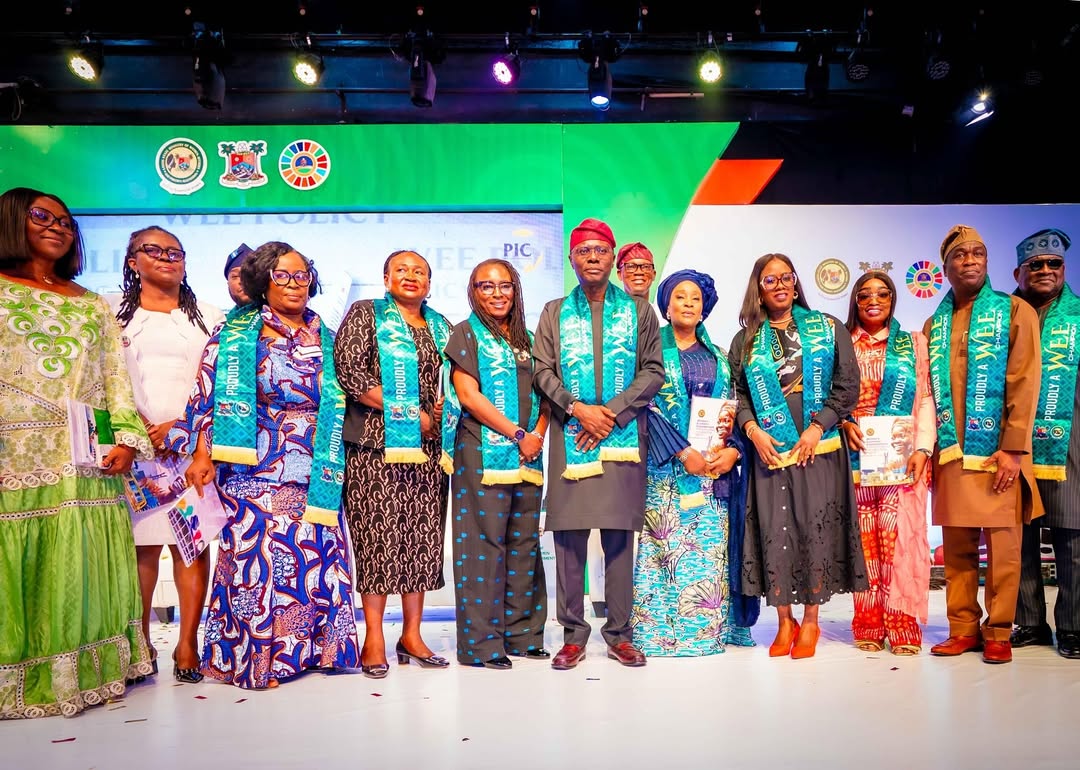
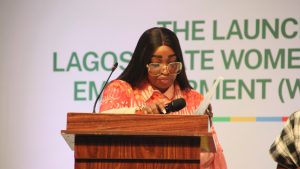
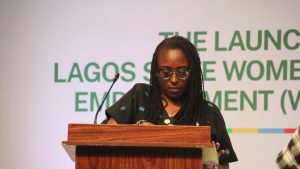
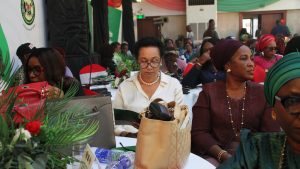
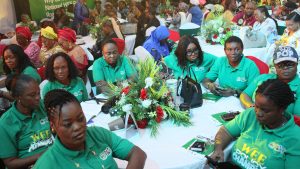
In a significant step toward addressing gender inequality and fostering inclusive economic development, the Lagos State Government on Tuesday unveiled the Women Economic Empowerment (WEE) Policy Roadmap at Shell Hall, Muson Centre, Onikan, Lagos.
Spearheaded by the Ministry of Women Affairs and Poverty Alleviation, the policy provides a strategic framework designed to break down systemic obstacles hindering women’s progress in key areas such as agriculture, entrepreneurship, education, and fast-growing sectors like technology.
During the launch, Lagos State Governor, Mr. Babajide Sanwo-Olu, highlighted that despite the state’s dynamic economy, women—who make up nearly half the population—continue to encounter significant challenges in accessing education, skills training, financial resources, and opportunities in both traditional and emerging industries.

He emphasized that the introduction of this policy marks a critical turning point in transforming that reality.
“The Lagos State WEE Policy Roadmap, developed by the Ministry of Women Affairs and Poverty Alleviation, is a strategic, forward-thinking framework designed to address these systemic challenges. This roadmap aligns not only with our state’s developmental agenda but also with national policy frameworks and global commitments such as the Sustainable Development Goals (SDGs),” he said.
“This initiative reflects our administration’s unwavering commitment to gender equity and inclusive economic growth,” Governor Sanwo-Olu declared in his keynote address.
He added, “Women constitute nearly half of our population, yet they continue to face substantial barriers in education, skill acquisition, access to finance, and participation in both traditional and emerging industries.”
The WEE Roadmap rests on five key pillars – Agriculture, Entrepreneurship, Traditional Labour Market, Emerging Industries, and Education and Skill Acquisition.

It proposes targeted interventions including improved access to finance, enhanced working conditions, digital inclusion, and gender-responsive policies based on data-driven strategies.
“In agriculture, we aim to increase women’s access to digital tools, e-commerce platforms, and targeted financing to grow agribusinesses and connect them to broader markets.
“In entrepreneurship, the roadmap recommends designing gender-friendly financial services and strengthening mentorship networks,” Sanwo-Olu stated.

The governor emphasized that the roadmap was shaped through extensive stakeholder engagement, involving government ministries, private sector leaders, NGOs, community representatives, and women’s groups, including persons with disabilities.
“The development of this roadmap was underpinned by a robust stakeholder engagement process. From government ministries, departments, and agencies, including the Ministry of Wealth Creation and Employment, Ministry of Tertiary Education, and Lagos State Employment Trust Fund, to non-governmental organizations, private sector players, community leaders, and women’s groups across the state, including women with disabilities, we ensured that no voice was left unheard,” Sanwo-Olu assured.

“This participatory approach helped shape a contextual and inclusive understanding of who a woman is in Lagos State.
“Her aspirations and challenges, from youth to old age, must be central to the policies we design,” he said.
Sanwo-Olu acknowledged persistent challenges such as cultural norms that deprioritize girls’ education, underrepresentation in STEM fields, and legal and infrastructural gaps in the labour market. However, he remained optimistic about the opportunities ahead.
“This roadmap is not just a document; it is a strategic tool for unlocking the full potential of the women of Lagos State,” he affirmed. “Empowering women economically does not only lift individual households, it strengthens our communities and grows our economy.”
Concluding his remarks, the governor made a call to action, urging all stakeholders to collaborate toward full implementation of the roadmap, “not just as a policy on paper, but a living instrument that transforms lives across Lagos.”

On her part, the the First Lady of Lagos State, Dr. (Mrs.) Claudiana Ibijoke Sanwo-Olu, represented by the wife of the Deputy Governor, Mrs. Oluremi Hamzat, called for urgent and deliberate action to ensure that the newly launched Women Economic Empowerment (WEE) Policy and Roadmap leads to real impact for women across the state.
The First Lady described the initiative as “a bold and strategic move, not just in planning, but in deliberately responding to the needs, dreams, and aspirations of women across every community in our state.”

She emphasized that the policy signals “a shift from limitation to opportunity, from silence to inclusion, and from mere survival to sustainable success,” adding that it was carefully crafted to address the multiple forms of inequality that women face. “This roadmap has been basically designed to address the multiple areas of inequality women face, including limited access to financial resources and skills training, as well as systematic gender bias in leadership and empowerment,” she said.
Earlier in her welcome address, Commissioner for Women Affairs and Poverty Alleviation, Hon. Bolaji Cecilia Dada, said the roadmap offered a well-defined strategy to address the systemic challenges limiting women’s participation in the economy.
She described the launch as “a significant step forward in our commitment to inclusive growth, gender equity, and sustainable development.
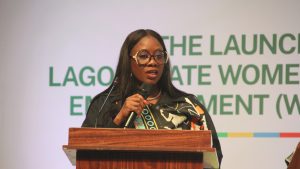
“Today is not just the unveiling of a policy,” she added, “it is the affirmation of a collective resolve to break barriers, expand opportunities, and elevate the economic power of women across Lagos State.”
Hon. Dada emphasized that the roadmap “offers a well-defined strategy to address the systemic challenges limiting women’s participation in the economy, from limited access to finance and skills to gender-based constraints in both traditional and emerging sectors.”
She noted that the process of creating the policy was inclusive, involving “stakeholder dialogues, co-creation workshops, grassroots engagement, and validation exercises.” The result, she said, is “a policy that is practical, people-driven, and inclusive of every segment of the female population, including the Iyalojas, professionals, and women living with disabilities.”

According to the Commissioner, the WEE Policy was developed through a rigorous 12-month domestication process that included stakeholder dialogues, co-creation workshops, grassroots engagement, and validation exercises. She emphasized that the resulting framework is practical, inclusive, and reflects the diverse realities of women in the state, from market leaders and professionals to women living with disabilities.
“These are not just lofty aspirations,” Dada stated. “They reflect a concrete agenda designed to uplift the economic standing of women and drive inclusive growth in line with global Sustainable Development Goals (SDGs).”
“At WAPA, we see this roadmap as a launchpad to expand our vocational training programmes, strengthen micro-enterprise support, foster public-private partnerships, and drive policy advocacy for women in the informal sector.

“When we empower a woman, we uplift a household, strengthen the economy, and build a more prosperous Lagos.
“Women’s empowerment is not a women’s issue, it is a Lagos issue, a development issue, and a moral imperative.
She went further by commending the contributions of the Policy Innovation Centre, the Albright Stonebridge Group, and the Office of the Senior Special Adviser to the Governor on SDGs for their technical support.
Hon. Dada also acknowledged the consistent leadership of Governor Babajide Sanwo-Olu, whom she referred to as “our He-for-She Champion,” crediting his backing of gender-inclusive governance as central to the success of the initiative.
Commending the First Lady of Lagos State, Dr. (Mrs.) Claudiana Ibijoke Sanwo-Olu, the Commissioner praised her as “a passionate advocate for women and girls,” whose “continuous advocacy, compassion, and presence here today reaffirm your unwavering commitment to the upliftment of women across the state.”
She further called for unified action to ensure that the policy moves from paper to impactful implementation. “As we officially launch the Lagos State WEE Policy Roadmap today, let us embrace this as a call to action — not just to celebrate, but to implement, monitor, and deliver real change. The time to act is now. Because when women win, Lagos wins”, the commissioner concluded.
As part of the event, a fireside chat titled “From Policy to Action: Driving Sustainable Impact for Women’s Economic Empowerment in Lagos State” brought together leading voices in women’s development, finance, and enterprise to explore strategies for translating the WEE Policy into measurable outcomes.
The session featured contributions from Mrs. Mabel Ajoke Jacobs, President of Women in Film and Television International (WIFTI); Mrs. Abiodun Olubitan, Group Head of Women Banking at Access Bank Plc; Dr. Nneka Okekearu, Director of the Enterprise Development Centre at Pan-Atlantic University; and Mrs. Rianat Ajibike Onigbanjo, Permanent Secretary of the Ministry of Women Affairs and Poverty Alleviation (WAPA).

Moderated by Mrs. Fabia Ogunmekan, Gender Project Consultant with the DGA–Albright Stonebridge Group, the panel delved into the practical pathways for ensuring that women across Lagos—not just in urban centres, but in underserved communities—feel the tangible benefits of the new policy framework.
The WEE Policy, which has been carefully domesticated from the national framework, makes Lagos the second state in Nigeria—after Kaduna—to adapt and localize the initiative.
Also in attendance at the event were Dr. Kadri Obafemi Hamzat, Deputy Governor of Lagos State; Dr. Oreoluwa Finnih, Special Adviser to the Governor on SDGs; Hon. Imaan Suleiman-Ibrahim, Honourable Minister, Federal Ministry of Women Affairs; Hon. Princess Omolara Oyekan-Olumegbon, Committee Chair on Women Affairs, Lagos State House of Assembly; Dr. Osasuyi Dirisu, Executive Director, Policy Innovation Centre; UN Women Country Representative and other relevant stakeholders.
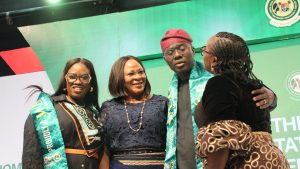
See more photos from the event below:




Happy
0 %

Sad
0 %

Excited
0 %

Sleepy
0 %

Angry
0 %

Surprise
0 %
 0
0
 0
0