
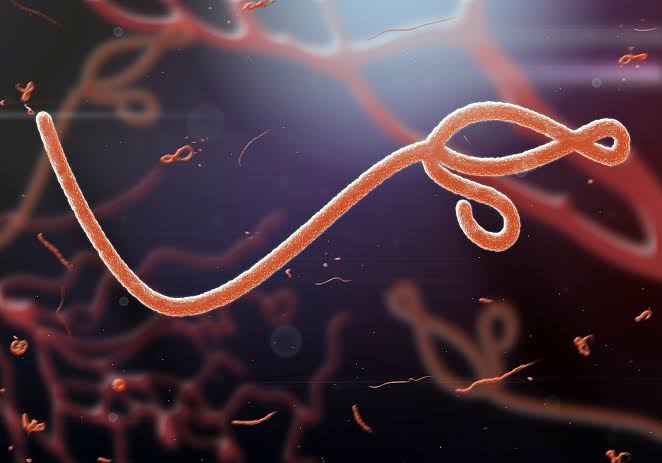
FG TIGHTENS BORDER SURVEILLANCE OVER FRESH EBOLA OUTBREAK
Read Time:3 Minute, 52 Second
By: Sefiu Ajape
The Federal Government has announced that it has “intensified surveillance at all points of entry” in response to the ongoing outbreak of Ebola Virus Disease in the Democratic Republic of Congo.
The Director of Port Health Services at the Federal Ministry of Health and Social Welfare, Dr. Akpan Nse, confirmed this in an interview with Saturday PUNCH on Friday. He also revealed that more personnel had been deployed to strengthen border monitoring.
Health officials in the DRC had earlier declared an outbreak in Kasai Province, where 28 suspected cases and 16 deaths—including four health workers—were recorded as of September 5, 2025. Tests conducted on September 3 at the National Institute of Biomedical Research in Kinshasa confirmed the cause as Ebola Zaire, a strain of the virus.
Dr. Nse said Nigeria remained at risk due to extensive travel connections with Congo but assured that measures had been reinforced. “We have intensified surveillance at all points of entry across the country airports, land borders, and seaports. Every inbound traveller coming from Congo to Nigeria is thoroughly screened, and we collect their medical history through mandatory forms.
“We have also reactivated our portals. Every passenger on every flight coming to Nigeria from Congo is screened upon arrival. This applies to airports, seaports, and land borders. Even if passengers transit through Congo on their way to Nigeria, they must undergo screening.
“In addition, with support from WHO, we have recruited more staff to enhance surveillance. Increasing the workforce allows us to effectively prevent the importation of the virus and ensure thorough screening at all borders.”
He added that private organisations were partnering with the government to ensure that thermal scanners at airports remained fully functional.
Meanwhile, WHO announced a $500,000 release from its Contingency Fund for Emergencies to support the DRC response. The organisation’s Director-General, Dr. Tedros Adhanom Ghebreyesus, said at a briefing that WHO teams were already in Kasai. “We’re joining rapid response teams to trace contacts and find cases; we’re collecting and testing samples, and we’re providing technical expertise in surveillance, infection prevention and control, treatment, risk communication, and more. WHO has also delivered personal protective equipment, laboratory equipment, medical supplies, and a mobile laboratory.
“We had previously prepositioned 2000 doses of Ebola vaccine in Kinshasa, which we are releasing to vaccinate contacts and health workers. This is the 16th outbreak of Ebola in the DRC, and the government has rich experience from those previous outbreaks.”
Back in Nigeria, experts have urged vigilance.
Dr. Oladipo Kolawole, Associate Professor of Infectious Diseases and Genomics at Adeleke University, said: “Everybody coming into the country, especially from DR Congo, must declare where they are coming from at the point of entry, and we must keep our surveillance system well-tightened.
“I think there is a bit of awareness about the virus in the country, and I’m very sure that all the institutions are on ground to handle things based on the experience we had previously on Ebola. I believe the Nigeria Centre for Disease Control and Prevention has a structured system in place that can handle that, and now they have expanded their lab to Lagos. The Nigeria Institute for Medical Research is also available in that regard, and they have a good structure to handle it.”
Similarly, Dr. Moses Adewumi, a virologist at the College of Medicine, University College Hospital, Ibadan, stressed the need for strong prevention. “We can’t stop people from travelling, but we need to ensure that surveillance is tightened… Early detection is the key to prevention.
“I hope the leadership in the country will improve on the surveillance system. This is the time for us to demonstrate preparedness, strengthen laboratory capacity, and ensure that our response teams are well-coordinated to prevent the importation of the virus in the country.”
Dr. Iorhen Akase, Head of the Infectious Diseases Unit at Lagos University Teaching Hospital, highlighted that risk of transmission arises only when an infected person shows symptoms. “The government should monitor the borders closely for somebody who’s already symptomatic is something the government is doing, I’m aware, with all the scanners they have,” he said.
He further urged Nigerians to be alert: “So, as a people, what can we do? I think the lesson there is that we need to all be very alert and know that surveillance, which the government is really doing, is to be on the lookout. If you have somebody in your community who is ill, let them go to the hospital. Anybody who is symptomatic, let them just go to the hospital to be checked.”


Happy
0 %

Sad
0 %

Excited
0 %

Sleepy
0 %

Angry
0 %

Surprise
0 %
 0
0
 0
0