
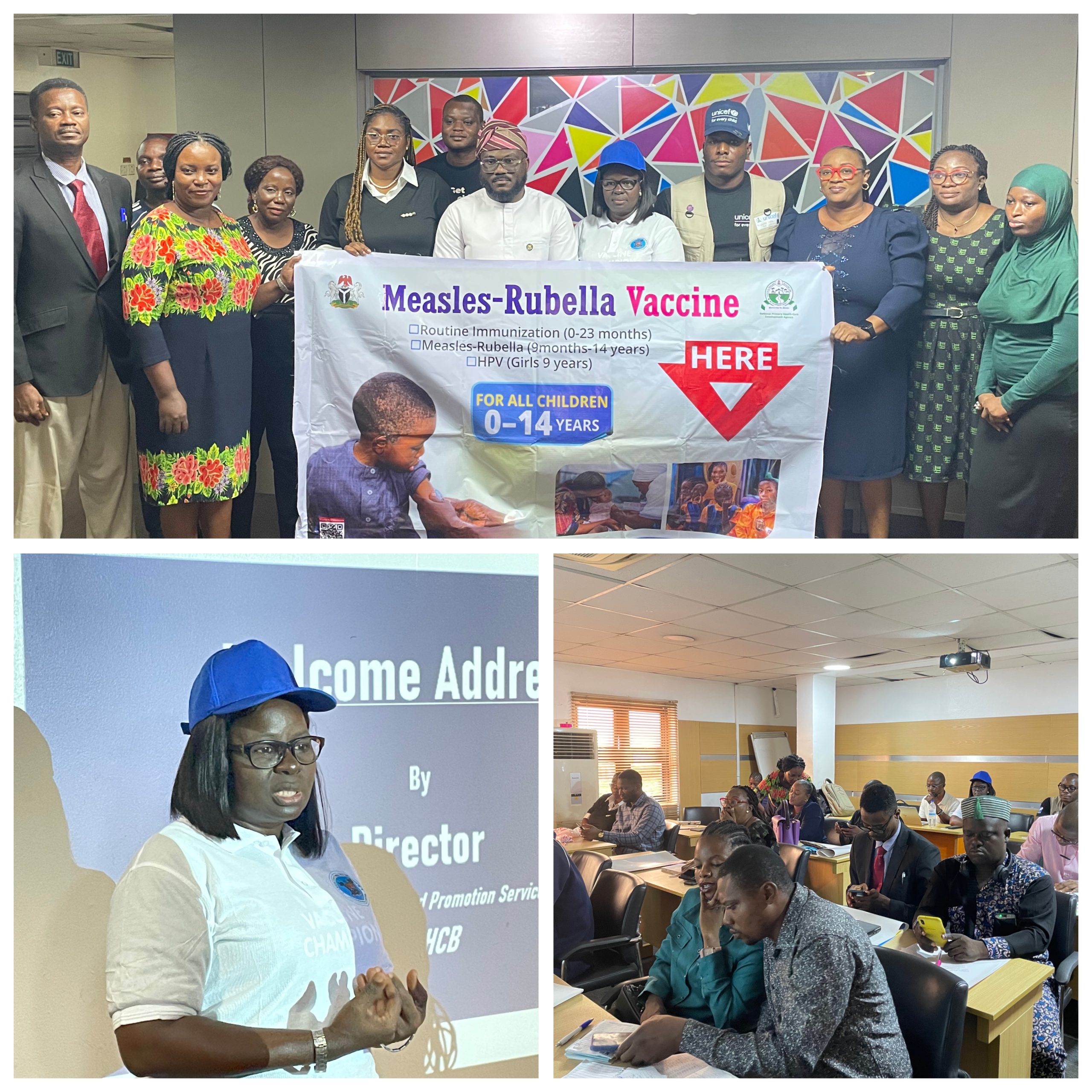
LAGOS STATE HOSTS MEDIA ORIENTATION ON INTRODUCTION OF MEASLES–RUBELLA VACCINE INTO ROUTINE IMMUNIZATION SCHEDULE
Read Time:3 Minute, 17 Second

By : Muftau Fatimo
A one-day Media Orientation on the introduction of the Measles–Rubella (MR) vaccine into Nigeria’s Routine Immunization (RI) programme was held on Tuesday, 6th January 2026, at the LCCI Conference and Exhibition Center, Alausa, Ikeja.
The orientation brought together health officials, programme managers, and media practitioners with the aim of strengthening collaboration between the health sector and the media in promoting accurate information, increasing public awareness, and encouraging community acceptance of the Measles–Rubella vaccination campaign.
Delivering the welcome address, Mrs. Grace Honfor, Director of Health Education and Promotion Services at the Lagos State Primary Health Care Board, highlighted the crucial role of the media as a strategic partner in public health communication.
She noted that journalists and media professionals are key to shaping public perception, correcting misinformation, and ensuring that caregivers understand the importance of timely vaccination in protecting children and communities.
She urged participants to actively support the campaign by disseminating verified and credible information that would boost public confidence in the Measles–Rubella vaccine.
Speaking on the objectives and expected outcomes of the engagement, Mr. Seyi Nubi( Unicef Lagos ) explained that the orientation was designed to equip media practitioners with accurate technical knowledge about the MR vaccine and the national vaccination campaign.
According to him, the expected outcomes include improved quality of media reporting, increased public trust, and higher vaccine uptake among eligible populations.
He emphasized that informed and responsible media engagement is essential to achieving optimal coverage and preventing outbreaks of measles and rubella.
The technical presentation and formal introduction of the Measles–Rubella vaccine was delivered by Dr. Matthew Adetola Akinpelu, Immunization Programme Coordinator (IPC). Dr. Akinpelu explained that measles is a highly contagious and potentially deadly disease, while rubella poses serious risks to unborn children when contracted by pregnant women, often resulting in Congenital Rubella Syndrome (CRS).
He emphasized that vaccination remains the most effective preventive measure against both diseases and described the MR vaccine as a safe, effective, WHO-prequalified and NAFDAC-certified combination vaccine that has been used globally for decades.
According to him, the most effective age for vaccination is between 9 months and 14 years, and all children within this age group are eligible to receive the vaccine during the campaign, regardless of their previous vaccination status.
Dr. Akinpelu further disclosed that the Measles–Rubella vaccination campaign in Lagos State will commence from January 20 to January 30, 2026, as part of Phase 2 of the national rollout.
He noted that the campaign will be conducted through public health facilities, schools, and designated outreach posts to ensure wide coverage and accessibility.
He added that the introduction of the MR vaccine into routine immunization will significantly reduce disease transmission, protect vulnerable populations, and support Nigeria’s commitment to measles and rubella elimination in line with global targets set for 2030.
Also speaking at the orientation, Mr. Shoboyejo Ayoade, Assistant State Health Education Officer (ACSM), delivered a detailed presentation on Advocacy, Communication, and Social Mobilization (ACSM).
He highlighted the importance of sustained community engagement, collaboration with traditional and religious leaders, and the strategic use of media platforms to mobilize caregivers and communities.
He stressed that effective advocacy and communication are vital in addressing vaccine hesitancy and ensuring accurate information reaches grassroots populations.
The programme concluded with closing remarks by Miss Adetayo Akitoye Asaba, Director of Public Affairs, who commended participants for their active engagement and reaffirmed the government’s commitment to child health and disease prevention.
She encouraged media professionals to continue partnering with health authorities to amplify accurate health messages and promote positive health-seeking behaviors.
The Measles–Rubella vaccination campaign targets children aged 9 months to 14 years and will be carried out at no cost to caregivers at public health facilities, schools, and designated outreach posts.
The campaign forms part of Nigeria’s broader strategy to reduce measles and rubella morbidity and mortality and to prevent Congenital Rubella Syndrome nationwide.


Happy
0 %

Sad
0 %

Excited
0 %

Sleepy
0 %

Angry
0 %

Surprise
0 %
 0
0
 0
0