
TINUBU VOWS TO TACKLE TERRORISM, HIGHLIGHTS ECONOMIC IMPACT OF INSECURITY
Read Time:2 Minute, 35 Second
By: Fasasi Hammad
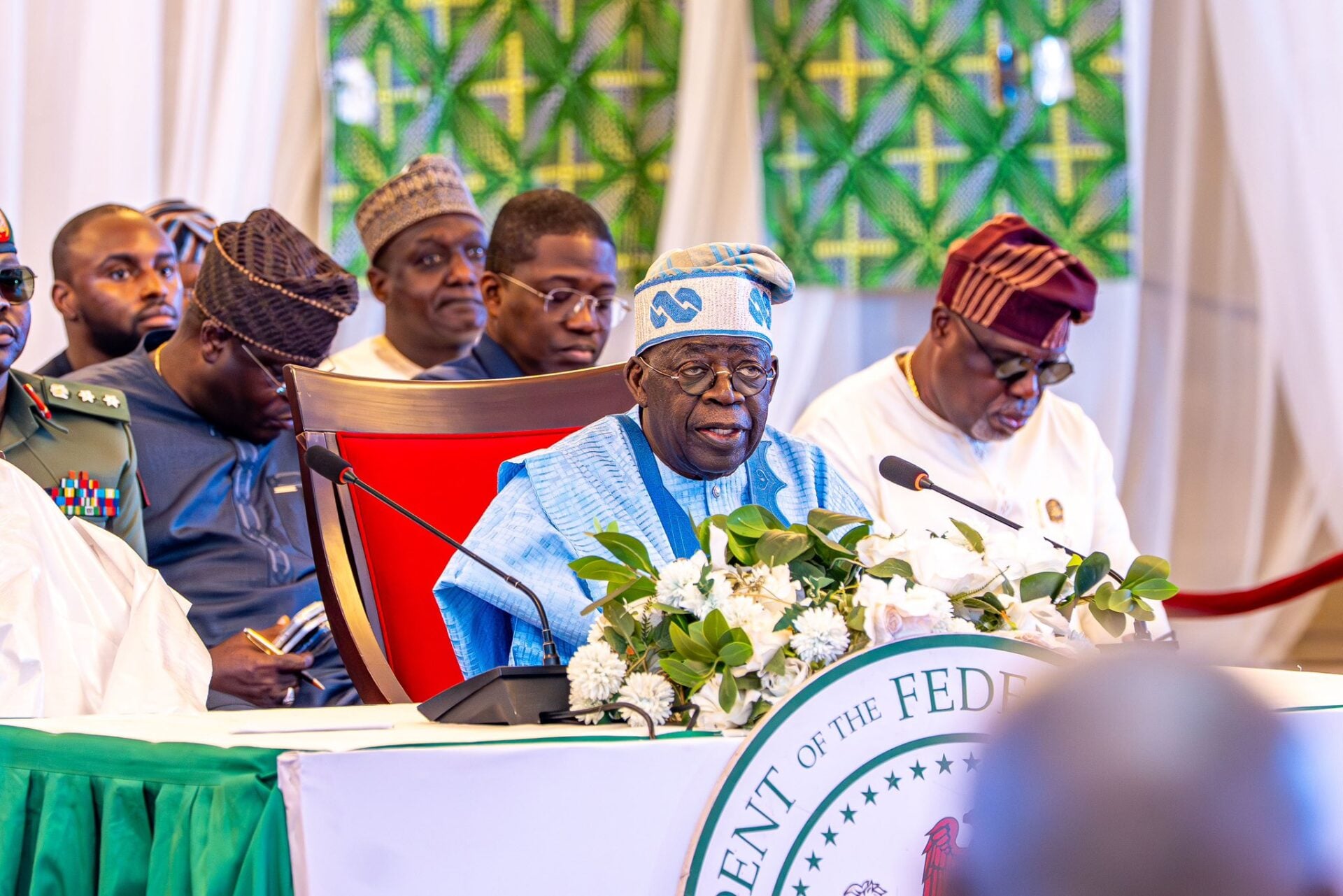
President Bola Tinubu on Monday highlighted the urgent need to tackle terrorism and banditry, warning that insecurity continues to affect Nigerians and undermine economic progress. He made the remarks while delivering his address at the second edition of the National Economic Council (NEC) conference.
“I believe we are here again to further find means to strengthen our security forces, to defeat terrorism and combat banditry,” Tinubu said. “That is what affects all of us—sleepless nights. But I assure you that we will prevail with determination and resilience.”
The president stressed that terrorism and banditry are alien to Nigeria’s culture and must be eradicated. “We will overcome this unacceptable terrorism and banditry; it is not part of our culture,” he said.
Tinubu warned that failure to address insecurity promptly would continue to hinder economic development. “It’s an economic hindrance if we do not find an immediate solution,” he noted. He also commended state governors, including those of Borno and Kaduna, for their efforts in combating insecurity and assured that the federal government would continue working with states to protect lives and property.
The president emphasized that strengthening security is central to achieving inclusive growth and the objectives of the Renewed Hope National Development Plan. He praised the NEC, chaired by Vice President Kashim Shettima, for providing a platform for policy coordination and strategic dialogue.
Tinubu also highlighted the positive impact of his administration’s economic reforms, saying they have helped stabilize the economy and restore investor confidence. “The monetary policy reforms we have embarked on have yielded positive results and gained recognition globally,” he said, commending the Central Bank of Nigeria under Governor Yemi Cardoso for restoring confidence in Nigeria’s monetary framework.
He further noted that state and local governments now receive increased and more predictable federal allocations, which strengthen their ability to pay salaries, invest in infrastructure, and deliver social services. The administration has also prioritized infrastructure development across transportation, power, digital connectivity, housing, and irrigation, alongside the expansion of social investment and human capital programs targeting vulnerable households, youth, women, and small businesses.
“The Renewed Hope Ward Development Project demonstrates our commitment to grassroots inclusion through a bottom-up approach to national development,” Tinubu said, emphasizing collaboration among federal and state governments, development partners, and the private sector.
Looking ahead, the president said the Renewed Hope National Development Plan 2026–2030 represents the next phase of Nigeria’s development, anchored on inclusive, resilient, and environmentally sustainable growth. “The plan prioritizes economic diversification, human capital development, subnational competitiveness, private sector-led growth, and climate resilience,” he noted. He stressed that its success depends on effective implementation at state and local levels, making NEC crucial in aligning national priorities with subnational realities.
Tinubu concluded that the conference reinforced collaboration, shared accountability, and a focus on practical solutions and measurable outcomes. “We must move decisively from declarations to implementation through data-driven decision-making, peer learning among states, and innovative financing models,” he said, expressing confidence that resolutions from the conference would advance agricultural diversification, including dairy farming, livestock investment, and ranching.


Happy
0 %

Sad
0 %

Excited
0 %

Sleepy
0 %

Angry
0 %

Surprise
0 %
 0
0
 0
0