
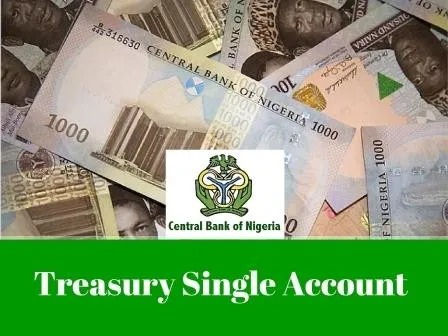
TEN YEARS OF THE TREASURY SINGLE ACCOUNT AND ITS IMPACT ON NIGERIA’S FISCAL LANDSCAPE
Read Time:4 Minute, 13 Second
By: Fasasi Hammad
Ten years ago, in August 2015, Nigeria made a transformative decision that reshaped the management of public finances. The full implementation of the Treasury Single Account (TSA) under the late President Muhammadu Buhari was far more than a routine policy—it was a structural reform addressing decades of fiscal mismanagement, constitutional breaches, and institutional opacity. A decade on, the impact of the TSA provides a compelling example of what can be achieved when political will aligns with technical capacity.
Powered by the indigenous fintech platform Remita, the TSA’s initial achievement was immediate and striking. On launch, it reclaimed over N3 trillion in government funds previously idle in commercial banks. These funds were never lost—they existed but remained invisible to treasury oversight, earning no returns and unavailable for budgetary use. The government had been paying billions in interest to borrow its own money, a paradox that alone justified the reform.
Yet the true measure of the TSA’s success lies not in the initial recovery but in the sustained transformation it has brought to public finance management. Over ten years, it has improved resource allocation, strengthened accountability, and enhanced transparency across Nigeria’s fiscal architecture.
READ MORE :
Before 2015, Nigeria’s revenue management system was fragmented and opaque. The federal government maintained over 17,000 bank accounts across commercial banks, many uncoordinated or inactive. Each Ministry, Department, and Agency (MDA) operated multiple accounts without central oversight, leaving the government unable to ascertain its true cash position.
This opacity generated fiscal inefficiencies. The government frequently borrowed at high interest rates to cover budget shortfalls while significant idle funds sat unused in banks. Constitutional violations were rampant: Section 80 of the 1999 Constitution mandates that all government revenue be paid into the Consolidated Revenue Fund, but the dispersed accounts made compliance nearly impossible. Revenue often disappeared into institutional black holes, bypassing parliamentary appropriation.
The fragmented system also enabled corruption. With thousands of unmonitored accounts, diversion of funds was routine. MDAs under-remitted collections, withheld taxes, and warehoused government funds to earn private interest. The pre-2015 architecture facilitated grand-scale financial mismanagement.
The TSA’s success depended on robust technology integrated with the Central Bank of Nigeria’s systems. Selecting Remita as the revenue and payment management backbone represented a major national achievement. By consolidating revenue flows into a single account, the TSA restored constitutional compliance, eliminated the debt paradox, and created transparency essential for effective fiscal management.
The results speak for themselves. Beyond reclaiming N3 trillion initially, by July 2019, the TSA had accounted for over N10 trillion in government collections. Implementation also yielded sustained fiscal discipline. In 2020, then-Finance Minister Zainab Shamsuna Ahmed reported that the government saved an average of N45 billion monthly in interest payments, thanks to improved liquidity management.
The TSA also strengthened monetary policy, providing better control over money supply and aiding currency stability. Monthly bank charges exceeding N24 billion and interest on short-term borrowing were eliminated, redirecting resources to productive use.
Institutionally, the TSA transformed MDA behaviour. Agencies that previously remitted minimal funds were compelled to increase contributions, as the system made fund concealment impossible. During the 2016 recession, the TSA’s visibility into cash positions allowed rational allocation of resources, stabilizing the economy without reliance on emergency external borrowing.
As the TSA enters its second decade, it remains Nigeria’s most successful fiscal reform. With fiscal pressures rising, the TSA provides a tested foundation for new initiatives. Yet challenges remain: some government funds still fall outside the TSA framework, highlighting areas for expansion and enforcement.
To sustain effectiveness, key steps are essential:
- Conduct a comprehensive review to optimize operational, administrative, and technological processes.
- Anchor the TSA in legislation that safeguards it from political interference.
- Maintain the use of indigenous technology like Remita, demonstrating that local solutions can meet national needs while developing the domestic tech market.
- Expand the TSA to include foreign exchange inflows, ensuring transparency across all government revenue streams.
A decade is long enough to judge the reform, and the TSA has passed decisively. It has recovered trillions, eliminated billions in waste, restored constitutional compliance, stabilized the economy during crises, and transformed institutional behaviour. More importantly, it proves that transparency and accountability in public finance are achievable realities.
The TSA is more than a revenue management tool; it represents a commitment to a government that operates transparently and within constitutional bounds. After ten years, the imperative is clear: the TSA must be strengthened, institutionalized, and protected. Weakening it would represent regression to the pre-2015 era of fiscal chaos and corruption.
Nigeria has demonstrated it can build and sustain world-class fiscal infrastructure. The TSA is proof. The next task is to expand and improve upon this foundation to secure the country’s fiscal future.
Valentine Achum is Advocacy Lead at Equal Trade Alliance, The Hague, and pursuing an M.Sc. in Applied Artificial Intelligence at Wittenborg University of Applied Sciences, Netherlands.


Happy
0 %

Sad
0 %

Excited
0 %

Sleepy
0 %

Angry
0 %

Surprise
0 %
 0
0
 0
0