
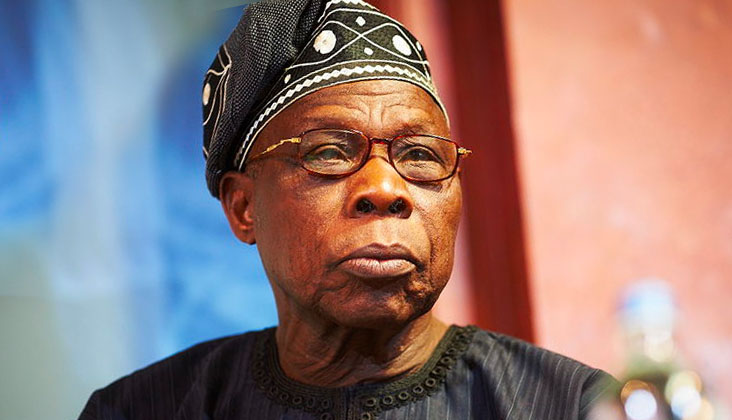
OBASANJO WARNS AFRICA NEEDS TRANSFORMATIONAL LEADERSHIP, REFLECTS ON BURDEN, BLESSING OF LEADING
Read Time:2 Minute, 6 Second
By Aishat Momoh. O.
Former President Olusegun Obasanjo on Wednesday lamented Africa’s prolonged leadership crisis, describing it as the main factor stunting the continent’s development, growth, and economic prosperity.
Speaking at a colloquium titled “Burden and Blessing of Leadership: Reflections from Global Africa to the World” in Abeokuta, held as part of activities marking his 89th birthday, Obasanjo said Africa is “not a problem to be managed but a promise to be fulfilled through honest, courageous, selfless, incorruptible and transformational leadership.”
Reflecting on his own experiences, he highlighted the personal costs of leadership, citing his imprisonment and near-execution under the late military ruler Sani Abacha as part of the burdens he bore while serving the nation.
Obasanjo condemned rumors circulating a fake letter claiming he was near death, dismissing them and asserting, “I dey kampe.”
The elder statesman criticized governance failures across Africa, noting that leaders often prioritize personal, familial, or political gain over the common good. He urged investments in leadership formation to cultivate individuals with integrity, accountability, and a commitment to service.
“By every measure of natural endowment, Africa should be a continent of prosperity, stability, peace, security and global influence,” he said, but added that leadership failures have instead left much of the continent “a theatre of preventable disease, suffering, starvation, conflict, insecurity and poverty.”
Obasanjo emphasized the importance of empowering Africa’s youth, warning that failing to educate, employ, and engage young people could sow seeds of instability for generations. He noted that Nigeria alone has 24 million out-of-school children, highlighting the risk of future recruits for insurgent groups.
Drawing on his tenure as military Head of State and two-term civilian president, he said leadership carries loneliness, the weight of decision-making, and the responsibility to uphold principles even when unpopular. He recounted critical moments, including the end of the Nigerian Civil War and the peaceful transition to civilian rule in 1979, as instances where leadership required courage, moral clarity, and sacrifice.
Obasanjo also reflected on achievements, such as securing the Paris Club debt relief and establishing the Economic and Financial Crimes Commission (EFCC), describing these efforts as blessings of leadership that positively impacted millions of Nigerians.
He concluded by urging current and aspiring leaders to prioritize accountability, transparency, and service to the people, reiterating that leadership is both a burden and a blessing.
“For my final note in this address… God has assured me that He has more for me to do on earth… I dey kampe as usual,” Obasanjo declared.


Happy
0 %

Sad
0 %

Excited
0 %

Sleepy
0 %

Angry
0 %

Surprise
0 %
 0
0
 0
0