
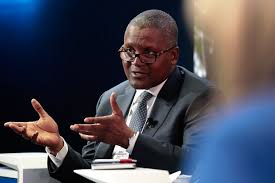
DANGOTE PUSHES AFRICAN-LED GROWTH, HIGHLIGHTS TRADE BARRIERS
Read Time:2 Minute, 50 Second
By; Ganiyat Sunmola
At an event hosted by the International Finance Corporation (IFC), Africa’s leading industrialist, Aliko Dangote, shared his vision for the continent’s economic transformation, highlighting structural barriers, investment strategies, and the need for African-led development.
Welcoming Dangote, IFC’s Managing Director, Makhtar Diop, described him as one of the world’s foremost investors and a transformative force in Africa’s industrial landscape. He noted that while IFC has long partnered with the Dangote Group, the focus of the conversation was on Dangote’s broader vision for Africa.
Dangote explained that his push for change led to the creation of the African Renaissance initiative, a platform designed to bring together like-minded African leaders committed to turning the continent’s long-discussed “potential” into tangible economic growth.
According to him, Africa’s progress is being slowed by systemic challenges, including restricted movement across borders. He cited the difficulty of intra-African travel, revealing that he requires dozens of visas to move across the continent—an issue he said discourages investment and limits economic integration.
He stressed that free movement of people, goods, and services remains critical to unlocking prosperity, noting that cross-border trade is often hampered by delays and inefficiencies. In some cases, he said, transporting goods between neighbouring African countries can take weeks due to border bottlenecks.
Dangote also pointed to high transportation and logistics costs as a major constraint. He observed that shipping goods within Africa can be more expensive than importing from Europe, while regional air travel remains unaffordable for many due to high fares.
On industrialisation, Dangote highlighted the development of the multi-billion-dollar refinery project in Nigeria, describing it as a bold step to address the paradox of an oil-rich country relying heavily on imported refined products. He disclosed that despite skepticism from global industry players, the project has reached full operational capacity of about 650,000 barrels per day.
He noted that the refinery has significantly reduced reliance on imports and demonstrated that large-scale industrial projects are achievable within Africa. Dangote added that such investments help build credibility and attract further capital into the continent.
Beyond refining, he outlined broader investments across key sectors, including fertiliser production, power generation, mining, and port infrastructure. He revealed plans to expand fertiliser output to position the company among the largest producers globally, while also investing in energy and logistics to support economic growth.
Dangote emphasised that Africa’s development must be driven by Africans, arguing that foreign investors are more likely to commit when they see strong local investment. He added that his group is exploring opportunities to list major assets, allowing Africans to invest and benefit directly through dividend returns.
He further highlighted the importance of agriculture and water infrastructure, noting that revitalising dams and expanding irrigation could boost food production, create jobs, and reduce poverty—particularly in vulnerable regions.
Dangote said the private sector, alongside institutions like IFC and the World Bank Group, must collaborate to address these challenges, combining capital, expertise, and policy support.
In his remarks, Diop reaffirmed IFC’s commitment to supporting Africa’s industrialisation, stressing the need for risk-taking, long-term investment, and stronger collaboration between governments, businesses, and development institutions.
The session concluded with both leaders expressing optimism about deepening partnerships aimed at accelerating Africa’s economic growth, improving livelihoods, and creating sustainable opportunities across the continent.


Happy
0 %

Sad
0 %

Excited
0 %

Sleepy
0 %

Angry
0 %

Surprise
0 %
 0
0
 0
0