
AJAERO INSISTS NLC CAN NEGOTIATE ALONE, REJECTS TUC’S POSITION
Read Time:2 Minute, 28 Second
By ‘Balogun Ibrahim
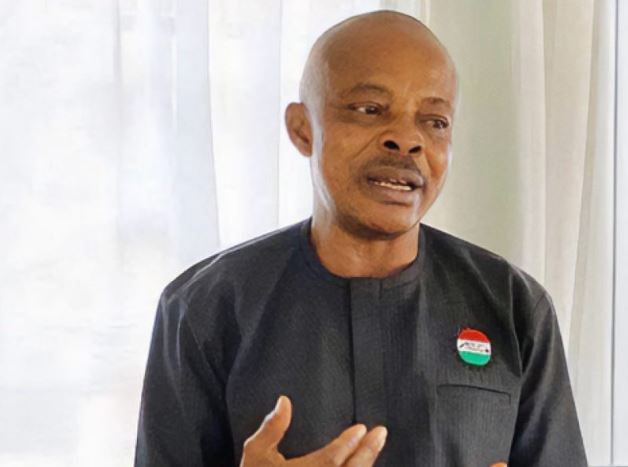
The President of the Nigeria Labour Congress, Joe Ajaero, has maintained that the union has the authority to negotiate labour matters independently, rejecting the position of his Trade Union Congress counterpart, Festus Osifo, that both labour centres must participate in such discussions.
Ajaero argued that while the TUC could join the NLC in negotiations, it could not independently engage labour authorities, citing what he described as the International Labour Organisation’s principle of representation based on the majority of workers.
He made the remarks on Monday during an appearance on Channels Television’s The Morning Brief, amid the dispute between the two labour organisations over the N70,000 transport allowance approved by the Federal Government for workers at all levels for six months.
According to Ajaero, the NLC could negotiate independently because it represented the majority of workers, while the TUC was expected to participate through the larger labour centre.
He claimed that the TUC had previously submitted its negotiation proposals directly ahead of an ILO conference, but the documents were returned, prompting him to intervene.
Ajaero said the TUC was required to forward its list to the NLC, which would then submit it to the relevant authorities, adding that the NLC determined how the TUC participated in the process.
He further argued that neither the Ministry of Labour nor other labour authorities would recognise the TUC as an independent negotiating body in such matters.
Addressing Osifo’s claim that the TUC represented a significant number of workers in the Federal Civil Service, Ajaero cited the Trade Union Amendment Act 2005 and the 1999 Constitution, which guarantee workers the right to choose their unions.
He said the 2005 amendment made trade union membership voluntary, allowing workers to decide which organisation they wished to join.
Ajaero also referenced Section 40 of the 1999 Constitution, as amended, which guarantees Nigerians the freedom to belong to any trade union, political or religious organisation of their choice.
He, however, disputed Osifo’s position on the number of workers represented by the TUC, arguing that the composition of the Joint National Public Service Negotiating Council did not support the claim.
According to him, only one of the eight union bodies represented in the joint council is affiliated with the TUC, while the remaining seven belong to the NLC.
He added that the TUC-affiliated union had subjected its authority to the joint council.
Explaining the circumstances surrounding the N70,000 transport allowance agreement, Ajaero said the NLC had issued an ultimatum to the Federal Government and was preparing to commence industrial action before the government requested further discussions.
He said the government sought a four-day window to meet with labour leaders, after which negotiations resumed and the transport allowance was introduced.
The NLC president also maintained that minimum wage demands could not be presented without the government first establishing a negotiation committee, stressing that wage adjustments required consultations among labour representatives, government officials and employers.


Happy
0 %

Sad
0 %

Excited
0 %

Sleepy
0 %

Angry
0 %

Surprise
0 %
 0
 0