
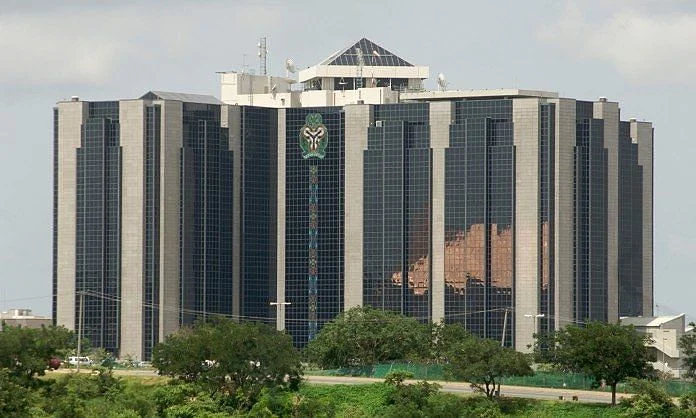
CBN SETS N15BN CAPITAL REQUIREMENT FOR DOLLAR-BACKED STABLECOIN ISSUERS
Read Time:3 Minute, 38 Second
By Aishat Momoh. O.

The Central Bank of Nigeria has introduced a minimum paid-up capital requirement of N15bn for companies issuing foreign currency-backed stablecoins, including digital tokens pegged to the United States dollar.
The requirement is part of new regulations governing virtual assets and digital payment services in Nigeria.
The provision is contained in the Regulations for the Operations of Non-Security Virtual Assets in Nigeria, released by the apex bank on Friday, following a circular dated November 5, 2026, and signed by the Director of the Payments System Policy Department, Musa Jimoh.
Under Section 15.2 of the regulations, the CBN stated that a Class 2 licensed issuer must maintain a minimum paid-up capital of N15bn at entry and throughout its operations.
The provision applies to Class 2 stablecoins, which are digital tokens designed to maintain a stable value against foreign currencies, including the US dollar.
The regulations also prescribe a lower capital threshold of N10bn for issuers of naira-referenced stablecoins, classified as Class 1, while companies providing other non-security virtual asset services must maintain at least N1bn in paid-up capital.
The CBN stated that Class 1 licensed issuers must maintain the N10bn minimum capital requirement or any higher amount the bank may prescribe.
For other virtual asset service providers, the regulations specify that the N1bn requirement must be maintained separately from capital committed to licences issued by the Securities and Exchange Commission or other regulatory authorities.
The new framework establishes different capital requirements for stablecoin issuers and other service providers, reflecting the varying financial and operational risks associated with their activities.
It also empowers the CBN to demand higher capital from operators based on their transaction volumes, market significance, redemption obligations, technology risks and exposure to the broader financial system.
The regulations further stipulate that capital must be separate from issuer reserves, the CBN reserve deposit, customer funds and assets, as well as operational liquidity.
This means operators cannot use the same funds to satisfy multiple regulatory obligations, including capital adequacy and reserves backing stablecoins already in circulation.
The regulations require eligible capital to be held as cash in designated accounts with the CBN or in approved Federal Government securities subject to the bank’s control.
Operators whose capital falls below the prescribed minimum must notify the CBN immediately and submit a restoration plan within 10 business days.
The regulator may restrict new token issuance or customer onboarding until the operator restores compliance.
Beyond capital requirements, the CBN introduced stricter rules on assets backing stablecoins, requiring issuers to maintain reserves equivalent to at least 100 per cent of outstanding obligations, alongside an additional two per cent buffer against potential losses.
The regulations also prohibit licensed issuers from creating new stablecoin tokens unless equivalent eligible reserve assets have been received and held in the designated reserve pool.
Stablecoin holders must be allowed to redeem their tokens at face value, generally no later than the next business day after submitting a valid request, without charges for standard redemptions.
The framework prohibits algorithmic stablecoins that rely primarily on supply adjustments rather than adequate reserve assets, as well as tokens linked to fiat currencies but backed mainly by other cryptocurrencies.
The CBN also introduced additional supervisory requirements for stablecoins whose circulating value exceeds N500bn for 30 consecutive days or which are used by more than five million people in Nigeria.
Such instruments will be classified as systemically important and subjected to enhanced regulatory scrutiny.
The framework further covers cryptocurrency exchanges, digital wallets, payment gateways, remittances, custody services and platform-facilitated peer-to-peer transactions.
It introduces obligations relating to anti-money laundering, terrorist financing, customer identification, transaction monitoring, cybersecurity, consumer protection and regulatory reporting.
The rules apply to both domestic and foreign operators offering regulated services to Nigerians, regardless of whether they maintain a physical office in the country.
However, the CBN clarified that securities-related virtual assets would remain under the jurisdiction of the SEC, with both regulators coordinating where their responsibilities overlap.
In the accompanying circular, the apex bank said the framework was designed to “promote responsible innovation, strengthen the integrity of the Nigerian financial system and provide an appropriate regulatory framework for emerging digital payment instruments.”
The regulations took effect on November 5, 2026, establishing a new licensing and supervisory framework for Nigeria’s expanding virtual asset payment market.


Happy
0 %

Sad
0 %

Excited
0 %

Sleepy
0 %

Angry
0 %

Surprise
0 %
 0
 0