
EDUCATION MINISTER WARNS TERTIARY INSTITUTIONS AGAINST BORROWING STAFF, EQUIPMENT FOR ACCREDITATION
Read Time:3 Minute, 12 Second

By; Sunmola Ganiyat
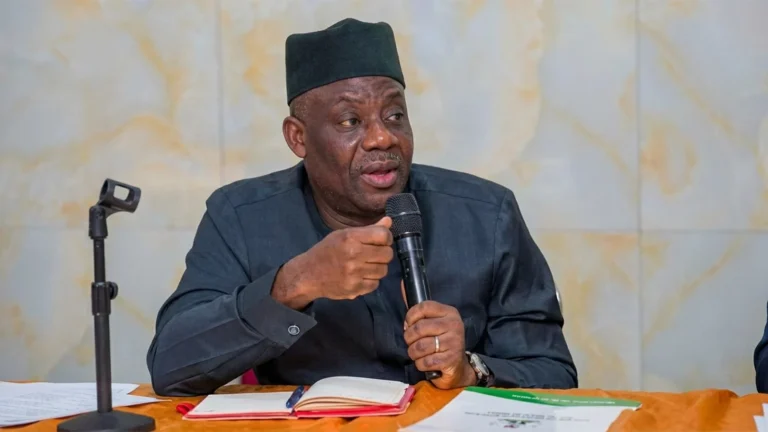
The Minister of Education, Dr Tunji Alausa, has warned tertiary institutions against presenting borrowed staff, equipment and facilities during accreditation exercises.
Alausa issued the warning on Wednesday during the inauguration of the Ministerial Committee on Strengthening Accreditation and Quality Assurance Systems for Tertiary Institutions in Nigeria.
The minister said the Federal Government was working to transform the country’s accreditation system from a periodic exercise into a continuous, digital and data-driven quality assurance process.
He stressed that accreditation exercises must provide an accurate representation of the actual capacity of universities, polytechnics and colleges of education to deliver quality education.
According to Alausa, institutions should no longer be allowed to create temporary impressions of their capacity simply to satisfy accreditation teams.
He said the government would address the practice of temporarily moving or borrowing academic and non-academic personnel, equipment, laboratory facilities, workshop resources, library materials and other infrastructure solely for accreditation purposes.
The minister maintained that everything presented before an accreditation team must reflect the actual and sustainable resources available to students.
To strengthen the process, Alausa said the government would deploy technology, including geospatial mapping, geotagging and digital identification systems, to verify institutional infrastructure, equipment and personnel.
He explained that critical equipment presented during accreditation should have unique digital records linking them to specific institutions and physical locations.
On staffing, the minister called for a comprehensive digital identity and staff verification framework to enable regulators to confirm the identity, presence and institutional affiliation of personnel presented by tertiary institutions.
He said the proposed system could leverage national identity infrastructure, including the National Identification Number, alongside other secure databases, subject to data protection regulations.
Alausa noted that the system should also be capable of identifying cases where an individual is improperly presented as full-time staff in more than one institution.
He said the reforms were necessary because the current accreditation model largely operates as a periodic exercise conducted every three to five years.
The minister advocated a shift towards continuous quality assurance, where institutions maintain prescribed standards throughout the year rather than make temporary preparations whenever accreditation teams are expected.
He added that a robust digital accreditation platform would allow regulators to continuously maintain and verify information on institutional staffing, facilities, laboratories, workshops and equipment.
According to him, physical accreditation visits would remain necessary but should increasingly serve to validate already verified data rather than commence the verification process from scratch.
Alausa said the approach would enable the National Universities Commission, National Board for Technical Education and National Commission for Colleges of Education to maintain reliable institutional records and improve coordination among regulatory bodies.
He disclosed that the Ministry of Education had recently held a collaborative meeting involving the three major tertiary education regulatory agencies and professional regulatory bodies, adding that the government was awaiting advice from the Attorney-General of the Federation on the next steps.
The minister said the creation of a digital platform serving as a single source of verified institutional data would help resolve regulatory conflicts and improve efficiency.
He charged the newly inaugurated committee to review the accreditation processes of the NUC, NBTE and NCCE and make practical recommendations for their modernisation.
Alausa said the ultimate goal was to establish an accreditation system that is credible, transparent, technology-driven, efficient and based on independently verifiable evidence.
Earlier, the Director of Polytechnic Education in the Federal Ministry of Education, Amy Igwe, said the committee was expected to help build a more robust and credible accreditation system.
Igwe acknowledged that some institutions had previously resorted to temporarily moving or borrowing staff and resources for accreditation exercises, expressing optimism that the proposed reforms would eliminate the practice.
She urged members of the committee to dedicate their time and expertise towards strengthening the accreditation system and protecting the interests of Nigerian students.


Happy
0 %

Sad
0 %

Excited
0 %

Sleepy
0 %

Angry
0 %

Surprise
0 %
 0
0
 0
0