
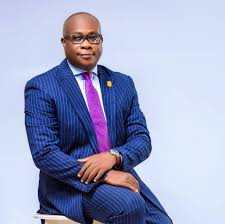
FROM BANKING TO POLITICS: THE JOURNEY OF AKEEM ADEBOLA YUSUF, OYO’S NDC GOVERNORSHIP CANDIDATE
Read Time:10 Minute, 2 Second
By:Tajudeen Aminat
Akeem Adebola Yusuf: From Ibadan Roots to Public Service
Akeem Adebola Yusuf was born in Ibadan North East Local Government Area of Oyo State, where he spent his formative years and developed the values that would later shape his career in leadership, finance and public service.
His early education laid a solid academic foundation. He attended the prestigious Government College, Ibadan, where he completed his secondary education between 1979 and 1984, earning his West African School Certificate. His years at the institution were marked by academic discipline and a growing interest in governance, leadership and national development.
Driven by a passion for understanding politics and public administration, Yusuf proceeded to the University of Ilorin, where he obtained a Bachelor of Science (B.Sc.) degree in Political Science between 1984 and 1988. The programme equipped him with a broad understanding of political systems, public policy, governance and democratic institutions—knowledge that would later complement his extensive professional career and political aspirations.
Recognising the importance of continuous learning and professional development, he expanded his academic qualifications with postgraduate studies at the University of Ibadan. Between 1995 and 1997, he earned a Master’s degree in Industrial and Labour Relations (MILR), deepening his expertise in human resource management, labour policy, conflict resolution and organisational relations.
He further strengthened his management and leadership credentials by obtaining a Master of Business Administration (MBA) in Management from the University of Ibadan between 2000 and 2002. The programme enhanced his strategic thinking, executive leadership and organisational management skills, preparing him for greater responsibilities in the corporate and financial sectors.
Committed to maintaining the highest professional standards in banking, Yusuf also pursued rigorous professional certification with the Chartered Institute of Bankers of Nigeria (CIBN). His dedication culminated in his elevation as a Fellow of the Chartered Institute of Bankers of Nigeria (FCIB), a distinction attained through years of professional excellence between 2001 and 2014. The fellowship represents one of the highest honours in Nigeria’s banking profession and reflects his extensive experience, integrity and contributions to the financial services industry.
With a strong educational background that combines political science, labour relations, business management and professional banking, Akeem Adebola Yusuf built a solid foundation for a distinguished career spanning several financial institutions within and outside Nigeria before venturing into partisan politics. His blend of academic excellence and professional expertise has positioned him as a leader with practical experience in governance, economic management and institutional development.
A Political Journey Inspired by the Olubadan
For Akeem Adebola Yusuf, politics was never part of his original career plan. Having built a successful career in the banking industry, his entry into public service came through the influence of one of Oyo State’s most respected political figures—the current Olubadan of Ibadanland, His Imperial Majesty Oba Rashidi Adewolu Ladoja.
According to Yusuf, it was Oba Ladoja who first introduced him to active politics after he resigned from the banking sector. The opportunity came when Ladoja served as Governor of Oyo State, a period Yusuf describes as a defining chapter in his life.
Working closely with the former governor, he said he gained first-hand experience of governance, public administration and the realities of political leadership. Beyond learning the mechanics of politics, he observed the demands of public office, policy formulation and the responsibilities that come with managing the affairs of a state.
That early exposure laid the foundation for his political journey.
Yusuf recalled that he formally began his political career with the Peoples Democratic Party (PDP), believing it offered him a platform to contribute meaningfully to the development of Oyo State.
However, his enthusiasm for politics was shaken by the wave of political violence and unrest that characterised the period. The experience, he said, left him deeply discouraged.
Reflecting on that period, Yusuf revealed that he informed Oba Ladoja of his decision to step away from politics, believing the environment no longer aligned with the ideals of service that had drawn him into public life.
His departure, however, proved to be temporary.
Despite the disappointment, Yusuf said his passion for public service never diminished. Over time, he found himself drawn back into the political space, convinced that meaningful change could only come through active participation rather than staying on the sidelines.
That conviction led him to join the Action Democratic Party (ADP) in 2018, where he continued to build his political profile and engage with grassroots stakeholders across Oyo State.
He later moved to the African Democratic Congress (ADC), remaining with the party until 2024. During that period, he said he deepened his understanding of the state’s political landscape and strengthened relationships with party leaders, community stakeholders and the electorate.
Speaking on his latest political move, Yusuf explained that he joined the Nigeria Democratic Congress (NDC) in 2026 after what he described as encouragement from respected political elders who had closely observed his character, commitment and style of leadership over the years.
According to him, the elders believed he possessed the qualities required to provide a different kind of leadership for Oyo State and subsequently welcomed him into the NDC, where he emerged as the party’s governorship candidate.
For Yusuf, the journey from banking to politics has been shaped by mentorship, setbacks, resilience and an unwavering commitment to public service. He believes each phase of his political evolution has prepared him for the task of seeking the mandate of the people of Oyo State.
During the interview, Yusuf was asked whether he had informed the Olubadan of Ibadanland, His Imperial Majesty Oba Rashidi Adewolu Ladoja, of his ambition to contest the Oyo State governorship election.
His response was unequivocal.
According to Yusuf, the monarch was among the first prominent personalities he informed after deciding to seek the state’s highest office. He disclosed that the Olubadan not only received the news warmly but also offered prayers and words of encouragement for his political journey.
Yusuf noted that the traditional ruler remains well informed about developments across Oyo State, describing the Olubadan as a leader who is deeply connected to the affairs of the state.
“There is virtually nothing happening in Oyo State that Kabiyesi is unaware of,” Yusuf said during the interview, adding that the monarch’s wealth of experience and understanding of the state’s political landscape continue to inspire confidence among leaders and stakeholders.
He further revealed that since informing the Olubadan of his governorship ambition, efforts within his political camp have intensified, with members of his team working tirelessly behind the scenes to strengthen the campaign and prepare for the electoral contest.
The discussion also turned to the growing profile of the Nigeria Democratic Congress (NDC) and questions surrounding the party’s political strength ahead of the election.
Asked how formidable the NDC had become, Yusuf declined to reveal the party’s internal strategy, insisting that doing so would amount to exposing carefully laid plans to political opponents.
According to him, every serious political party has strategies it keeps confidential, and the NDC is no exception.
He suggested that much of the party’s work is taking place away from the public eye and maintained that revealing its organisational strength or campaign structure at this stage would only provide rival parties with an unnecessary advantage.
Without going into specifics, Yusuf expressed confidence in the party’s preparations, stressing that the NDC would continue to focus on grassroots mobilisation and strategic engagement while allowing its performance to speak for itself as the election draws closer.
As the interview progressed, Akeem Adebola Yusuf spoke extensively about his vision for Oyo State, the future of the Nigeria Democratic Congress (NDC), and his confidence in the emerging political coalition ahead of the 2027 general elections.
Responding to questions on the alliance involving Labour Party presidential candidate Peter Obi and former Kano State Governor Rabiu Musa Kwankwaso, Yusuf expressed optimism that the coalition would pose a formidable challenge in the next presidential election.
According to him, the political landscape has changed significantly since the last election, with more Nigerians identifying with the movement.
He maintained that the coalition has grown stronger, insisting that the increasing support it enjoys across the country would improve its chances at the polls.
Turning his attention to Oyo State, Yusuf said his ambition goes beyond winning an election, stressing that his goal is to ensure that development reaches every part of the state.
He pledged that, if elected governor, government policies and development programmes would not be concentrated in major urban centres but would be extended to all the 33 local government areas.
“We cannot continue to develop only a few cities while the rural communities remain behind. Every part of Oyo State deserves equal attention and equal opportunities,” he said.
Agriculture, according to Yusuf, will be one of the major pillars of his administration’s economic agenda.
To illustrate the opportunities available within the sector, he cited Sepeteri in Saki East Local Government Area, where, according to him, vast quantities of cashew fruits go to waste every year despite the enormous commercial value of the crop.
He argued that with the right investment in processing facilities, value chains and agro-industrial development, products that are currently wasted could become a major source of employment and revenue for thousands of young people.
For Yusuf, agriculture is not merely about farming; it is about creating industries, generating wealth and building sustainable livelihoods across rural communities.
Speaking on his qualifications for the governorship, Yusuf pointed to his extensive career in the banking sector, describing it as evidence of his capacity to manage people, institutions and resources effectively.
He noted that he worked with several financial institutions within and outside Nigeria, where he acquired practical experience in leadership, strategic planning and financial management.
He also disclosed that in 2014, he attended the prestigious National Institute for Policy and Strategic Studies (NIPSS), Kuru, Plateau State, describing the experience as one that broadened his understanding of governance, national development and public policy.
Yusuf further pledged to strengthen local government administration by promoting greater autonomy for councils across Oyo State, arguing that governance becomes more effective when development is driven closer to the grassroots.
During the programme, a listener asked whether the political elders who encouraged him to join the NDC and eventually emerge as the party’s governorship candidate would seek to control his administration if elected.
Yusuf dismissed the suggestion, saying those who invited him into the party already understood his personality, values and principles.
According to him, while he values the wisdom and experience of political leaders, his decisions would always be guided by the overall interest of the people.
“I will always welcome advice and different opinions,” he said. “But every recommendation will be carefully reviewed, and I will only implement what serves the best interest of the people of Oyo State.”
He also identified youth empowerment, employment generation and agricultural transformation as central pillars of his administration, insisting that the state’s greatest asset remains its youthful population.
Rather than relying solely on government employment, Yusuf said his administration would create an environment that encourages entrepreneurship, agro-processing, investment and private sector growth capable of generating sustainable jobs.
On the issue of accessibility, Yusuf promised that, if elected, his administration would maintain regular engagement with residents across the state.
Drawing from his years in the banking industry, he said governance should be continuously evaluated just as organisations assess their performance.
Borrowing a phrase from the financial sector, he described the proposed engagements as a form of “performance measurement”—a platform through which citizens would periodically interact directly with the governor, assess government performance, express concerns and contribute ideas for better governance.
For Yusuf, leadership is not defined by occupying public office but by listening to the people, measuring performance and making adjustments that improve their quality of life.
As the interview drew to a close, one message remained consistent throughout his responses: his desire to translate decades of corporate experience, political exposure and policy knowledge into what he believes would be a people-centred administration focused on inclusive development across every community in Oyo State.


Happy
0 %

Sad
0 %

Excited
0 %

Sleepy
0 %

Angry
0 %

Surprise
0 %
 0
0
 0
0