

HAITIAN-CANADIAN AUTHOR DENIES AI CLAIMS OVER AWARD-WINNING NOVEL
Read Time:2 Minute, 7 Second

By ‘Balogun Ibrahim
Haitian-Canadian author Thélyson Orélien has denied allegations that artificial intelligence was used to write most of his debut novel, C’était ça ou mourir (It Was Either That or Die), which recently won France’s Prix du Roman Fnac.
The 38-year-old writer came under scrutiny after an X account, Balance ton Claude, claimed that several passages from the novel were generated using AI.
The account said it tested excerpts from different sections of the book with Pangram, an AI-detection tool, and claimed the passages returned a 100 per cent AI-generated result.
READ MORE…
NECO RELEASES 2026 SSCE RESULTS, RECORDS 64.74% DROP IN EXAM MALPRACTICE
However, Orélien rejected the allegation, describing it as an attack on his work and insisting that he wrote the novel himself.
“I have always loved creation and literature. I can’t see why I would feel compelled to use a machine,” he told French newspaper Libération, according to the BBC.
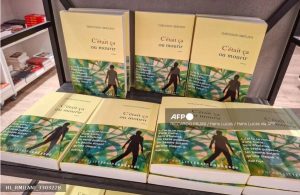
Copies of the novel C etait ca ou mourir It Was That or Die by Thelyson Orelien are displayed on a bookstore table, with their yellow cover and the graphic illustration occupying the lower part. Paris, France, September 23, 2026. The quote highlighted on the cover underlines the strength of the text, while the mention of the fall literary season places the work in current publishing news. (Photo by Riccardo Milani / Hans Lucas / Hans Lucas via AFP)
The author said he was working with his French and Canadian publishers to compile evidence demonstrating that he was responsible for writing the book.
Orélien said the novel’s language and imagery were rooted in his Haitian and Caribbean background.
His French publisher, Grasset, also defended the author, describing the allegations as damaging and insisting that his work was original.
The controversy comes as Orélien’s debut novel continues to attract attention in the French literary world. The book is also reportedly in contention for the prestigious Goncourt and Renaudot prizes.
The novel tells the story of a teacher who escapes gang violence in Haiti and eventually travels to Canada, where he finds a new sense of freedom and security.
Born in Gonaïves, Haiti, in 1988, Orélien moved to Montreal in 2010 and later worked as a journalist in Canada.
The author said he wrote the first draft of the novel in 2019, before generative AI writing tools became widely accessible.
The allegations have also reignited debate over the accuracy and reliability of AI-detection tools in identifying machine-generated writing.


Happy
0 %

Sad
0 %

Excited
0 %

Sleepy
0 %

Angry
0 %

Surprise
0 %
 0
0
 0
0