
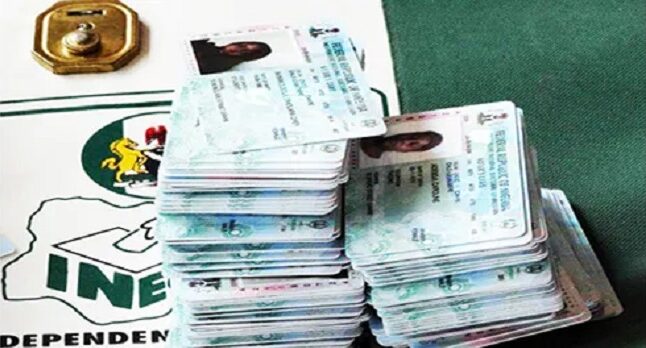
INEC ASSURES INCLUSIVE VOTING FOR PWD’s
Read Time:3 Minute, 31 Second
The Independent National Electoral Commission has reaffirmed its dedication to guaranteeing that individuals with disabilities are not marginalized from participation in the 2027 general elections.
The commission announced an enhancement of protocols designed to dismantle physical, communicative, and procedural impediments that obstruct the exercise of electoral rights by persons with disabilities.
On Monday, during a sensitisation workshop convened at the Hajiya Amina Inuwa Gombe Hall to address disability inclusion, accessibility, and electoral interventions, Umar Gajiram, the Resident Electoral Commissioner for Gombe State, articulated these views via Administrative Secretary Fadimatu Bakari.
Gajiram asserted that every Nigerian citizen possesses an unequivocal right to engage in the electoral process, regardless of whether they are afflicted by physical, visual, hearing, or any other form of disability.
He said, “As an electoral body, INEC recognises that PWDs have the same rights as every other citizen. Their votes matter, their voices matter, and their participation is important to the growth of our democracy.”
He explained that the commission had introduced measures, including assistive materials, improved polling unit accessibility, training of electoral officials and collaboration with disability organisations, to promote inclusive elections.
However, he cautioned that providing such interventions was not enough without ensuring their effective implementation.
“Having these measures in place is not enough. We must ensure that they are properly understood and put into practice. This is why today’s programme brings together PWDs, Electoral Officers and Disability Desk Officers. We want to share information, listen to your experiences, understand the challenges you face and find practical ways of addressing them before the 2027 General Election,” he said.
Also speaking, the Assistant Director, Youth, at INEC headquarters, Bukar Maikwada, said the workshop was organised to strengthen stakeholders’ understanding of disability inclusion and ensure the effective deployment of the commission’s interventions ahead of the 2027 general elections.
Maikwada said the participation of persons with disabilities as voters, candidates and election personnel was central to building an inclusive, accessible and credible democracy.
He said the commission’s commitment to addressing barriers throughout the electoral cycle was anchored on Section 54 of the Electoral Act, 2026, the Discrimination Against Persons with Disabilities (Prohibition) Act, 2018, and INEC’s Framework on Access and Participation of Persons with Disabilities in the Electoral Process.
According to him, the workshop would create awareness about the barriers faced by persons with disabilities and strengthen participants’ understanding of physical, information, communication and procedural accessibility.
He listed some of the commission’s interventions to include Braille Ballot Guides for visually impaired voters, EC30 PWD Written Instruction Posters for deaf voters, magnifying glasses for persons with visual impairment and albinism, as well as voter education materials in Braille, jingles, flyers and posters.
Maikwada said the training would also equip electoral officers with the knowledge required to determine where, when and how the assistive materials should be deployed.
He emphasised the need for effective coordination among INEC officials, the Joint National Association of Persons with Disabilities, Organisations of Persons with Disabilities and cluster heads to ensure that the interventions reached their intended beneficiaries.
He further called for inclusive voter education and mobilisation through disability clusters, special schools, camps and settlements, urging JONAPWD to take ownership of sensitisation activities within their respective clusters.
“The participation of PWDs as voters, candidates and election personnel is central to an inclusive, accessible, credible and participatory democracy. The Commission therefore remains committed to identifying and addressing barriers across the entire electoral cycle,” he said.
On the expected outcome of the workshop, Maikwada said it would provide an opportunity for stakeholders to assess previous elections, identify gaps and develop practical recommendations for implementation at national, state, local government and grassroots levels.
He said, “This workshop is about moving from awareness to practical action. The availability of inclusive interventions is only one part; effective deployment, communication, utilisation and monitoring are equally critical areas that should not be taken for granted.”
He urged stakeholders to strengthen collaboration and ensure that disability inclusion was treated as a collective responsibility rather than the sole responsibility of INEC.
Maikwada expressed confidence that sustained sensitisation, targeted mobilisation, accessibility measures and proper deployment of assistive materials would help deliver a more inclusive and participatory electoral process in 2027.
HOTJIST NEWS


Happy
0 %

Sad
0 %

Excited
0 %

Sleepy
0 %

Angry
0 %

Surprise
0 %
 0
 0