
SANWO-OLU UNVEILS NEW LAGOS HEALTHCARE BLUEPRINT, TARGETS WIDER ACCESS AT 2ND EKO HEALTH CONVENTION
Read Time:8 Minute, 38 Second
By ‘Sefiu Ajape, ‘Balogun Ibrahim
-
Lagos Needs 40,000 Doctors, Currently Has 7,000
-
Ilera Eko Enrollment Hits 1.5 Million
-
Malaria Prevalence In Lagos Drops To 2%
Governor Babajide Sanwo-Olu on Thursday unveiled a new roadmap for healthcare development in Lagos State, declaring that the next phase of the state’s health reform agenda will focus on building a system that combines wider access with higher standards of care.
The governor made the announcement while declaring open the 2nd Eko Health Convention, a two-day gathering organised by the Lagos State Ministry of Health at the Oriental Hotel, Victoria Island, from Thursday, August 6 to Friday, August 7, 2026.
Speaking on the convention’s theme, “Building a Healthier Lagos: Connecting Access with Excellence,” Sanwo-Olu said his administration was moving beyond the delivery of projects to creating institutions and systems capable of sustaining quality healthcare for residents.
According to him, the theme captured the central challenge facing healthcare delivery by ensuring that quality services are not only available but also reachable.
“Access without excellence is a queue. It is a clinic within walking distance where the drugs have run out. Excellence without access is a showpiece. It is a world-class hospital that a mother in Ajegunle will never enter. Lagos is not interested in either,” Sanwo-Olu said.
He said the administration was committed to creating a healthcare system where quality medical care is available to every resident regardless of location or economic status.
“From promises kept to systems built. Because delivering a project is one thing. Building an institution that will still be delivering when all of us in this hall have moved on is another thing entirely,” he said.
A major component of the roadmap is the expansion of digital healthcare through the Lagos Smart Health Information Platform (SHIP), the state’s health information exchange system.
Sanwo-Olu disclosed that SHIP has achieved about 30 per cent implementation in its first phase, covering general hospitals, teaching hospitals and more than 300 primary healthcare facilities across the state.
He explained that the platform would enable patients’ medical records to move seamlessly across health facilities, eliminate unnecessary repeat tests and strengthen clinical decision-making through improved data integration.
“When the record travels, the clinician sees the whole patient. When the data comes together, the policymaker sees the whole city. We move from reacting to anticipating,” he said.
The governor also highlighted the growing impact of the state’s health insurance programme, revealing that 1,502,994 Lagos residents had enrolled in the Ilera Eko Health Insurance Scheme as of the end of May 2026.
According to him, more than half of those enrolled are women, while increasing utilisation of the scheme demonstrates that health insurance coverage is translating into actual access to healthcare services.
Sanwo-Olu said reforms in healthcare financing were aimed at protecting residents from catastrophic out-of-pocket medical expenses.
He disclosed that the LASHMA Assistance in Distress programme, introduced to ensure emergency patients receive immediate treatment regardless of their financial status, has saved 18 lives since becoming operational in March.
The intervention, he said, has supported victims of road traffic crashes, surgical emergencies, obstetric complications and stroke cases.
“In an emergency, a Lagosian should be stabilised first and asked about payment afterwards,” he said.
Sanwo-Olu also reaffirmed the government’s commitment to strengthening healthcare regulation and eliminating quackery across the sector.
“A licence is a promise to a patient. We intend to keep it on their behalf,” he said.
Highlighting the challenges confronting the health sector, the governor disclosed that Lagos requires about 40,000 doctors to adequately serve its growing population but currently has only about 7,000, while also facing a shortage of approximately 40,000 nurses.
He said government was responding through aggressive recruitment, improved welfare packages, healthcare worker accommodation and increased investment in medical education.
Sanwo-Olu further revealed that Lagos faces a healthcare funding gap of about ₦100 billion between current budgetary allocations and the sector’s actual needs, noting that declining donor support has made sustainable financing reforms increasingly important.
He announced plans to establish a dedicated University of Medicine and Health Sciences to significantly expand the production of doctors, nurses, pharmacists and other healthcare professionals.
According to the governor, the true measure of success would not be the number of hospitals built but whether the systems established continue serving residents for generations.
“A system is not the sum of its buildings. It is what continues to function when the person who commissioned the building has gone,” he said.
Earlier, Commissioner for Health, Prof. Akin Abayomi, described the Eko Health Convention as a collaborative platform bringing together every stakeholder in the healthcare ecosystem to shape the future of healthcare delivery in Lagos.
“The Ministry of Health is not the Ministry of Health for public facilities. It’s the Ministry of Health for all Lagosians,” Abayomi said, stressing that government oversight extends across the public, private and informal healthcare sectors.
He added that traditional medicine practitioners, alternative medicine providers and patent medicine vendors must also be effectively regulated to guarantee safe and quality healthcare for residents.
Abayomi said Lagos was positioning itself as a leading medical tourism destination through the expansion of specialist healthcare facilities capable of attracting highly skilled Nigerian professionals practising abroad.
“If you’re a brain surgeon, you should be able to come back to Lagos and do brain surgery. You can’t do brain surgery in an ordinary hospital. It needs to be a hospital that is specially set up,” he said.
He also disclosed that the Lagos State College of Medicine would transition into a broader University of Medicine and Health Sciences to expand the state’s training capacity.
On the migration of healthcare professionals, Abayomi said government was pursuing a brain gain strategy rather than opposing migration.
“We are not against Japa. You want to go somewhere to explore and see how things are done differently. But what we need is a circular movement, go out, gain experience and come back to implement what you have learnt,” he said.
He added that technology would continue bridging healthcare gaps through telemedicine, virtual learning and remote access to specialist expertise.
The commissioner also urged residents to embrace health insurance and seek proper diagnosis before taking medication, warning against self-diagnosis of malaria.
According to him, rapid diagnostic testing has reduced malaria test positivity in public health facilities from about 60 per cent to around 5 per cent, while malaria prevalence in Lagos has declined from about 15 per cent fifteen years ago to approximately 2 per cent, bringing the state close to pre-elimination status.
“Let’s do the test, make sure it’s not malaria. If it’s not malaria, then we investigate to find out what it really is,” he said.
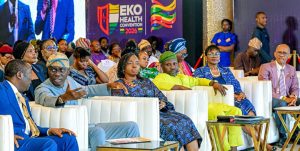
During a one-on-one conversation, the Permanent Secretary of the Lagos State Ministry of Health, Dr. Dayo Lajide, engaged the Deputy Governor of Lagos State, Dr. Obafemi Hamzat, in a discussion on the state’s ongoing healthcare reforms and the government’s vision for improving the quality of healthcare for residents.
Responding to questions from Lajide, Hamzat highlighted the importance of sustained investment in healthcare infrastructure, digital innovation, workforce development and strategic partnerships to build a resilient health system capable of meeting the needs of Lagos’ growing population.
He also stressed the need for continuity in healthcare policies and stronger collaboration among stakeholders to deliver better health outcomes for residents.
Also speaking, the Special Adviser to the Governor on Health, Dr. Kemi Ogunyemi, urged healthcare workers to remain committed to building the state’s health system, assuring them that government was investing in skills development, innovation and professional growth.
“We want them to stay. We are increasing capacity and skilling our healthcare workers,” Ogunyemi said.
She described the convention as an opportunity to showcase ongoing reforms and encourage healthcare professionals to contribute actively to the state’s transformation agenda.
“Government cannot do it all. We need everybody,” she added, noting that professionals who have relocated abroad could also contribute by returning with new knowledge and experience.
In her presentation titled “First, Do No Harm: Building a Culture of Patient Safety,” the Executive Secretary of the Lagos State Health Facility Monitoring and Accreditation Agency (HEFAMAA), Dr. Victoria Egunjobi, stressed that patient safety must remain the foundation of healthcare delivery.
She noted that globally, four out of every 100 patients die from avoidable harm, while another 12 per cent suffer permanent disabilities.
“These are not just statistics; they are real people and real families. Patient safety must therefore become an intentional effort across the health sector,” she said.
According to Egunjobi, HEFAMAA is shifting beyond routine licensing, inspections and monitoring by placing greater emphasis on accreditation and quality assurance.
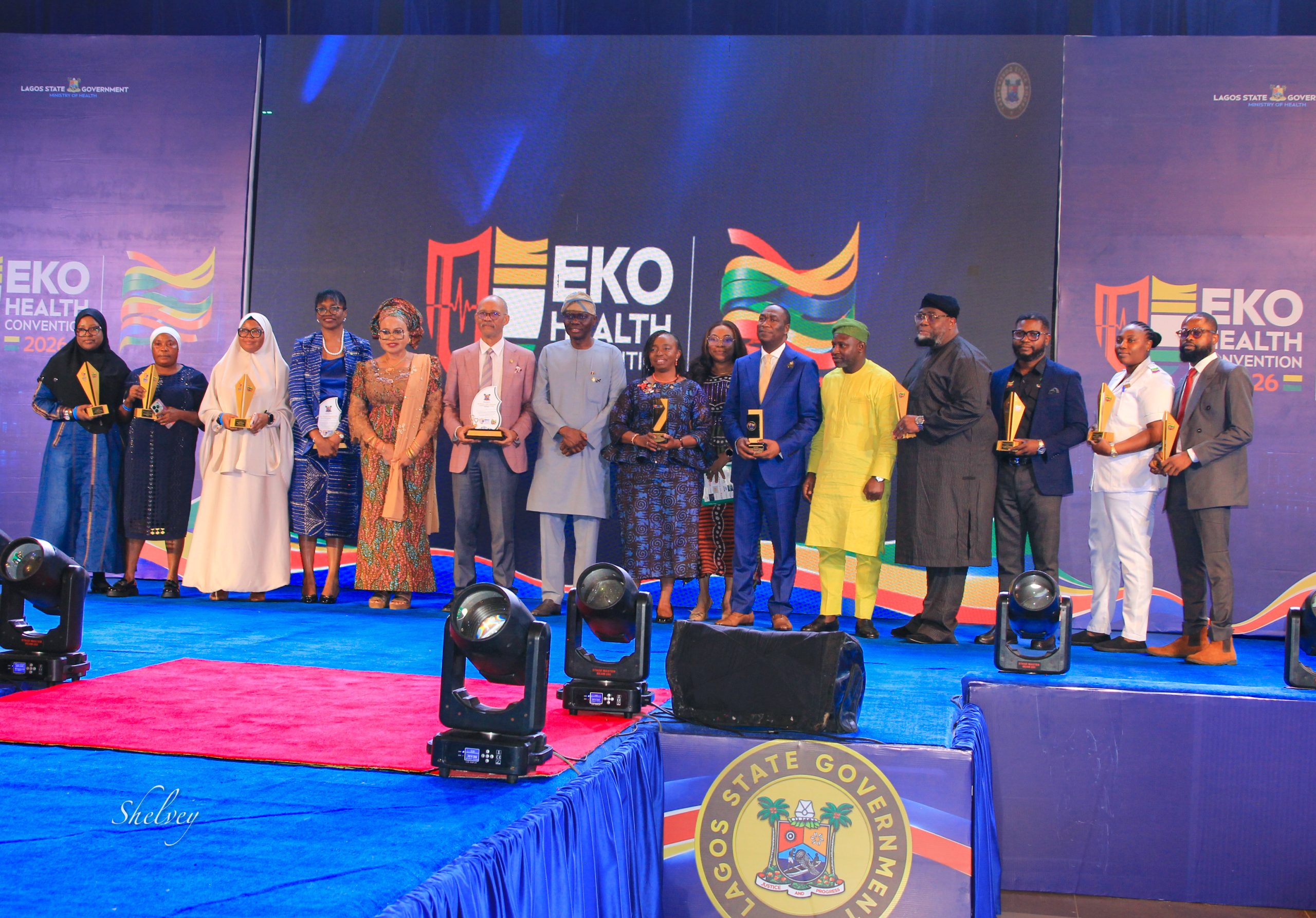
The convention also featured the presentation of the Eko Health Awards, where outstanding healthcare professionals and public servants were honoured for their contributions to healthcare delivery in Lagos State.
Recipients included Dr. Jafet Olugogi, Pharmacist Halimat Adedeji, Health Attendant Shakirat Taiwo Durosimi of Ojo Primary Health Centre, Principal Nursing Officer Victoria Oyinloye Agbose of Orile-Agege General Hospital, Chief Medical Laboratory Scientist Ayonbisi Taibat of Gbagada General Hospital, Resident Physician Dr. Sulaiman Nasiru of LASUTH, alongside senior officials of the Ministry of Health.
Senior government officials, including Commissioner for Health Prof. Akin Abayomi, Special Adviser on Health Dr. Kemi Ogunyemi, Deputy Governor Dr. Obafemi Hamzat and Governor Babajide Sanwo-Olu, were also recognised for their contributions to healthcare reforms in Lagos State.
The 2nd Eko Health Convention continues on Friday, August 7, 2026, with more keynote presentations, panel discussions, policy dialogues and technical sessions expected to focus on digital innovation, health systems strengthening, financing, workforce development and strategic partnerships.
As Lagos State’s flagship health summit, the convention brings together policymakers, healthcare professionals, researchers, development partners, investors, innovators, academia, private sector organisations and community stakeholders to shape the future of healthcare in the state.
The 2026 edition highlights how technology, collaboration and stronger health systems can improve access to quality healthcare while creating opportunities for innovation, investment and sustainable partnerships.
Beyond the discussions, the convention serves as a platform for knowledge exchange, policy dialogue, strategic collaboration and the celebration of excellence across the health sector, with more key announcements and engagements expected as the event enters its second day.


Happy
0 %

Sad
0 %

Excited
0 %

Sleepy
0 %

Angry
0 %

Surprise
0 %
 0
0
 0
0