
LAGOS MOVES TO TIGHTEN COSMETIC REGULATION AMID SAFETY CONCERNS
Read Time:3 Minute, 3 Second
By ‘Sefiu Ajape

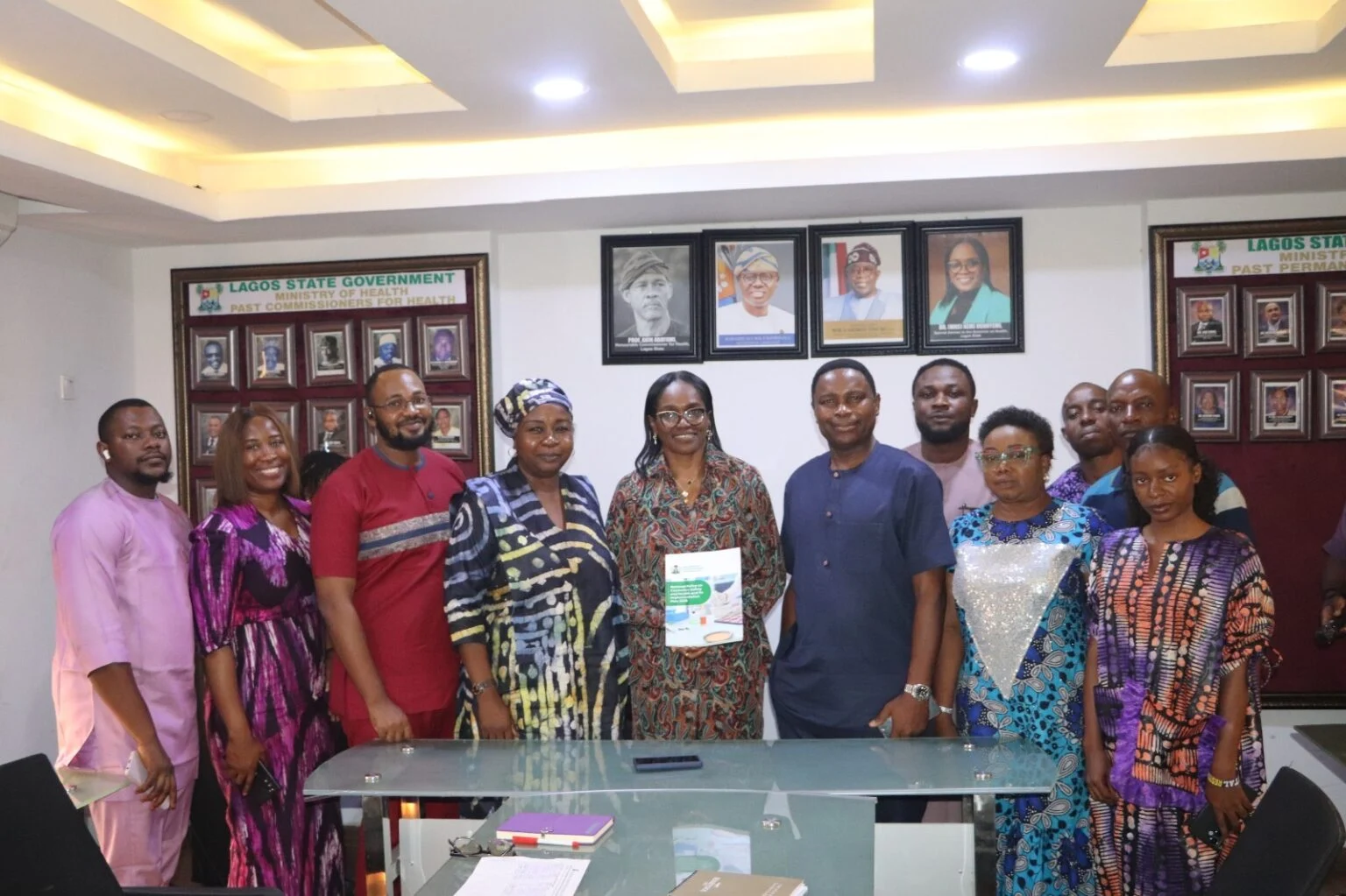
The Lagos State Government has taken a significant step toward strengthening the regulation of cosmetic products and procedures with the presentation of the National Policy on Cosmetics Safety and Health and its Implementation Plan to the Special Adviser to the Governor on Health, Dr. (Mrs.) Kemi Ogunyemi.
The policy was presented during the Exit Meeting of the Lagos State Engagement on the National Policy on Cosmetics Safety and Health, held at the Conference Room of the Lagos State Ministry of Health on Friday. The meeting marked the conclusion of a four-day stakeholder engagement that began on Tuesday, March 10, at the Sojourner Hotel, GRA Ikeja.
Speaking at the event, Ogunyemi said the timing of the engagement was critical, referencing a recent cosmetic surgery-related death in Lagos currently under investigation by the Health Facilities Monitoring and Accreditation Agency.
“This engagement could not have come at a better time. Only this week, we had an unfortunate incident where a well-known lady died in Lagos following cosmetic surgery,” she said, noting that authorities are investigating the circumstances, including the drugs used and their sources.
READ MORE :
IRAN DEFIANT AT UN, SAYS IT WON’T BOW TO ‘LAWLESS AGGRESSION’
She emphasised that patient safety remains a top priority for the state government, stressing the importance of regulating cosmetic products and procedures to safeguard residents. “When even one person dies, it means something has gone wrong, and we certainly do not want such incidents to happen again,” she added.
Ogunyemi assured stakeholders that the state government would ensure effective implementation of the policy across the cosmetics value chain, including manufacturers, suppliers, training institutions, and health facilities. She added that Lagos would continue to lead other states in implementing the policy.
Also speaking, the Director of Cosmetics Safety in the Food and Drug Services Department, Federal Ministry of Health and Social Welfare, Paul Okhakhu, said the policy was introduced to address the growing incidence of adverse health effects linked to unsafe cosmetic products.
“We have been seeing cases of people experiencing adverse events as a result of the use of adulterated, wrongly formulated, or substandard cosmetic products, and because of this the government decided to take the matter seriously,” he said.
Okhakhu explained that the policy, validated in Lagos and later launched at the 66th National Council on Health in Calabar, is designed to guide regulatory actions and support state-specific plans to tackle cosmetic safety challenges.
He added that the Federal Government is developing a national dashboard to monitor implementation across states, noting that Lagos was chosen for early engagement due to its strategic importance as Nigeria’s commercial hub. “If we are able to get it right in Lagos, we believe we can get it right in other states,” he said.
In her closing remarks, the Director of Pharmaceutical Services in the Lagos State Ministry of Health, Pharm. Olawale Poluyi, described the engagement as a key milestone in the policy’s implementation in the state.
“Every journey begins with a step, and today marks an important step in the implementation of this policy,” Poluyi said, while appreciating the Special Adviser for receiving the delegation despite her busy schedule.
She assured the team that the ministry would translate the outcomes of the engagement into concrete actions, reaffirming the state’s commitment to strengthening cosmetics safety and consumer protection.
The four-day engagement brought together 49 participants from federal and state agencies, regulatory bodies, academia, industry associations, cosmetology practitioners, civil society organisations, and the media to assess the cosmetics safety landscape in Lagos and develop a State Cosmetics Safety Action Plan aimed at protecting public health.


Happy
0 %

Sad
0 %

Excited
0 %

Sleepy
0 %

Angry
0 %

Surprise
0 %
 0
0
 0
0