
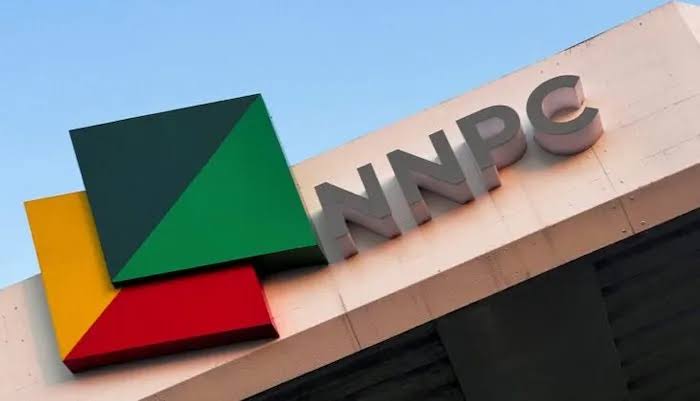
NNPC TO DEPLOY 50–70 SMART SELF-SERVICE FILLING STATIONS NATIONWIDE WITHIN SIX MONTHS
Read Time:4 Minute, 1 Second
The Nigerian National Petroleum Company Limited (NNPC Ltd.) has announced plans to deploy between 50 and 70 smart, self-service filling stations across the country within the next six months as part of efforts to modernise its retail network.
The company said the initiative would transform conventional filling stations into modern energy and mobility hubs offering petrol, electric vehicle (EV) charging, liquefied petroleum gas (LPG), compressed natural gas (CNG) and other services.
Executive Vice President, Downstream, NNPC Ltd., Mumuni Dagazau, disclosed this on Thursday in Abuja at the commissioning of a technology-driven service station equipped with an electric vehicle charging facility along Bill Clinton Drive, Airport Road.
Dagazau described the newly commissioned outlet as the first of several smart stations to be rolled out nationwide, saying the new concept was designed to move NNPC beyond traditional fuel retailing to provide multiple energy and mobility services at a single location.
“This is the first of many smart stations that we are going to have around the country,” Dagazau said.
He said the company was targeting the deployment of about 50 to 70 such stations within six months, adding that several similar outlets were already being developed in Abuja and Kano.
According to him, the smart stations would combine different energy sources, including petrol, gas and electricity, to create what NNPC described as energy hubs.
The new model will also enable customers to dispense petrol themselves, including at night, using digital payment systems, although attendants will remain available to assist customers.
Dagazau dismissed concerns that self-service pumps could lead to job losses, arguing that the expanded services and technology-driven operations would create additional employment opportunities.
“What we are doing is creating jobs for that. Somebody has to support the integration. Somebody has to support the automation. The EVs, we have to be here to support people,” he said.
He added that the focus of the smart stations was to improve customer convenience, comfort and quality of service.
Executive Director, Retail Operations and Mobility, NNPC Ltd., Shettima Baba-Kukawa, said the newly commissioned Abuja station has a storage capacity of 180,000 litres of Premium Motor Spirit (PMS) and 45,000 litres of Automotive Gas Oil (AGO).
The facility has 16 PMS pumps, two AGO pumps and six electric vehicle charging points installed in partnership with African Motor Works.
Baba-Kukawa said the station was powered entirely by solar energy through a system with a capacity of more than 200 kilowatts.
He added that the facility would also feature a quick-service restaurant, coffee shop, automated car wash, modern service bay and LPG dispensing facilities, while CNG and a vehicle conversion centre were planned for the outlet.
“The station is going to run 24 hours. And it is fully self-service,” Baba-Kukawa said.
He explained that customers would be able to make transactions through a mobile application and dispense the exact quantity of fuel purchased directly into their vehicle tanks.
However, he said customers who were unable to use the application would not be excluded, as attendants would be available to provide assistance.
Dagazau also disclosed that NNPC had commenced plans to modernise its existing filling stations as part of its response to changing customer expectations.
“We’re going to modernise our station. That’s the word that we’re going to say,” he said, adding that customers deserved better-quality service.
He said the company expected most of its stations to eventually adopt the new model, although the pace of transformation would depend on customer demand and the investment required.
Managing Director, NNPC Retail, Huub Stokman, said the transformation had become necessary as Nigeria’s downstream petroleum sector continued to evolve following deregulation and the commencement of operations at the Dangote Refinery.
Stokman said consumers were increasingly demanding quality products, competitive prices, faster services, digital payment options and alternative energy solutions such as EV charging and CNG.
“Above all, especially the younger generation, they want us to deliver it sustainably, hence the fact that you also see that this station is completely solar-powered,” he said.
In a goodwill message at the commissioning, Comptroller-General of the Nigeria Immigration Service, KN Nandap, commended NNPC for combining conventional fuel retailing with electric vehicle charging and other modern services.
Nandap said the facility reflected Nigeria’s growing adoption of technology, cleaner energy and smart mobility, adding that such investments could create opportunities for employment, skills development and industrial growth.
The development comes as Nigeria’s downstream petroleum sector undergoes significant changes, with deregulation, increased domestic refining capacity and the emergence of alternative fuels reshaping the distribution and consumption of petroleum products.
NNPC said the smart-station programme was aimed at positioning its retail network for the evolving market by integrating conventional fuel sales with cleaner energy, digital services and other consumer-focused offerings.


Happy
0 %

Sad
0 %

Excited
0 %

Sleepy
0 %

Angry
0 %

Surprise
0 %
 0
0
 0
0