
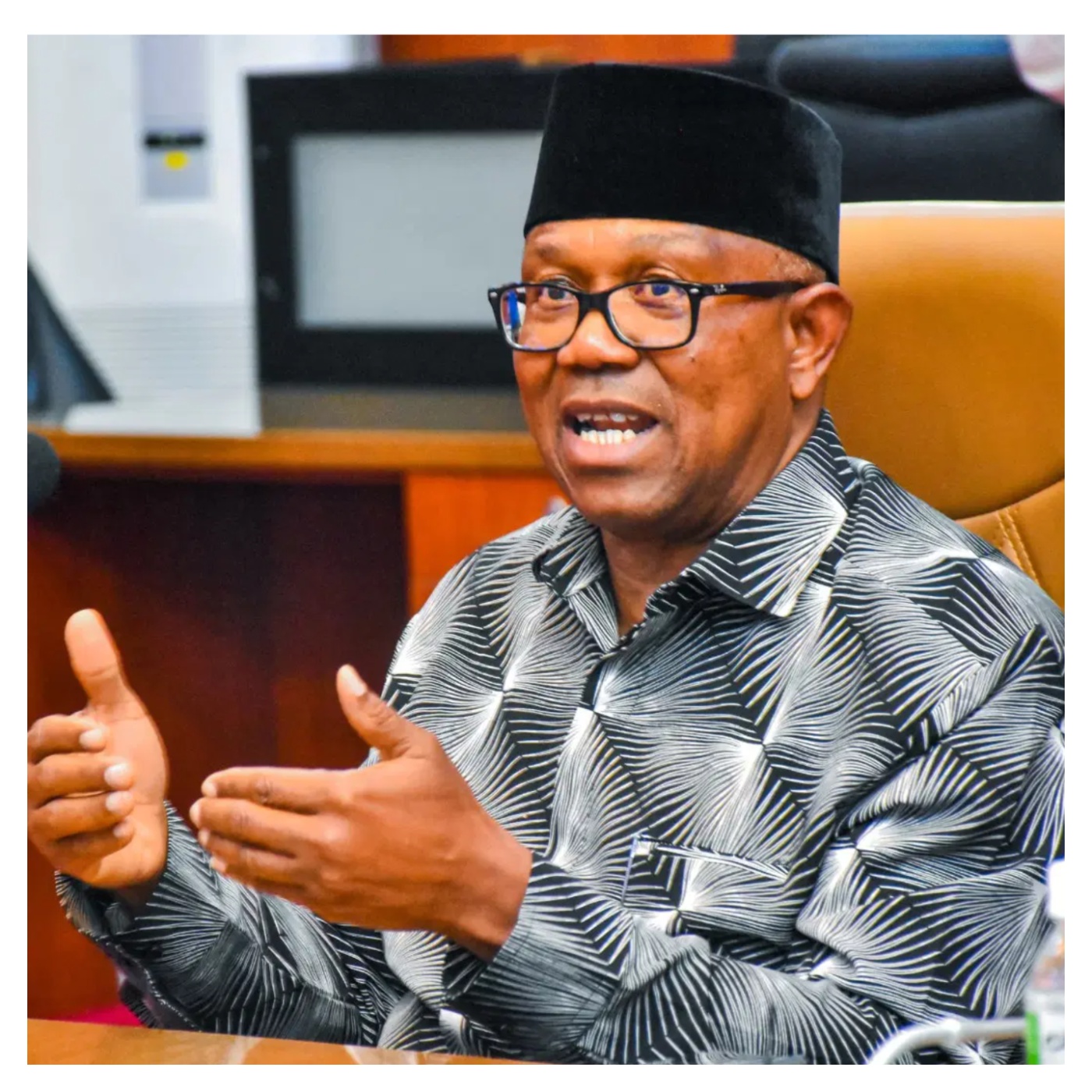
OBI SLAMS NIGERIA’S ‘UNPRODUCTIVE’ BORROWING, ADVOCATES SOUTH AFRICA’S MODEL
Read Time:2 Minute, 1 Second
By; Ganiyat Sunmola
The presidential candidate of the Nigeria Democratic Congress (NDC), Peter Obi, has called on Nigeria to adopt South Africa’s approach to borrowing, stressing the need for transparency and accountability in the management of public debt.
In a post shared on his verified X handle on Thursday, Obi stated that borrowing is not inherently negative, but emphasised that the key issue lies in how borrowed funds are utilised and whether citizens can clearly track their impact.
The former Anambra State Governor described South Africa’s recent $1 billion loan from the New Development Bank as a model of responsible borrowing, noting that the purpose was clearly defined, the projects were identifiable, and the expected benefits to citizens were measurable.
According to him, such structured investments have a direct impact on improving living standards, boosting productivity, and driving economic growth.
“I have consistently maintained that borrowing, in itself, is not a bad thing. Every nation borrows. The critical issue is not the act of borrowing, but what the borrowed funds are used for and whether citizens can clearly see and measure the impact of such borrowing in their daily lives,” he wrote.
Obi added that South Africa’s transparent handling of its recent loan demonstrates what accountable borrowing should look like, where objectives and outcomes are clearly stated and easily assessed.
He contrasted this with Nigeria’s situation, alleging that public debt has risen significantly under the current administration, with limited transparency on how the funds are deployed.
He noted that Nigeria’s total public debt reportedly increased from about ₦87 trillion in 2023 to nearly ₦200 trillion, expressing concern over the lack of clear disclosure on how such borrowings are utilised across critical sectors such as education, healthcare, power, security, and infrastructure.
Obi stressed that borrowing should be tied strictly to productive investments capable of generating value, creating jobs, reducing poverty, and improving citizens’ welfare.
He further argued that good governance requires full transparency and accountability, where government can clearly explain what was borrowed, how it was spent, and the measurable outcomes achieved.
At a time of rising inflation, unemployment, insecurity, and declining purchasing power, Obi said fiscal discipline and prudent resource management have become essential rather than optional.
He concluded that every borrowing decision should be guided by its impact on ordinary Nigerians, warning that failure to ensure productive use of loans risks burdening future generations with unsustainable debt.


Happy
0 %

Sad
0 %

Excited
0 %

Sleepy
0 %

Angry
0 %

Surprise
0 %
 0
0
 0
0