
OGUN HAS ONLY 1,200 DOCTORS FOR NINE MILLION RESIDENTS, NMA RAISES ALARM
Read Time:3 Minute, 35 Second
By; Aina Daniel
The Nigerian Medical Association, Ogun State chapter, has expressed concern over the acute shortage of medical doctors in the state, revealing that only about 1,200 physicians are currently serving an estimated population of nine million people.
The association said the figure translates to roughly one doctor for every 7,500 residents, describing it as grossly inadequate to meet the healthcare needs of the state’s growing population.
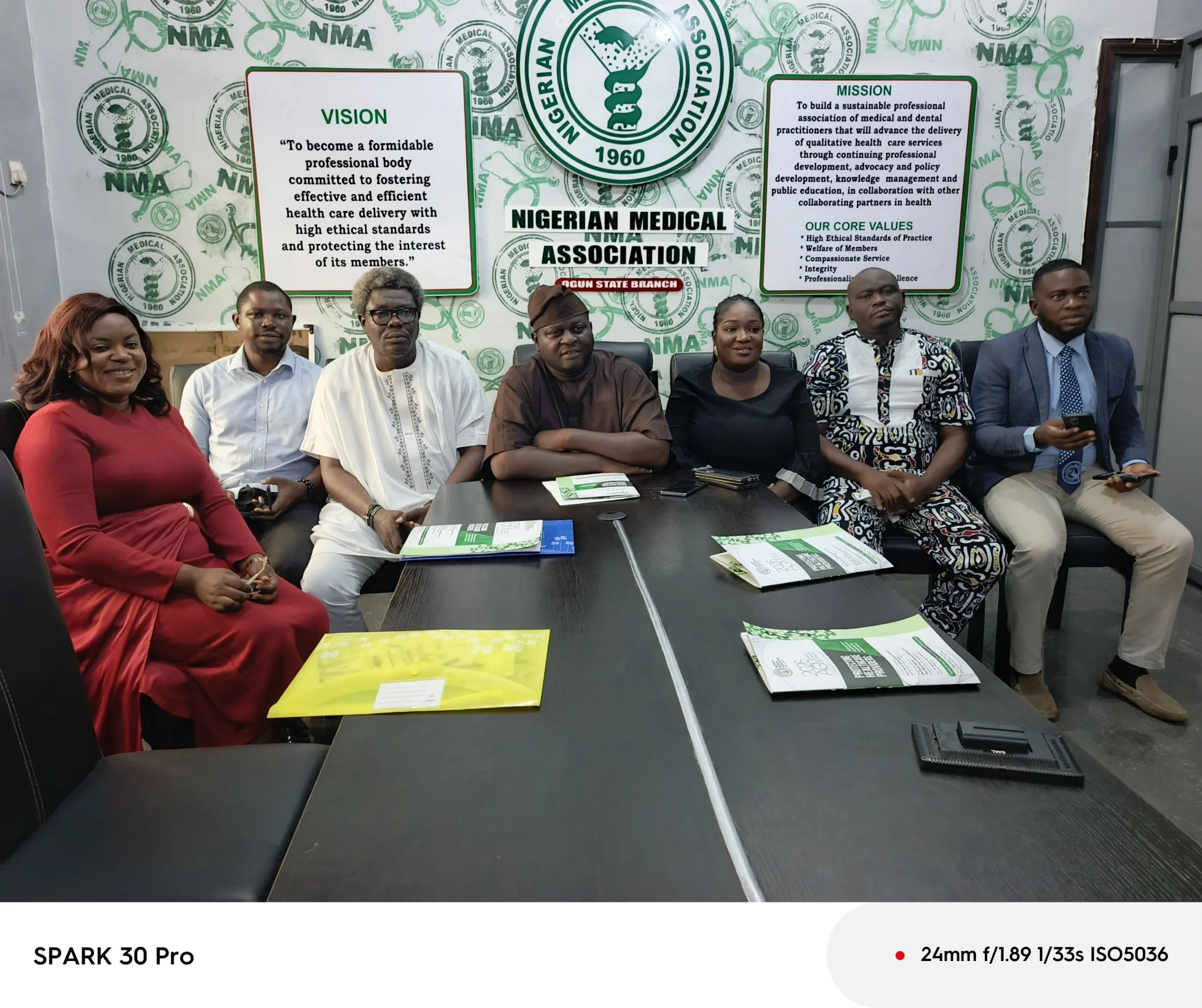
Speaking on Thursday at a press conference in Abeokuta to announce activities marking the 2026 NMA Week and Annual General Meeting, the state Chairman of the association, Dr Luqman Ogunjinmi, said the shortage had been worsened by the continued migration of Nigerian doctors abroad.
The conference is themed, “Protecting Healthcare Providers: Addressing Violence Against Doctors and Strengthening a Safe Healthcare System.”
According to Ogunjinmi, the doctors who have chosen to remain in Nigeria despite better opportunities overseas deserve greater support and improved welfare.
“If you have an estimated population of about nine million in Ogun State and we have only 1,200 doctors working in the state, you know this is a far cry. However, the 1,200 doctors remaining have decided to stay back to give back to their country,” he said.
He estimated that Ogun State requires between 5,000 and 10,000 doctors to adequately serve its population.
“If we have between 5,000 and 10,000 doctors in Ogun State, it will not be too bad. We need nothing less than 5,000 doctors. But those 1,200 doctors who are still here are trying their best,” he added.
The NMA chairman also decried the increasing cases of violence, intimidation and harassment against healthcare workers, warning that such incidents were fueling the ongoing brain drain in the health sector.
He alleged that doctors, particularly those practising in border communities such as Ota, Mowe and Ogijo, are frequently harassed or arrested by security agencies over clinical matters that should be handled by the Medical and Dental Council of Nigeria.
“When a doctor is delivering services, there is an organised body meant to investigate allegations of professional negligence. It is the Medical and Dental Council of Nigeria. We do not want security agencies prosecuting clinical matters without following due process,” he said.
Ogunjinmi disclosed that the association had intervened in several cases where doctors were arrested following the death of patients, insisting that professional investigations should precede any legal action.
“Doctors cannot be working and suddenly security agents storm the hospital to arrest them because a patient died. Diagnosis and treatment are continuous processes. You must investigate properly before concluding that a doctor is culpable,” he said.
He stressed that while doctors strive to provide the best possible care, they cannot guarantee every medical outcome.
“We try our best to provide quality healthcare, but we are not God. It is God who heals. If anyone has a complaint, there are complaint channels such as SERVICOM within hospitals. Assaulting healthcare workers is not acceptable,” he added.
The NMA chairman said the association had taken legal action in some assault cases to deter attacks on healthcare workers and would intensify public awareness campaigns through radio, print and social media.
“Nigeria remains our home. We are here and we will continue to do our best to serve our people. We only ask that government and the public support and protect those who have chosen to stay,” he said.
Ogunjinmi also commended Ogun State Governor Dapo Abiodun for approving and implementing the Professional Allowance Table and Specialist Allowance for doctors, describing the move as a positive step toward improving doctors’ welfare.
He, however, urged the state government to harmonise multiple taxes imposed on private medical practitioners and continue upgrading healthcare facilities across the state.
“We went round and saw what the governor has done in some primary healthcare centres and we commend him for that. However, there are still many others that require improvement. It is a work in progress,” he said.
Nigeria continues to face a severe shortage of medical personnel, driven largely by the migration of healthcare professionals to countries offering better pay and working conditions.
Professional bodies have repeatedly warned that the combination of brain drain, poor welfare and insecurity is placing enormous strain on the country’s healthcare system and limiting access to quality medical services.


Happy
0 %

Sad
0 %

Excited
0 %

Sleepy
0 %

Angry
0 %

Surprise
0 %
 0
0
 0
0