
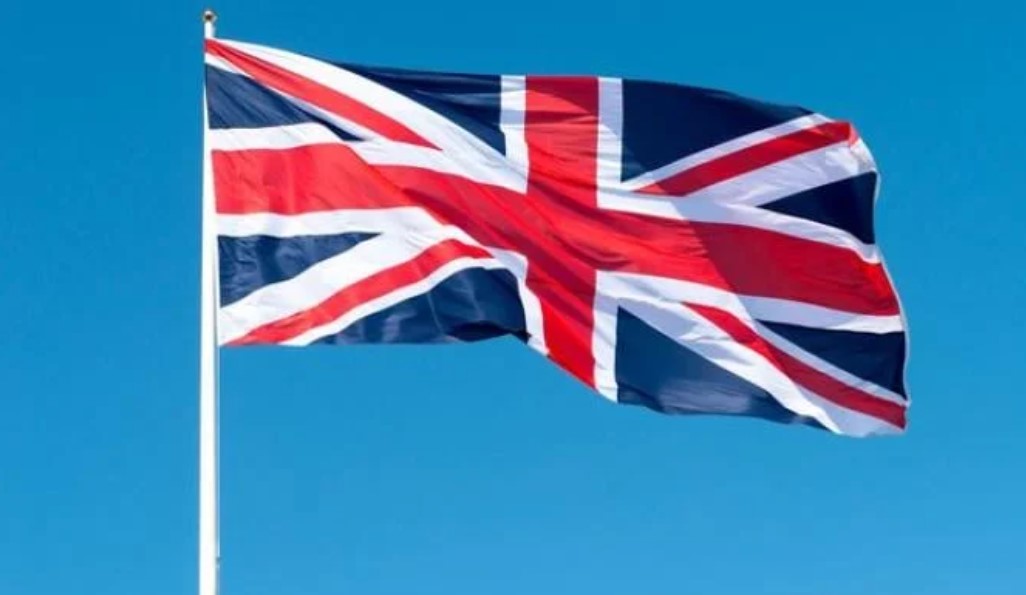
RUSSIA’S OCCUPATION CANNOT ALTER UKRAINE’S SOVEREIGNTY — UK
Read Time:2 Minute, 48 Second
By: Fasasi Hammad
The United Kingdom has told the United Nations General Assembly that Russia’s occupation and attempted annexation of Ukrainian territories have not changed Ukraine’s sovereignty or internationally recognised borders, while urging Moscow to accept a full and unconditional ceasefire.
Speaking at a UN General Assembly meeting on Ukraine in New York on Tuesday, the UK Permanent Representative to the UN, Ambassador Sarah MacIntosh, said Russia’s continued military actions constituted violations of the UN Charter and Ukraine’s territorial integrity.
“It is 1,651 days since Russia began her illegal, full-scale invasion of Ukraine,” MacIntosh said, noting that it had also been 12 years since Russia’s “illegal annexation of Crimea.”
According to the full text of her speech published on the UK government website, MacIntosh said Russian attacks had intensified, with at least 429 missiles launched against Ukraine in July alone, more than twice the number recorded the previous month.
She said Ukrainian civilians continued to bear the consequences of the war, with nearly 17,000 civilians, including 820 children, reportedly killed since February 2022, while more than 51,000 others, including 3,000 children, had been injured.
MacIntosh also highlighted the conflict’s impact on global food security, noting that before Russia’s full-scale invasion in 2022, Ukraine accounted for 12 per cent of global corn exports, 10 per cent of wheat exports and 50 per cent of sunflower oil exports.
She said intensified Russian strikes on Ukrainian ports and civilian shipping were disrupting food supplies, contributing to rising global food prices and causing the deaths of seafarers from UN member states across Africa and Asia.
The UK envoy described Russia’s actions in occupied Ukrainian territories as violations of fundamental international principles, particularly Ukraine’s sovereignty and territorial integrity.
“Mr President, Russia’s war in Ukraine is a clear violation of our UN Charter and of Ukraine’s sovereignty and territorial integrity,” she said.
MacIntosh identified Crimea and parts of Donetsk, Luhansk, Kherson and Zaporizhzhia as territories occupied by Russia, accusing Moscow of using force to consolidate its control.
She also alleged that Russia had separated families, forcibly deported people, indoctrinated children, issued Russian passports, and subjected Ukrainian civic leaders to arbitrary detention, disappearance, torture and ill-treatment.
According to her, some communities had also been left without adequate water or humanitarian assistance, while Ukraine’s cultural heritage and language were being targeted.
“Russia’s occupation and attempted illegal annexations are inflicting a terrible toll on the Ukrainians living in these territories,” MacIntosh said.
“But these actions do not change Ukraine’s sovereignty; nor do they rewrite her borders.”
The UK urged UN member states to uphold the principles of the UN Charter, reject Russia’s territorial claims, facilitate humanitarian access and support accountability for alleged violations.
MacIntosh also reaffirmed Britain’s support for Ukraine’s right to defend itself under international law, citing Article 51 of the UN Charter.
“The United Kingdom will stand with Ukraine as she exercises her lawful right to self-defence, in accordance with Article 51 of our United Nations Charter,” she said.
She added that Britain supported Ukraine’s demand for an immediate end to the fighting.
“We support Ukraine’s call for a full, immediate, and unconditional ceasefire, and a just and lasting peace,” MacIntosh said, urging Russia to make the same commitment.


Happy
0 %

Sad
0 %

Excited
0 %

Sleepy
0 %

Angry
0 %

Surprise
0 %
 0
0
 0
0