
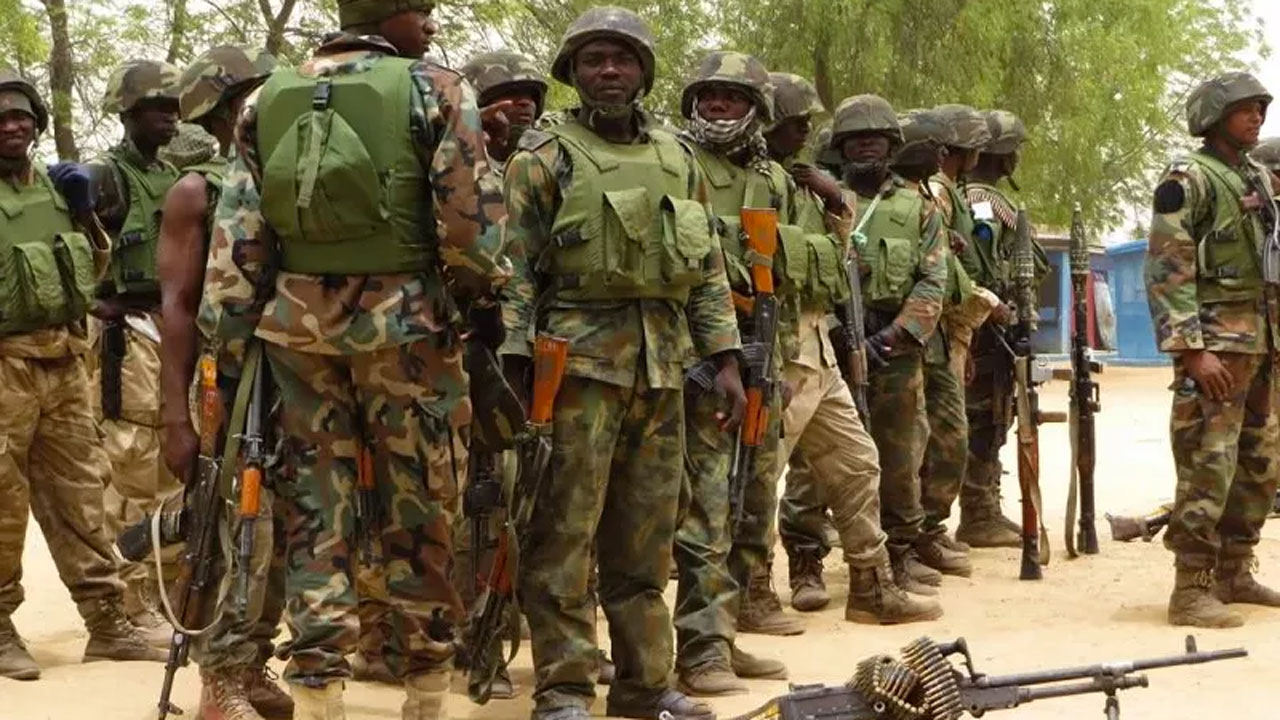
SOUTH-EAST YOUTHS EXPLAIN WHY THEY ARE LOSING CONFIDENCE IN NIGERIAN ARMY
Read Time:10 Minute, 20 Second
By:Tajudeen Aminat
Last month, the Chief of Army Staff, Lieutenant General Waidi Shaibu, raised concerns over the continued low participation of youths from the South-East geopolitical zone in the Nigerian Army’s recruitment exercises.
Shaibu disclosed this during the passing-out parade of the pioneer batch of 90 regular recruits at the Nigerian Army Recruit Training Depot in Amasiri-Edda, Ebonyi State.
While young Nigerians in other parts of the country reportedly compete for the limited recruitment slots available in the Army, the South-East has struggled to fill its allocated quota.
The Army Chief said the recruitment quota assigned to the region had remained largely unutilised for several years, describing the situation as unacceptable.
He appealed to traditional rulers, parents, community leaders and other stakeholders in the South-East to encourage eligible young men and women to take advantage of opportunities to join the Nigerian Army.
According to Shaibu, military service goes beyond a career, describing it as an honourable calling that promotes patriotism, leadership and national service.
He said, “We ask for your continued support because military service is very demanding. Please stand by them, encourage them and pray for them.
“To our hosts, the Ndigbo, I humbly appeal to you to encourage your youths to take their rightful place in the defence of our fatherland.
“For some time now, the recruitment quota allocated to this zone has not been fully utilised. This should not continue. Military service is not just a career but an honourable endeavour of patriotism, leadership and national contribution.
“I, therefore, urge community leaders, parents, guardians and elders across the South-East to encourage our young men and women to regard this depot as their own and step forward to serve the nation.”
Former Abia State Governor and Senator representing Abia North, Orji Uzor Kalu, has also expressed concern over the reluctance of some people from the South-East to enlist in the country’s security agencies.
Kalu made the remark during a recent interview with News Central TV, where he discussed the state of the nation.
He said that in his constituency, application forms were often made available for people interested in joining the Nigerian Army, Police and Air Force, but many were unwilling to apply.
“I know in my area, they give me forms for people to join the Army; nobody wants to join. They give me forms for people to join the Police; nobody wants to join. They give me forms for people to join the Air Force; they will not want to apply,” Kalu said.
According to the senator, Nigeria’s security challenges are partly fuelled by hatred, tribalism and religious divisions.
He urged Nigerians, including those from the South-East, to see themselves first as citizens of one country and work collectively to address insecurity.
Kalu also described the armed forces as among Nigeria’s best institutions, arguing that tribal considerations do not influence most military personnel.
All Progressives Congress chieftain, Joe Igbokwe, has warned that the South-East could suffer consequences in the future if youths in the region continue to show little interest in joining the Nigerian Army.
Reacting to reports that recruitment slots allocated to the region were being left vacant while applicants from other parts of the country competed for available positions, Igbokwe described the development as disturbing.
“South-East will regret rejecting Nigerian Army recruitment, mark my words,” he said.
However, human rights lawyer Aloy Ejimakor argued that the reluctance of Igbo youths to enlist in the armed forces should not be interpreted as a lack of courage.
According to him, many youths are unwilling to serve in an institution they have come to distrust.
Ejimakor made the comment in a post on X following the Army Chief’s concerns about the low enlistment of South-East youths.
He argued that historical experiences and current developments had contributed to what he described as a perception of systematic marginalisation of people from the region within Nigeria’s security structure.
The lawyer further alleged that the armed forces had, at various times, been deployed against Ndigbo during periods of crisis.
He cited the killings associated with the Nigerian Civil War and more recent security operations involving youths suspected of links to the Indigenous People of Biafra as factors that have deepened mistrust.
Ejimakor also criticised the reported integration of former Boko Haram members into the military, arguing that such developments could further discourage young people from the South-East.
He said the reluctance to enlist should therefore be viewed as a consequence of distrust rather than cowardice.
Against the backdrop of the Army’s concerns over low recruitment from the region, DAILY POST spoke to several young South-Easterners to understand why many youths remain reluctant to enlist.
Their reasons ranged from concerns about insecurity and soldiers’ welfare to allegations of discrimination, political interference and a broader loss of confidence in the military.
Chinedu Udemmezue, a trader from Anambra State, said he had no personal objection to the Nigerian Army but had abandoned his earlier ambition of joining the military because of concerns about soldiers’ safety.
“I have nothing against the Nigerian Army. In fact, when I was younger, I wanted to join. But today, I am no longer interested.
“My fear is simple: I don’t want to enter the Army and become a casualty of a war that politicians are not serious about ending. Look at the number of soldiers being killed in different parts of the country.
“Sometimes, you hear that soldiers were sent somewhere without adequate equipment or support. Then, when something happens, they will talk about sacrifice.
“Sacrifice is good, but there must be a reason to believe that your life is valued. I have a family. I cannot just volunteer to die because somebody in Abuja wants to score political points,” he said.
For Ifeanyi Nwankwo, a graduate from Enugu State, the major issue is a lack of trust.
He said young people could be discouraged from joining an institution where they believe opportunities for advancement and promotion are not always based on merit.
“You cannot tell young people to join an organisation when they believe that opportunities and promotions are not always based on merit.
“There has been this perception for years that people from the South-East are not treated fairly in some national institutions.
“Whether every allegation is true or not is another matter. But perception matters. If a young man believes that even after joining the Army, he may not get equal opportunities because of where he comes from, why would he rush to enlist?
“The government needs to address that perception. You cannot simply announce recruitment and expect people to forget everything they have heard or experienced,” he said.
Chukwuebuka Eze, an undergraduate of Enugu State University of Science and Technology, said he remains interested in joining the Army but faces opposition from his parents.
According to him, his parents are primarily concerned about the dangers associated with military service.
“I actually want to join the Army. I have always admired the military. But my parents are against it because of insecurity.
“They keep asking me: ‘What will you gain if you are killed?’ That question is difficult to answer,” he said.
Uche Madu, 27, a mechanic from Imo State, said he considered joining the Army after secondary school but eventually changed his mind because of concerns about soldiers’ welfare.
“Go and ask the families of soldiers who died in the line of duty whether their relatives were properly taken care of. Sometimes, it appears the government remembers soldiers only when they need to send them into danger.
“If the salary, insurance, housing, healthcare and welfare are attractive, you will see more young people applying.
“If I can work here as a mechanic, run a business or travel abroad and potentially earn better money without carrying a gun into a dangerous place, why would I choose the military?” he asked.
Obinna Onwe, 29, a civil servant from Ebonyi State, blamed what he described as political interference for discouraging some youths from joining the military.
“The biggest issue for me is political interference.
“The military should be a professional institution that serves Nigeria, not politicians. Once young people begin to believe that soldiers are being used to settle political scores or suppress particular communities, it affects recruitment.
“Look at the history of military intervention in Nigeria. Look at the various conflicts and how communities perceive the security agencies. These things create resentment.
“If the government genuinely wants youths from the South-East to join the military, it should rebuild confidence.
“You cannot use propaganda to convince people. Give them reasons to believe in the institution,” he said.
Kelechi Ugwu, 23, an undergraduate from Enugu State, disagreed with the view that South-East youths had completely lost interest in military service.
He said he had applied for Army recruitment because he wanted to serve his country.
“I think it is wrong to say South-East youths have given up on Nigeria.
“I applied for Army recruitment because I want to serve my country. I disagree with those saying nobody from the South-East wants to join.
“But I understand why some people are afraid. Parents don’t want to lose their children. There are young men who have gone into security jobs and never returned.
“What the government should do is improve the conditions of service and make recruitment transparent. If people see that soldiers are respected and properly equipped, more youths will come,” he said.
Onyemaechi Nwafor, 25, an entrepreneur from Anambra State, urged the government to engage youths in the region rather than accuse them of abandoning the country.
“I don’t think the answer is to accuse South-Easterners of abandoning Nigeria.
“Ask the youths why they are not coming. Don’t just sit in Abuja and say they are not patriotic.
“Some are worried about discrimination. Some are afraid of insecurity. Some don’t trust the recruitment process, while others simply have better opportunities elsewhere.
“If the government wants more people from the region, it should engage them. Go to the universities, communities and youth organisations. Explain the opportunities. Address the complaints. Make them feel that they are wanted in the Nigerian Army.
“People will respond when they believe the country also values them,” he noted.
Political analyst and communication expert at Peaceland University, Enugu, Nduka Odo, attributed the low recruitment figures to factors including poor remuneration, inadequate living conditions and concerns about the handling of insecurity.
Speaking with the media, Odo said the government should focus on reforming the military and making the profession more attractive instead of blaming the South-East for the recruitment shortfall.
He noted that youths from the region are generally ambitious and may prefer careers that offer better opportunities, improved living standards and international prospects.
According to him, the remuneration and welfare packages for soldiers could be discouraging potential recruits.
“The remuneration for soldiers is poor. They would do better if they went into trading and other businesses. So, poor salaries and low standards of living among soldiers discourage youths from joining the Army,” he said.
Odo also criticised the condition of some military barracks, arguing that poor accommodation and facilities could further discourage prospective recruits.
He expressed concern over the deaths of military officers in attacks by terrorists and bandits, saying such incidents could undermine public confidence in the armed forces.
Odo also called for a wider discussion about the representation of South-East youths in the military, particularly their participation in the Nigerian Defence Academy.
He argued that the issue should not be limited to recruitment at the rank-and-file level but should also consider opportunities for youths from the region to enter the officer corps.
“When we talk about South-East youths not joining the Army, let’s be specific. They are talking about joining as recruits.
“We forgot decades of inability of South-East youths to enrol in the Nigerian Defence Academy. Those are the people who come out later to lead the military.
“Young people without generals as godfathers cannot enter the NDA even if they qualify,” he alleged.
He urged the Federal Government to also examine the representation of South-East youths in other strategic agencies and institutions, arguing that addressing wider concerns about inclusion and equal opportunity could help restore confidence in national institutions.


Happy
0 %

Sad
0 %

Excited
0 %

Sleepy
0 %

Angry
0 %

Surprise
0 %
 0
0
 0
0