
WILDFIRES FORCE MASS EVACUATIONS IN GREECE AND TURKEY AS STRONG WINDS FUEL FLAMES
Read Time:2 Minute, 12 Second
Agency Report
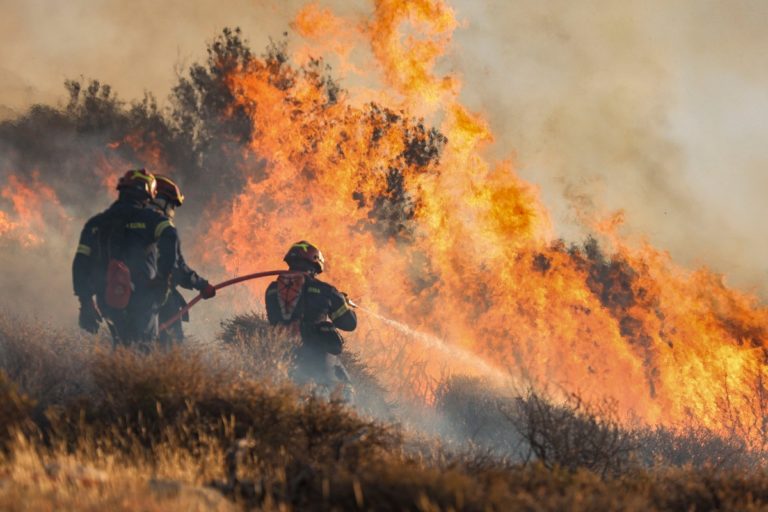
Wildfires fanned by gale-force winds have triggered mass evacuations on the southern Greek island of Crete and in Turkey’s western province of Izmir, as emergency services struggle to contain multiple blazes amid challenging weather conditions.
In Crete, around 5,000 people—including 3,000 tourists and 2,000 residents—were evacuated overnight near the popular resort town of Ierapetra. The blaze broke out on Wednesday evening and quickly spread due to strong winds, according to Yorgos Tzarakis, president of the regional hotels’ association.
Local authorities described the evacuations as precautionary, with tourists temporarily housed in a municipal gymnasium. Vice-prefect Yannis Androulakis told Greek broadcaster Mega that water bombers were unable to reach the area overnight, prompting swift ground-based evacuations.
“There are still a number of different fronts,” Androulakis said. “Because of the strong winds, the fire has progressed quite rapidly.” Wind speeds have reached up to nine on the Beaufort scale, complicating efforts by nearly 270 firefighters, 10 helicopters, and drones, including reinforcements from Athens.
The fires have already damaged homes and agricultural greenhouses, especially those used for growing fruits and vegetables. Crete’s dry, rugged terrain is making it difficult for firefighters to fully access the affected areas.
Meanwhile, across the Aegean in Turkey, two major wildfires broke out near Izmir, prompting the evacuation of six villages. One elderly, bedridden man died in the flames near the town of Odemis, according to opposition lawmaker Salih Uzun.
Izmir Governor Suleyman Elban said wind speeds reaching 85 kilometers per hour were spreading the fire rapidly and unpredictably. “Intervention from both land and air is seriously challenging,” he told reporters, adding that flames had already cut off the main highway leading to Izmir city.
Turkey has deployed nine firefighting aircraft, 22 helicopters, and over 1,100 emergency vehicles to battle the blazes. Officials said power cables, poorly maintained in some areas, were the likely cause of the fires. Meteorologist Ismail Kucuk cited forestry ministry data indicating that 90 percent of forest fires in Turkey are caused by human activity.
Both Greece and Turkey have seen increasing wildfire activity in recent years, driven by climate change and prolonged droughts. Greece recorded its worst wildfire season on record in 2023, with nearly 175,000 hectares of land destroyed and 20 lives lost during searing heatwaves. Experts have warned both countries to strengthen climate resilience and infrastructure maintenance to reduce the frequency and impact of such disasters.
As temperatures rise and dry conditions persist, authorities in both nations are bracing for what could be another devastating wildfire season.


Happy
0 %

Sad
0 %

Excited
0 %

Sleepy
0 %

Angry
0 %

Surprise
0 %
 0
0
 0
0