
22 KILLED, OVER 1,200 ARRESTED IN ANGOLA FUEL PROTESTS AS CALM RETURNS TO LUANDA
Read Time:1 Minute, 54 Second
Agency Report
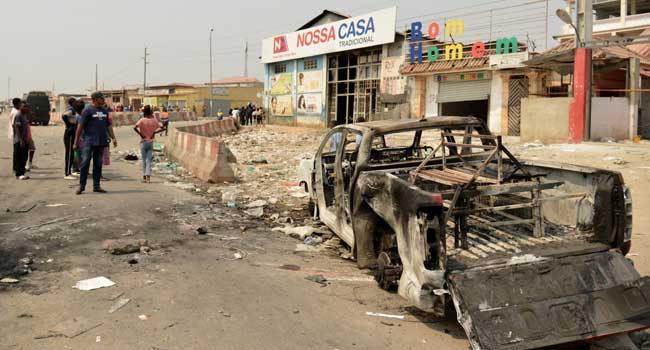
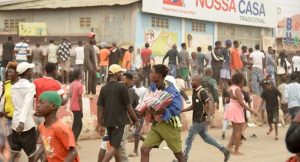
Two days of violent unrest and looting in Angola have left 22 people dead including one police officer and over 1,200 arrested, following mass protests against a recent fuel price hike, the government announced on Wednesday.
The unrest, which erupted on Monday during a strike led by taxi drivers, marked one of Angola’s worst episodes of civil disorder in recent years. Protesters rallied against the government’s July 1 decision to raise fuel prices from 300 to 400 kwanzas per litre (\$0.33 to \$0.43), a move aimed at reducing heavy subsidies under pressure from the International Monetary Fund.
Interior Minister Manuel Homem confirmed the death toll and revealed that nearly 200 people were injured in the chaos, which engulfed the capital Luanda and spread to other cities. Sixty-six shops were looted, and the damage to property was extensive.
“The situation turned into a threat to national security,” said a government statement issued after a Council of Ministers meeting chaired by President João Lourenço. Officials blamed “criminal elements” for hijacking the protest.
In Luanda, sporadic gunfire and looting were reported on Monday and Tuesday. By Wednesday, a tense calm had returned to the capital, though many shops remained shut and police and security forces maintained a strong presence.
Police in the southern city of Lubango also confirmed that a 16-year-old boy was shot dead by an officer while attempting to storm the ruling MPLA party’s office.
The unrest follows growing public frustration over worsening economic conditions in the oil-rich country, where inflation is around 20%, unemployment hovers at nearly 30%, and poverty affects over one-third of the population.
Opposition parties UNITA and Bloco Democrático issued a joint statement blaming the government for the crisis, describing Angola’s current state as a “severe economic and social emergency” exacerbated by disconnected policies.
Human rights groups, including Amnesty International, have condemned the excessive use of force by police during protests in Angola, pointing to a pattern of repression that has continued since the country’s civil war ended in 2002.
Angola has seen repeated protests in recent weeks, with demonstrators not only decrying the fuel hike but also voicing wider grievances over alleged corruption and poor governance under President Lourenço, who was re-elected in 2022.


Happy
0 %

Sad
0 %

Excited
0 %

Sleepy
0 %

Angry
0 %

Surprise
0 %
 0
0
 0
0