
NASS MOVES TO LEGALISE DIASPORA VOTING AS FG DEEPENS GLOBAL ENGAGEMENT
Read Time:3 Minute, 10 Second
BY MUNIRAT BALOGUN
The Speaker of the House of Representatives, Hon. Tajudeen Abbas, has announced that the National Assembly is advancing plans for the Diaspora Voting Bill, which seeks to grant Nigerians living abroad the constitutional right to participate in national elections.
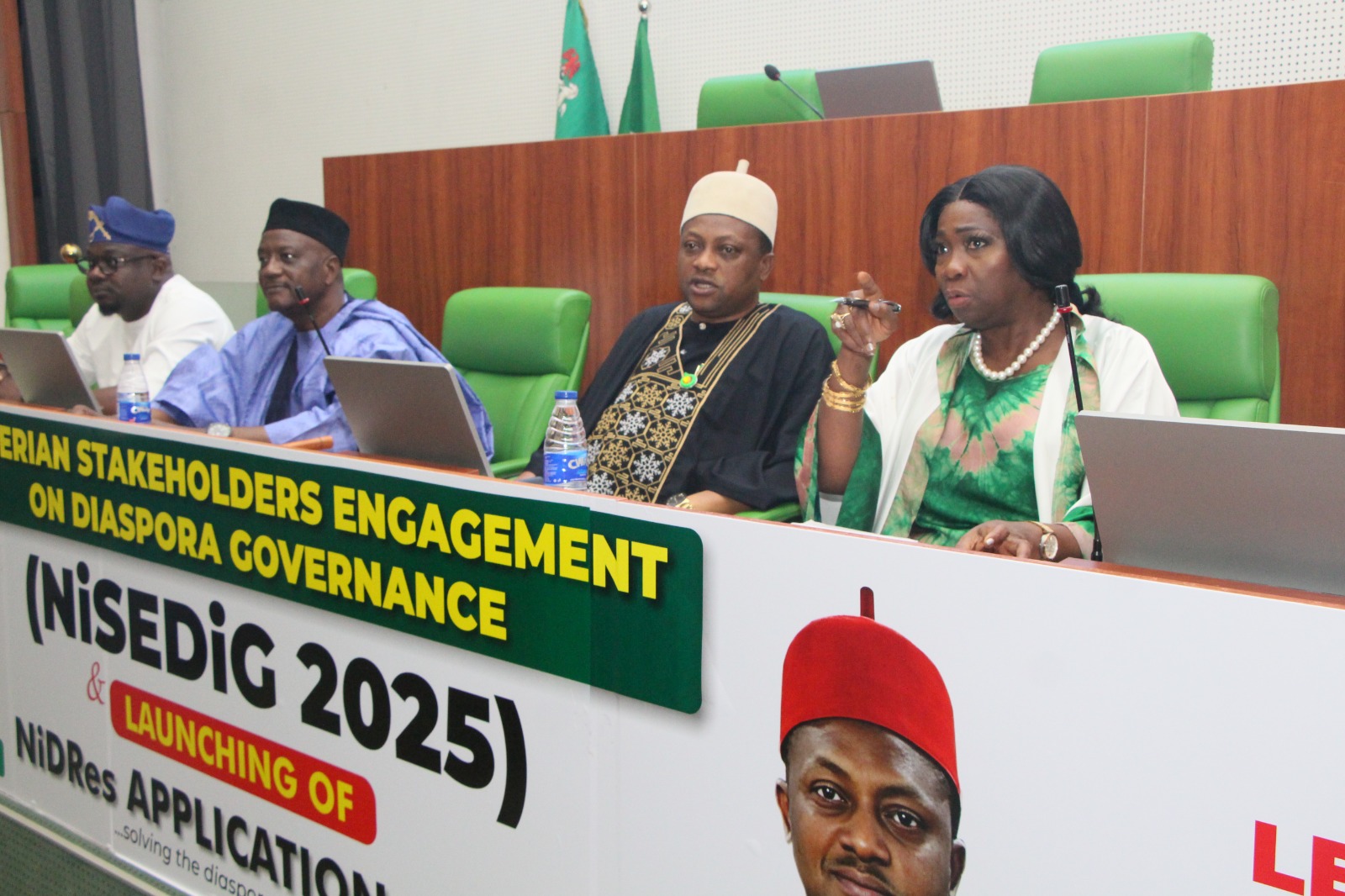
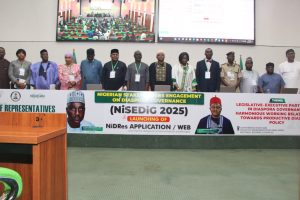
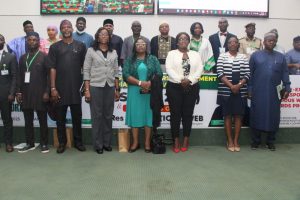
Abbas made this known on Monday at the Nigerian Stakeholders Engagement on Diaspora Governance (NiSEDiG 2025) and the official launch of the Nigerians in Diaspora Response (NiDRes) Application and Website, held in Abuja. The event was jointly organised by the House Committee on Diaspora and the Nigerians in Diaspora Commission (NiDCOM).
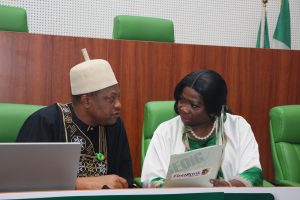
Represented by Hon. Patrick Umoh, member representing Ikot Ekpene/Essien Udim/Obot Akara Federal Constituency, the Speaker described the move as a major step towards extending democratic participation to all citizens and ensuring that every Nigerian voice is heard in the process of nation-building. He stressed that the 10th House of Representatives considers diaspora engagement a national priority in line with its legislative agenda of inclusion, accountability, and economic reforms.

Also speaking at the event, the Chairman of the House Committee on Diaspora, Hon. Tochukwu Chinedu Okere, explained that the NiSEDiG 2025 initiative was designed to create a unified framework that integrates institutions, legislation, and technology to improve diaspora governance. He said the newly launched NiDRes App and Website would simplify access to government services for Nigerians living abroad and enhance communication with Nigerian missions across the world.
In her keynote address, the Chairman and Chief Executive Officer of NiDCOM, Hon. Abike Dabiri-Erewa, highlighted the significant progress recorded in diaspora engagement since the establishment of the Commission six years ago. She noted that over the past six years, the relationship between Nigeria and its diaspora community has made remarkable strides in health, education, agriculture, ICT, transportation, and volunteerism. According to her, the country has now entered a new phase of consolidating diaspora engagement to accelerate national development.
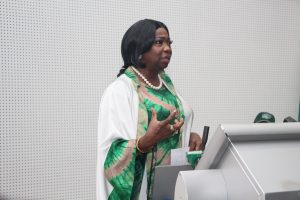
Dabiri-Erewa recalled that the National Diaspora Policy, approved by the Federal Executive Council (FEC) on April 28, 2021, provides the framework for facilitating diaspora participation in national development. She also pointed out that the Diaspora Data Mapping Portal, launched in June 2021, continues to support data collection and evidence-based decision-making.
She stated that diaspora remittances remain Nigeria’s highest source of foreign exchange, amounting to $23.81 billion in 2019, which represents about six percent of the nation’s Gross Domestic Product (GDP). She further emphasised that NiDCOM has championed several key programmes such as the National Diaspora Day held annually on July 25 to celebrate diaspora contributions to national growth, the Nigeria Diaspora Investment Summit (NDIS) which connects diaspora investors with local opportunities, and the National Town Hall Meetings where the President meets Nigerians abroad during official visits. She also mentioned the National Diaspora Merit Award, which recognises exceptional Nigerians living abroad, as well as the Diaspora Quarterly Lecture Series that focuses on issues affecting citizens overseas. Dabiri-Erewa added that NiDCOM continues to collaborate with the Ministries of Foreign Affairs and Humanitarian Affairs to repatriate distressed Nigerians from crisis regions.
Despite these achievements, she identified challenges confronting the Commission, including limited funding, inadequate office accommodation, and the need to amend the NiDCOM Act to ensure a sustainable funding mechanism through diaspora remittance charges. She expressed optimism that with stronger legislative backing and improved funding, the Commission would further deepen its engagement with Nigerians abroad.
The NiSEDiG 2025 engagement and NiDRes App launch, she said, symbolise Nigeria’s renewed commitment to strengthening diaspora governance and creating an inclusive system that allows Nigerians abroad to play a more active role in national development. The hybrid event brought together key stakeholders from Nigerians in Diaspora Organisations (NIDO), the academia, youth and student groups, the Nigerian Immigration Service, government ministries, departments and agencies, as well as State Diaspora Focal Point Officers.


Happy
0 %

Sad
0 %

Excited
0 %

Sleepy
0 %

Angry
0 %

Surprise
0 %
 0
0
 0
0