
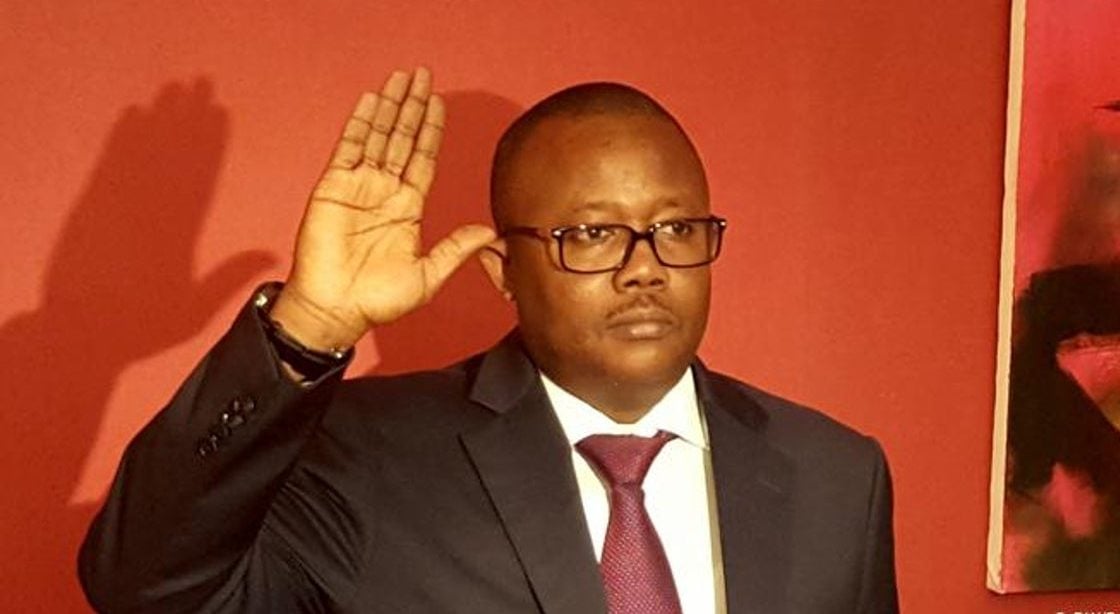
GUINEA-BISSAU PRESIDENT EMBALO FLEES TO SENEGAL AMID COUP ALLEGATIONS, OPPOSITION CLAIMS HE ORGANISED POWER GRAB
Read Time:2 Minute, 24 Second
Agency Report
Guinea-Bissau’s President Umaro Sissoco Embalo has fled to Senegal after reportedly being detained during a military coup, Senegalese authorities confirmed on Thursday. The development comes as opposition candidate Fernando Dias da Costa accused Embalo of orchestrating the coup to prevent him from assuming power.
The military seized control on Wednesday—just one day before provisional results of Sunday’s presidential and parliamentary elections were due to be released. Both Embalo, who was seeking re-election, and Dias had declared themselves winners.
Senegal’s foreign ministry stated that Embalo arrived in the country “safe and sound” aboard a military aircraft chartered by its government.
Following the takeover, the army named General Horta N’Tam, formerly chief of staff, as interim leader for a one-year period. He took the oath at military headquarters on Thursday, declaring he would lead the High Command.
N’Tam, believed to have been close to Embalo, now replaces him as head of the country.
Dias, speaking to AFP by telephone from hiding, claimed he won the election with approximately 52 per cent of the vote and alleged that the power shift was staged by Embalo to block his inauguration.
“There wasn’t a coup,” Dias insisted. “It was organised by Mr Embalo.” He said he narrowly escaped arrest when armed men stormed his campaign headquarters on Wednesday.
Domingos Simoes Pereira, a prominent opposition figure barred by the Supreme Court from running but who endorsed Dias, was arrested during the upheaval.
The military also appointed General Tomas Djassi formerly Embalo’s personal chief of staff as the new chief of the armed forces.
Bissau, the capital, remained locked down on Thursday, with soldiers patrolling and most businesses shuttered. Media programming was suspended, and protests banned.
General N’Tam claimed the operation was to prevent a threat to democracy, citing an alleged plot involving “drug lords” and the illegal importation of weapons. Land, air, and sea borders initially sealed were later reopened, while the curfew was lifted.
However, members of the diaspora and regional analysts told AFP that available indications suggested Dias was leading in preliminary results prior to the coup.
“This is a coup aimed at preventing the opposition candidate from taking power,” a West African researcher said anonymously. “The scenario could favour Embalo if negotiations allow him to reposition himself ahead of future elections.”
The African Union condemned the coup and demanded Embalo’s immediate and unconditional release. ECOWAS Chair, Julius Maada Bio, described it as a “serious breach of constitutional order,” while the European Union urged a swift return to electoral processes.
Guinea-Bissau, located between Guinea and Senegal, has suffered four successful coups since its independence from Portugal in 1974 and multiple failed attempts. Elections are frequently disputed.
“Each time we hope for stability, a crisis happens,” said Mamadou Woury Diallo, a market trader in Bissau. “We can’t continue like this.”


Happy
0 %

Sad
0 %

Excited
0 %

Sleepy
0 %

Angry
0 %

Surprise
0 %
 0
0
 0
0