
CBN COURTS GLOBAL INVESTORS, PROJECTS STABILITY TO BOOST CAPITAL INFLOWS
Read Time:3 Minute, 21 Second
The Central Bank of Nigeria (CBN) has intensified efforts to attract sustained foreign capital inflows, projecting policy stability, macroeconomic discipline and renewed investor confidence as part of a broader strategy to reposition the economy for long-term growth.
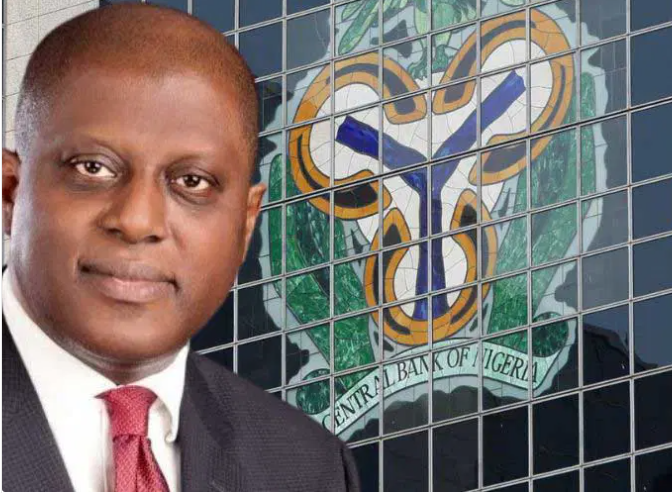
Under the leadership of Governor Olayemi Cardoso, the apex bank has taken its reform narrative to the global stage, reassuring international investors of Nigeria’s commitment to transparent markets, predictable policies and rules-based economic management.
At the just-concluded US–Nigeria Executive Business Roundtable in Washington, D.C., Cardoso told global investors that Nigeria is firmly committed to macroeconomic stability and credible reforms designed to restore confidence and attract long-term capital. The forum, convened by the US Chamber of Commerce’s US-Africa Business Centre, brought together senior US corporate executives, institutional investors and policymakers at a critical point in Nigeria’s economic reset.
According to information from the CBN, Cardoso said Nigeria’s reforms are deliberately structured to rebuild investor trust and provide clarity in an increasingly volatile global environment. He noted that foreign exchange market reforms have improved transparency and price discovery, while the adoption of orthodox monetary policy has helped anchor expectations and manage macroeconomic risks.
The CBN governor also highlighted the modernisation of Nigeria’s payment systems as a key element of the country’s investment appeal, stressing that an efficient, secure and inclusive payment infrastructure is critical for business growth, innovation and financial inclusion.
Discussions at the roundtable focused on Nigeria’s macroeconomic stabilisation efforts, regulatory clarity and opportunities to scale bankable projects in sectors such as infrastructure, energy, financial services, agriculture and technology.
Reacting to the engagement, President of the US-Africa Business Centre, Ms Kendra Gaither, said global investors are increasingly attracted to markets that demonstrate discipline and credibility.
“What investors are responding to today is clarity, credible reforms and seriousness of purpose. Nigeria’s message is increasingly one of discipline and opportunity,” she said.
The renewed investor outreach comes against the backdrop of far-reaching economic reforms introduced since 2023, including the liberalisation of the foreign exchange market, the end to central bank financing of fiscal deficits and fuel subsidy reforms. These measures have contributed to improved foreign exchange access, rising external reserves and Nigeria’s return to the international capital markets.
Nigeria recently issued a $2.25bn dual-tranche Eurobond, maturing in 2036 and 2046, which attracted orders exceeding $13bn — the largest order book in the country’s history. The issuance was widely seen as a strong vote of confidence in Nigeria’s macroeconomic policies.
Minister of Finance and Coordinating Minister of the Economy, Wale Edun, said the strong subscription reflected global confidence in Nigeria’s reform trajectory, while Director-General of the Debt Management Office, Patience Oniha, noted that the issuance drew broad-based demand from investors across Europe, North America, Asia and the Middle East.
Following the Eurobond sale, Nigeria’s external reserves climbed to a seven-year high of $46.07bn, while the naira showed signs of stabilisation across market segments.
Analysts say Nigeria’s improving investment outlook is being supported by greater currency liquidity, enhanced profit repatriation flexibility and declining sovereign risk spreads. Portfolio managers and market strategists have also pointed to Nigeria’s removal from the Financial Action Task Force grey list as a major boost to investor sentiment.
As part of its domestic reform agenda, the CBN recently hosted the Monetary Policy Forum 2025, focused on managing disinflation and strengthening coordination between fiscal and monetary authorities. Cardoso reaffirmed the bank’s commitment to price stability, a planned transition to inflation targeting and policies aimed at restoring purchasing power.
The apex bank has also announced new minimum capital requirements for banks, effective March 2026, to strengthen the financial system and support Nigeria’s ambition of building a $1tn economy.
While acknowledging that macroeconomic stability requires constant vigilance, Cardoso said the CBN remains focused on restoring confidence, strengthening policy credibility and sustaining reforms that will position Nigeria as a credible destination for long-term global investment.


Happy
0 %

Sad
0 %

Excited
0 %

Sleepy
0 %

Angry
0 %

Surprise
0 %
 0
0
 0
0