
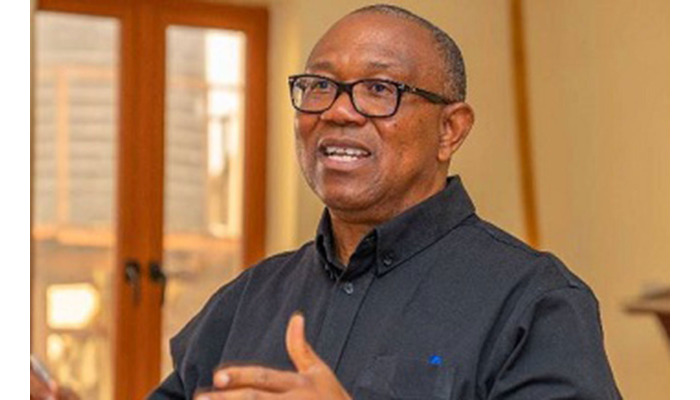
OBI DUMPS LABOUR PARTY, JOINS ADC, CALLS FOR UNITED OPPOSITION AHEAD OF 2027
Read Time:2 Minute, 29 Second
By Aishat Momoh. O.

Former Anambra State Governor and Labour Party presidential candidate, Peter Obi, has formally announced his defection to the African Democratic Congress (ADC), declaring the move part of a broader coalition aimed at rescuing Nigeria and preventing electoral fraud ahead of the 2027 general elections.
Obi made the announcement on Wednesday, while addressing political leaders, elders, and stakeholders at a gathering marking the end of the year. He described the decision as a deliberate step toward building a united opposition capable of delivering competent leadership and restoring national cohesion.
According to Obi, Nigeria is facing an existential crisis marked by deepening poverty, insecurity, economic decline, and political division, stressing that unity and competence are critical to reversing the country’s fortunes.
“We are ending 2025 with a commitment that 2026 will mark the beginning of a journey to rescue Nigeria,” Obi said, adding that the coalition under ADC is not about political ambition but national survival.
He condemned what he described as the normalization of electoral fraud, warning that any attempt to rig the 2027 elections would be resisted through lawful and legitimate means. Obi also challenged the Independent National Electoral Commission (INEC) to strictly enforce constitutional requirements, including educational qualifications for candidates, well ahead of the elections.
Drawing from comparative studies, Obi cited Rwanda and Indonesia as examples of countries that achieved rapid socio-economic transformation through unity and competent leadership. He noted that while Rwanda’s GDP per capita rose by over 500 percent since the mid-1990s, Nigeria’s economic indicators have worsened despite its vast resources.
“Nigeria knows what to do to prosper but refuses to do it,” Obi said, referencing insights from global scholars, including Nobel laureates and economists.
He criticised current fiscal policies, arguing that taxation must be treated as a social contract rather than a burden imposed on a population grappling with unemployment and multidimensional poverty. Obi stressed that economic recovery must begin with empowering citizens, particularly the country’s estimated 80 million unemployed youths.
Obi further revealed that he had been part of the ADC coalition from its inception, dismissing suggestions that the move was a sudden defection. He called on opposition parties across the political spectrum to set aside differences and unite under a common platform to safeguard democracy and Nigeria’s future.
“This is not a family of crime; it is a family of change,” he declared, adding that the coalition would prioritise agriculture, manufacturing, and small businesses as engines of growth.
The former governor said the ADC-led coalition, chaired by former Senate President David Mark, would in the coming months unveil a clear alternative agenda distinct from the current political order.
“We are faced with an existential threat, and all opposition forces must come together for the sake of our children,” Obi said.
He concluded by expressing confidence that a new, united, productive, and inclusive Nigeria is possible, urging Nigerians to embrace hope and collective action as the country enters 2026.


Happy
0 %

Sad
0 %

Excited
0 %

Sleepy
0 %

Angry
0 %

Surprise
0 %
 0
0
 0
0