
WIKE URGES EU COUNTRIES TO PARTNER FCT ON INVESTMENT AND CULTURAL EXCHANGE
Read Time:2 Minute, 35 Second
By:Tajudeen Aminat
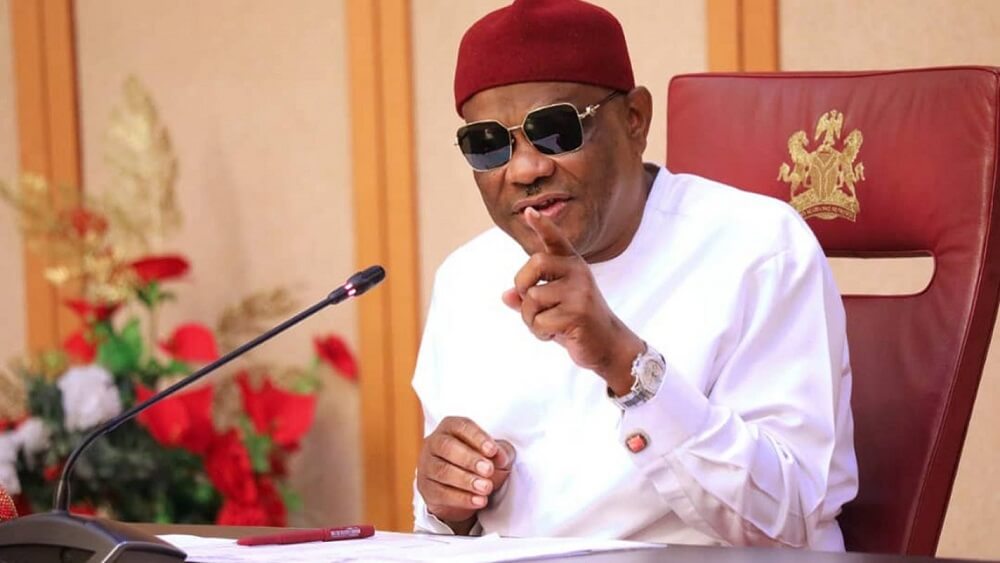
Minister of the Federal Capital Territory (FCT), Nyesom Wike, has urged European Union (EU) member states to strengthen investment relations, expand cultural cooperation, and work more closely with the Federal Capital Territory Administration (FCTA) in areas of shared interest to support the growth of Abuja and Nigeria.
Speaking on Tuesday during a meeting with EU Heads of Mission at the European Union House in Abuja, Wike said he looks forward to sustained collaboration with EU countries to advance the development of the FCT.
The meeting, chaired by the Head of the EU Delegation to Nigeria and ECOWAS, Ambassador Gautier Mignot, brought together envoys from Italy, Austria, Ireland, France, Hungary, Germany, Poland, Romania, Bulgaria, Greece, Finland, Belgium, Sweden, Spain, the Czech Republic, and Denmark.
Ambassador Mignot, introducing the Minister, described the EU as Nigeria’s leading trade and investment partner.
Wike used the occasion to outline FCTA’s development priorities, investment prospects in the capital territory, and an overview of Nigeria’s political environment. He emphasized Abuja’s status as a business-friendly city and highlighted key investment areas such as real estate and housing, tourism and entertainment, agriculture, solid minerals, and waste management.
He thanked the EU delegation for its continued partnership with Nigeria, noting that cooperation has supported shared goals of development, stability, and prosperity.
He further explained that under President Bola Ahmed Tinubu’s Renewed Hope Agenda, the FCTA is focusing on infrastructure expansion, security enhancement, education, healthcare, social welfare, land reforms, revenue generation, and the rule of law.
According to him, major infrastructure projects are ongoing, including road expansion, transport system upgrades, and improved water supply. He also noted security improvements, including the construction of 12 new fully equipped divisional police headquarters and officers’ quarters across the six area councils of the FCT.
Wike also addressed questions from the diplomats, discussing Nigeria’s electoral reforms and noting that the amended Electoral Act provides for electronic transmission of results, while also allowing manual transmission where electronic systems fail due to local challenges.
He emphasized that Nigeria’s democracy is maturing, with increasing reliance on legal and constitutional mechanisms to resolve disputes rather than violence or self-help, reflecting growing trust in institutions.
The Minister added that opposition politics should serve as a constructive force offering alternatives and oversight rather than fostering conflict.
He further observed that under President Tinubu, Nigeria’s governance approach is increasingly focused on competence over ethnic or partisan considerations, and that relations between the executive and legislature have become more collaborative.
Wike also highlighted ongoing economic reforms such as fuel subsidy removal, foreign exchange rate unification, and tax system restructuring, describing them as necessary steps to stabilize the economy and improve public finances.
He noted that social interventions, including conditional cash transfers, support for small and medium enterprises, and student loan schemes, are designed to cushion the impact of reforms on vulnerable citizens.
On security, he acknowledged challenges such as insurgency, banditry, kidnapping, and communal conflicts linked to broader regional instability, while stressing that government efforts are ongoing through improved coordination, intelligence gathering, and technology-driven security strategies.


Happy
0 %

Sad
0 %

Excited
0 %

Sleepy
0 %

Angry
0 %

Surprise
0 %
 0
0
 0
0