
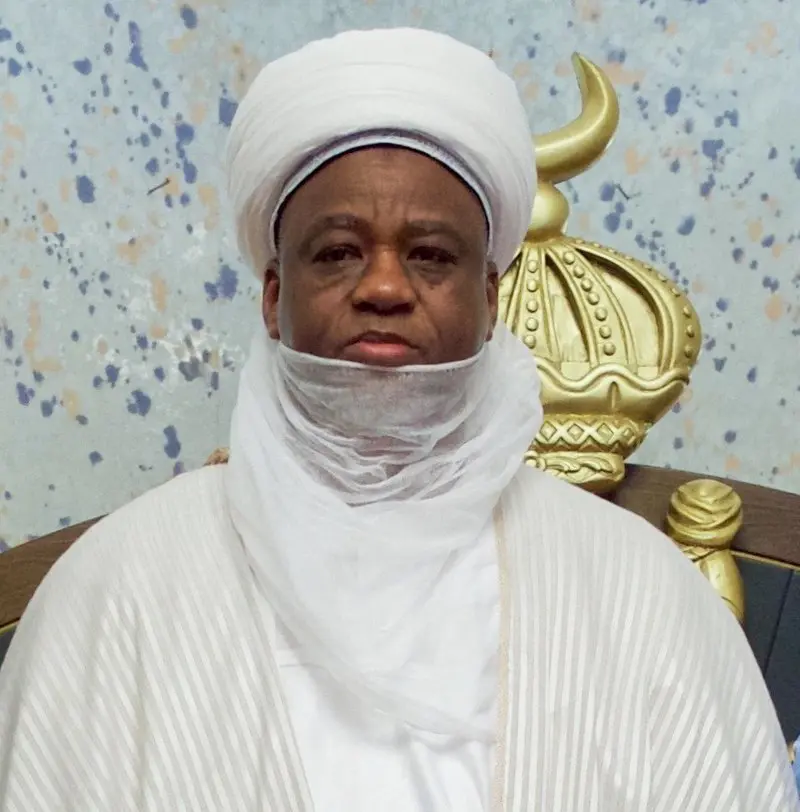
SULTAN, YARI DEMAND ACTION AS SOCIAL MEDIA FUELS NATIONAL TENSION
Read Time:3 Minute, 22 Second
The Sultan of Sokoto, Muhammad Sa’ad Abubakar, has cautioned that social media necessitates regulation while delivering a crucial message advocating for unity among Muslim scholars.
On behalf of the Sultan, the Emir of Zazzau, Ahmad Nuhu Bamalli, articulated this caution during a dedicated summit of Northern Ulamas convened on Wednesday in Kaduna, where prominent figures in Islam and politics gathered to discuss the escalating threats to national tranquility, harmony, and social integration.
The gathering, which included notable clerics, traditional leaders, and legislators, highlighted a deepening apprehension regarding how polarizing discourse, online falsehoods, and escalating economic adversity are exacerbating instability throughout the North and beyond.
The Sultan of Sokoto urged solidarity among Muslims, asserting that social media serves as an instrument of discord and animosity which necessitates oversight.
“This is the moment to consolidate the Muslim Ummah.
“Our scholars must advocate for peace, forbearance, and national cohesion in accordance with Islamic doctrine.
“Social media must similarly be monitored, as it is being increasingly harnessed to disseminate division and animosity,” the Sultan proclaimed in his address.
The Sultan, who also serves as the President-General of the Nigerian Supreme Council for Islamic Affairs, emphasized that authentic leadership among the Ulamas should be anchored in sagacity, self-control, and proactive engagement with the populace, particularly at the grassroots level.
He expressed dismay that incendiary preaching, together with the proliferation of unverifiable information online, has intensified suspicion among communities.
“If we do not articulate a unified stance,” he warned, “we jeopardize our future, risking chaos and disarray. ”
The Speaker of the House of Representatives, Alhassan Doguwa, similarly echoed the plea for unity, accentuating the necessity for robust collaboration between spiritual leaders and political authorities in addressing national challenges.
Doguwa stated, “Security is the responsibility of all. We in the National Assembly will endorse any initiative that fosters unity among our people and upholds Islamic principles.
“Our leaders must transcend partisan and sectarian boundaries to cultivate enduring peace. ”
Doguwa, a longstanding proponent of religious harmony in governance, indicated that the legislative body is prepared to collaborate with religious institutions to bolster moral values and encourage responsible civic conduct, particularly among the youth.
Also addressing the summit, Senator Abdul’aziz Yari (Zamfara West) provided an honest self-evaluation of the region’s situation, noting that the insecurity crisis initially emerged in predominantly Muslim communities before expanding nationwide.
“Insecurity originated in Muslim-heavy areas. We cannot hold the government solely accountable.
“The remedy resides within us — in solidarity, decisive action, and sincere dialogue,” Yari asserted.
The former governor of Zamfara State cautioned Nigerians against fostering a culture of economic dependency and unrealistic aspirations, warning that lethargy and misplaced priorities are exacerbating the region’s socio-economic deterioration.
“We’re resting in our homes and anticipating billionaire status. This approach is futile. We must confront economic realities, exert effort, and cease living in self-deception,” he added.
Addressing the hazards of unchecked digital communication, Yari characterized social media misuse as a ticking time bomb that threatens both leaders and ordinary citizens alike.
He advocated for regulation to safeguard public spaces without encroaching upon freedom of expression.
“Social media does not discriminate — affluent or impoverished. It is imperative to regulate it and utilize it responsibly, akin to the practices of other nations,” he stated.
In his remarks, notable Kaduna-based religious leader, Sheikh Ahmad Gumi, ascribed a significant portion of the insecurity in the North to external influences, poverty, and internal divisions among Muslims.
He claimed that foreign entities were taking advantage of vulnerable and illiterate herders to destabilize the region.
“Banditry is incited by external forces. They desire our mineral resources and manipulate our uneducated youth as instruments.
“We need to engage in discussions among ourselves to discover an internal resolution to these issues,” Gumi asserted.
He urged the diverse Islamic sects to transcend doctrinal discrepancies and participate in ongoing dialogue to address ignorance, unemployment, and extremism.
“Communication within the Ummah is essential. If we can resolve our internal conflicts, outsiders will have no opportunity to divide or exploit us,” he concluded.


Happy
0 %

Sad
0 %

Excited
0 %

Sleepy
0 %

Angry
0 %

Surprise
0 %
 0
0
 0
0