
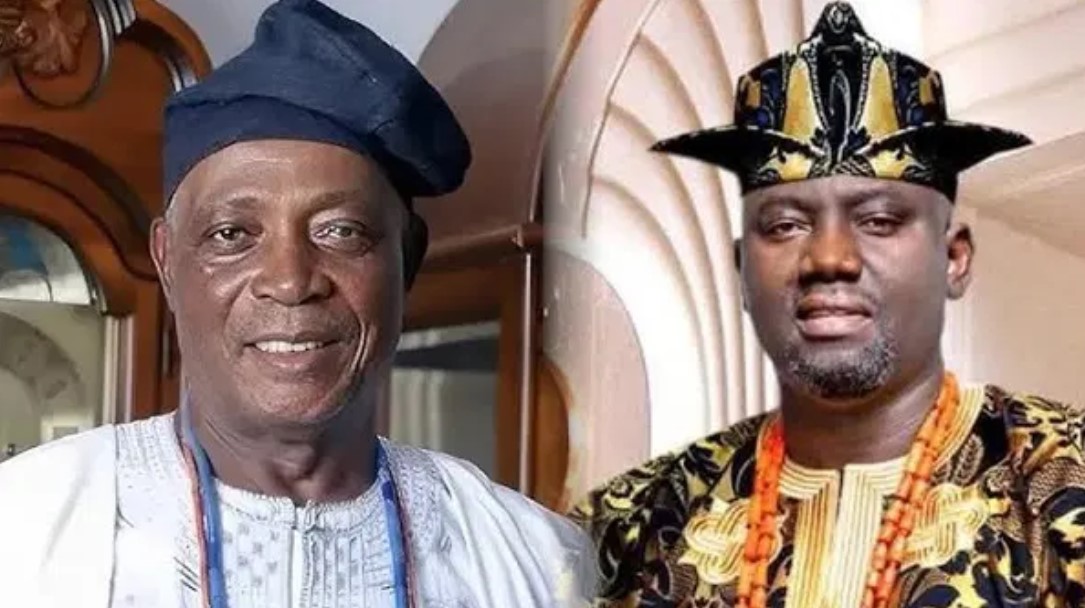
DISPUTE EMERGES BETWEEN OLUBADAN AND ALAAFIN WITHIN OYO OBAS’ COUNCIL
Read Time:4 Minute, 12 Second
By: Fasasi Hammad
When the Oyo State Council of Obas and Chiefs was revived after years of inactivity, it was conceived as a unifying institution — a bridge between ancestral authority and contemporary governance.
Instead, its return has reignited a long-standing and sensitive debate: who leads when history, tradition, and modern politics collide?
At the centre of the unfolding dispute are four key actors — Governor Seyi Makinde, the Alaafin of Oyo, Oba Akeem Abimbola Owoade I, the Olubadan of Ibadanland, Oba Rashidi Adewolu Ladoja, and the Olugbon of Orile-Igbon, Oba Francis Alao — each embodying differing interpretations of authority, tradition, and the evolving future of Yoruba kingship in Oyo State.
The controversy dates back to 2011, when then-Governor Adebayo Alao-Akala, nearing the end of his tenure, stripped the late Alaafin of Oyo, Oba Lamidi Adeyemi III, of his long-held position as permanent chairman of the council.
The move followed a legislative amendment pushed through the Oyo State House of Assembly, ending the Alaafin’s exclusive leadership of the council and introducing a rotational chairmanship among three monarchs — the Alaafin of Oyo, the Soun of Ogbomoso, and the Olubadan of Ibadanland.
The decision immediately fractured the council. Both the Soun of Ogbomoso, Oba Jimoh Adewumi, and the Olubadan of Ibadanland, Oba Samuel Odulana, boycotted meetings convened by the Alaafin, insisting on equal entitlement to preside.
Ironically, Governor Alao-Akala had earlier publicly affirmed that the chairmanship would remain the Alaafin’s exclusive preserve — a position the Soun and Olubadan openly rejected. His later reversal, justified under Section 3(3) of the enabling law, was widely interpreted as politically motivated, following the ruling PDP’s poor electoral performance in areas under the Alaafin’s influence.
The amended law also provided for a two-year rotation of the chairmanship, while the deputy chairmanship would rotate among the Olugbon of Orile-Igbon, the Eleruwa of Eruwa, the Okere of Saki, and the Aseyin of Iseyin.
Under Governor Abiola Ajimobi, the dispute — which the late Alaafin challenged in court — remained unresolved. The council did not convene a single meeting throughout Ajimobi’s eight-year tenure, effectively placing the institution in limbo.
Governor Seyi Makinde eventually moved to resuscitate the council, citing the existing gazetted amendments as legal backing. He framed the revival as strategic rather than ceremonial, positioning traditional rulers as partners in governance — custodians of peace, community cohesion, and grassroots intelligence.
To reflect Oyo State’s cultural diversity — Ibadan, Oyo, Ogbomoso, Oke-Ogun, and Ibarapa — Makinde announced a rotational chairmanship, beginning with the Olubadan of Ibadanland.
Supporters argue the approach promotes fairness, inclusion, and balance, preventing dominance by any single throne and aligning traditional leadership with democratic ideals.
If the inauguration was meant to project unity, the absence of the Alaafin of Oyo sent a different message.
Oba Akeem Owoade I did not attend the ceremony — a silence deeply symbolic in Yoruba tradition. From the palace came a carefully worded response: the Alaafin was neither consulted on the rotational arrangement nor willing to recognise any process perceived as diminishing the historical primacy of the Alaafin stool.
For the palace, the issue transcends politics. Long before colonial boundaries or state councils, the Alaafin symbolised the apex of Yoruba political and spiritual authority. Traditionalists fear that reducing the chairmanship to a rotating office risks eroding centuries of hierarchical meaning in favour of administrative convenience.
The Olubadan of Ibadanland, Oba Rashidi Ladoja, occupies a distinctive space in the unfolding narrative.
A former governor turned monarch, Ladoja brings both political acumen and traditional gravitas. His emergence as the council’s first chairman under the revived framework was presented as lawful and institutional — not personal ambition.
READ MORE…
In his remarks, Oba Ladoja struck a conciliatory tone, urging fellow monarchs to prioritise peace, development, and cultural preservation over titles. He neither contested the Alaafin’s historical stature nor openly challenged the governor’s policy.
To supporters, he represents a bridge between palace tradition and government protocol.
Amid rising tension, the Olugbon of Orile-Igbon, Oba Francis Alao, has emerged as a moderating force.
As deputy chairman, he has called for cooperation over confrontation, emphasising that the council must serve as a platform for service, not supremacy. Hosting Governor Makinde at his palace, the Olugbon publicly pledged support for the council’s leadership and stressed unity across cultural zones.
To many observers, the controversy extends beyond who chairs the council. It raises a broader question: how does traditional authority adapt and survive within a constitutional democracy?
As the council begins its work, attention remains fixed on whether dialogue can reconcile historical preeminence with modern governance — and whether the rotational model can evolve into a trusted tradition of its own.
In Yoruba culture, wisdom lies not in winning disputes but in preserving harmony.
For now, the crowns remain steady, the council sits, and the story of Oyo — as always — continues to be written between past and present. Time, as ever, will tell.


Happy
0 %

Sad
0 %

Excited
0 %

Sleepy
0 %

Angry
0 %

Surprise
0 %
 0
0
 0
0