
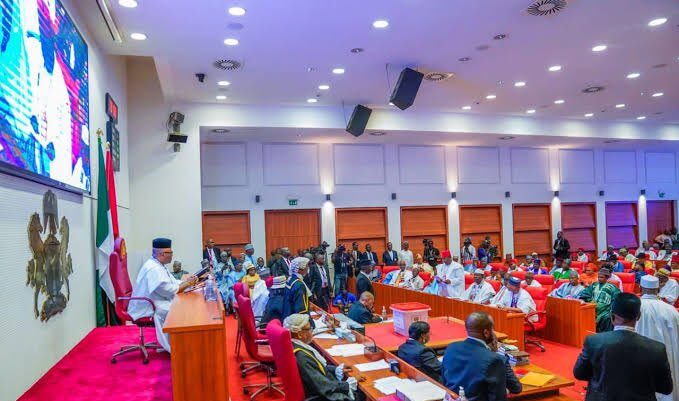
ELECTORAL ACT AMENDMENT: SENATE RETAINS ELECTRONIC TRANSFER OF RESULTS, REJECTS REAL-TIME TRANSMISSION
Read Time:2 Minute, 0 Second

The Electoral 2022 Act’s provision for the electronic transfer of election results was upheld by the Senate on Wednesday. The red chamber also rejected ideas for a 10-year ban on vote purchasers and realtime results transmission during the Electoral Act (Amendment) Bill’s consideration, choosing instead to uphold the current penalties of fines or jail time.
The MPs claimed that in order to prevent operational and legal problems in the handling of election results, a distinction between electronic transfer and real-time transmission is required.
Under the retained provision, “the presiding officer shall transfer the results, including the total number of accredited voters and the results of the ballot, in a manner as prescribed by the commission”.
A provision that would have mandated that presiding officers immediately upload polling unit results to the Independent National Electoral Commission’s (INEC) result viewing (IReV) portal following the signing and stamping of Form EC8A was removed by the senate. The upper house agreed to eliminate a planned 10-year ban on running for office for those convicted of vote buying.
READ MORE…
CANADIAN COURT HALTS DEPORTATION OF MOTHER, SON OVER SAFETY RISK
The senate committee on electoral matters proposed the rejected clause, which calls for penalties ranging from “a fine of N5 million to a two-year jail and a 10-year ban from running elections.”
The rejected provision, recommended by the senate committee on electoral matters, proposes sanctions ranging from “a fine of N5 million to a two-year imprisonment and a 10-year ban from contesting elections”.
Objecting to the proposal, Asuquo Ekpeyong, senator representing Cross River south, said the 10-year ban is “too grievous” and disproportionate to the offence.
The senate subsequently agreed that offenders should be liable to either a N5 million fine or a two-year term of imprisonment, without any additional ban from electoral participation.
Lawmakers also approved a reduction in electoral timelines, resolving that INEC should issue notice of elections at least 180 days before polling day, instead of the current 360 days.
In addition, the upper chamber approved that the nomination of candidates should close 90 days before an election.
The senate also retained the use of the bimodal voter accreditation system (BVAS) for voter accreditation and affirmed the permanent voter card (PVC) as the sole means of voter identification at polling units.
HOTJIST NEWS


Happy
0 %

Sad
0 %

Excited
0 %

Sleepy
0 %

Angry
0 %

Surprise
0 %
 0
0
 0
0