
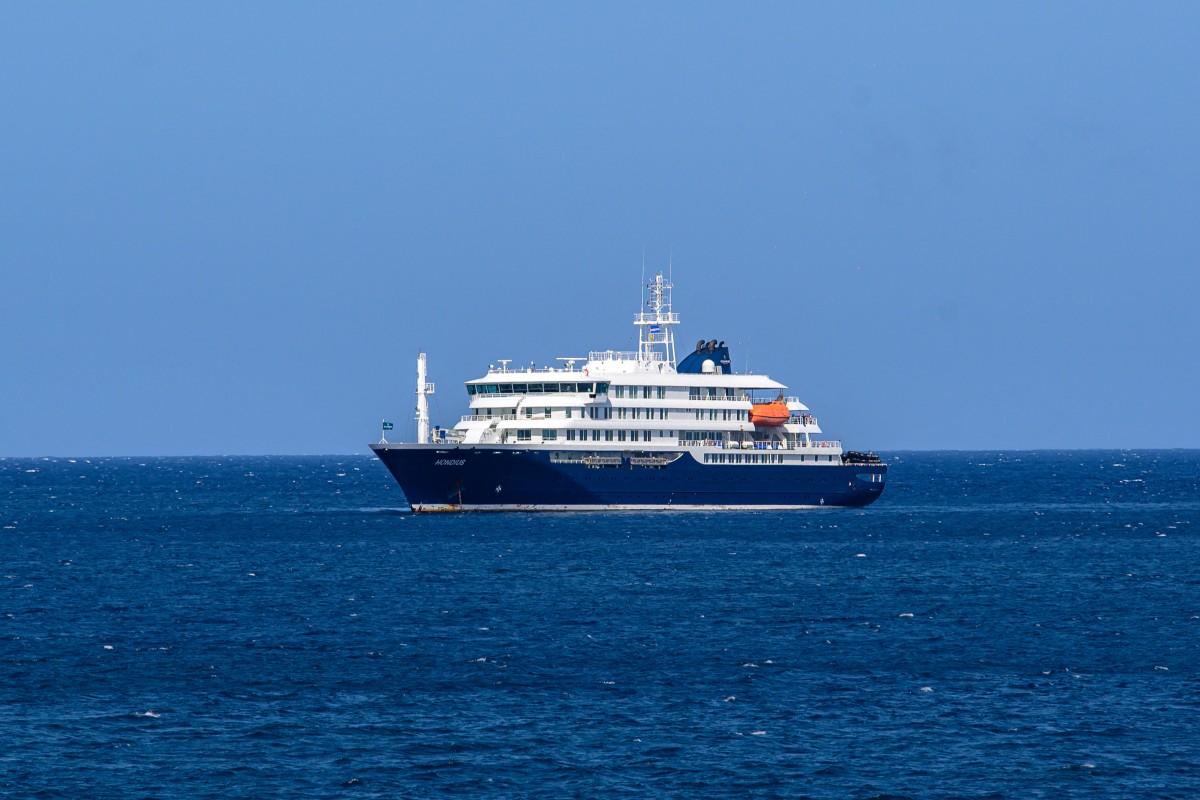
HANTAVIRUS OUTBREAK ON CRUISE SHIP TRIGGERS GLOBAL HEALTH ALERT
Read Time:2 Minute, 39 Second
Agency Report
Passengers aboard the MV Hondius have adopted strict health protocols reminiscent of the COVID-19 era as authorities across multiple countries investigate an outbreak of a rare hantavirus linked to several deaths.
According to reports by The New York Times, passengers on the vessel are “sanitising their hands repeatedly and awaiting their next socially distanced meal” as the ship sails across the Atlantic under heightened health surveillance.
The outbreak has triggered coordinated international responses, with Spain confirming plans to receive the vessel in the Canary Islands despite objections from regional authorities.
Spain’s Health Minister, Mónica García, said the ship would dock in Tenerife, where passengers deemed medically fit would be allowed to return home.
However, the decision has sparked criticism from local officials. Head of the Canary Islands government, Fernando Clavijo, questioned the rationale behind the move.
“There is no information that justifies why the vessel must sail for three days to the Canary Islands,” he said.
Health concerns intensified after three passengers reportedly died and several others became ill.
The World Health Organization confirmed that the cases are linked to hantavirus, a rare group of viruses commonly transmitted by rodents.
Despite the fatalities, WHO Director-General Tedros Ghebreyesus sought to reassure the public, saying, “At this stage, the overall public health risk remains low.”
Medical evacuations have already taken place, with three individuals, including two suffering acute symptoms, flown to the Netherlands for treatment.
Authorities said the cases involve the Andes strain of hantavirus, a rare variant capable of spreading between humans through close and prolonged contact.
In response, South Africa has begun tracing individuals who may have been exposed.
South African Health Minister, Aaron Motsoaledi, said authorities had identified 62 contacts, with 42 already traced and placed under observation.
On board the ship, passengers have been instructed to maintain social distancing, wear masks and observe strict hygiene measures. Dining arrangements have also been modified, with spaced seating and sanitiser stations installed throughout the vessel.
“Our days have been close to normal, just waiting for authorities to find a solution,” one passenger reportedly told The Times, adding that morale remained high despite the uncertainty.
Investigations into the source of the outbreak are ongoing, with authorities in Argentina examining whether the virus may have been contracted during earlier travel in South America.
According to a health advisory from Harvard University, hantavirus was first identified in the Hantaan River region of Korea and is commonly carried by rodents, with humans contracting it through exposure to infected saliva, urine or droppings.
The advisory noted that although the disease is rare, it can become severe when it affects the lungs, kidneys or heart.
It further stated that human-to-human transmission is unusual and infections are generally not considered a major public health threat due to their rarity and limited spread. However, experts believe the confined environment of a cruise ship may have created conditions for the limited transmission currently under investigation.
Symptoms of hantavirus typically begin with fatigue, fever and muscle aches before progressing to headaches, dizziness and gastrointestinal complications.
Severe cases may lead to respiratory distress, coughing and shortness of breath caused by fluid accumulation in the lungs.


Happy
0 %

Sad
0 %

Excited
0 %

Sleepy
0 %

Angry
0 %

Surprise
0 %
 0
0
 0
0