
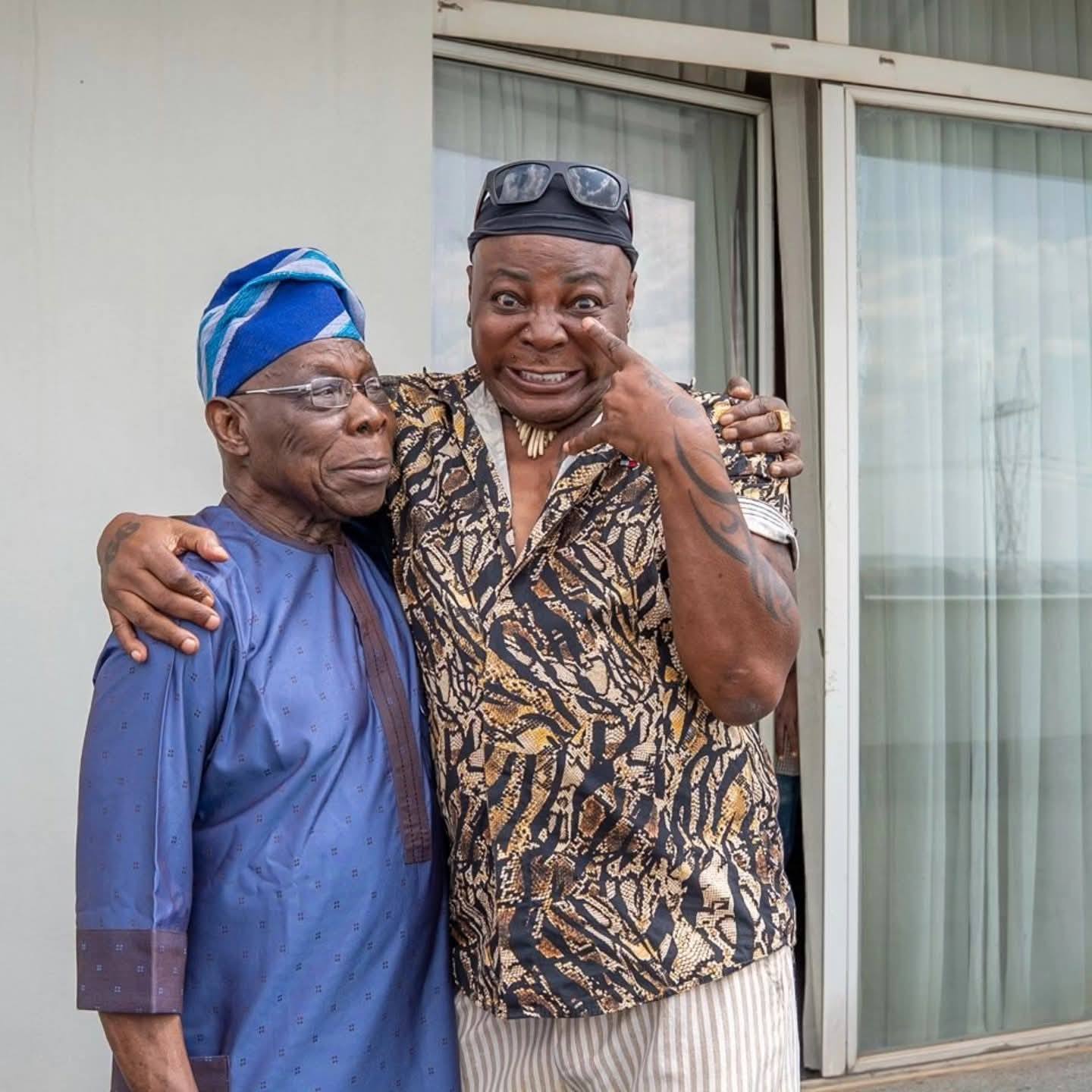
OLUSEGUN OBASANJO OPENS UP ON INITIAL DISLIKE FOR CHARLES OPUTA’S “JAGA-JAGA” STYLE
Read Time:2 Minute, 17 Second
By: Fasasi Hammad
Former President Olusegun Obasanjo has revealed how he grew to admire entertainer Charles Oputa, despite initially disapproving of his unconventional “jaga-jaga” dressing style.
Obasanjo made the remarks during an interview on the Before Tomorrow Comes Podcast, published on YouTube on Thursday.
Reflecting on his relationship with the Oputa family, Obasanjo spoke about his admiration for Charlie Boy’s late father, Justice Chukwudifu Oputa, whom he described as a close friend and a man he deeply respected.
According to the former president, he was initially shocked by Charlie Boy’s appearance and lifestyle, which sharply contrasted with his father’s polished and dignified image.
READ MORE…
NIGERIAN TROOPS NEUTRALISE SCORES OF TERRORISTS IN FAILED MAGUMERI RAID
“I was close to Charlie Boy’s father, Justice Oputa. I admired him greatly. Then I started seeing Charlie Boy, and they said he was Justice Oputa’s son. Justice Oputa was decent, immaculate, and proud, but Charlie Boy appeared completely different,” Obasanjo recalled.
He admitted that he deliberately kept his distance from the entertainer because he expected the son of a respected Supreme Court justice to reflect his father’s refined personality.
However, his perception changed after visiting Justice Oputa and discovering him living in Charlie Boy’s house.
Obasanjo said he was deeply impressed by the way Charlie Boy cared for his father, describing it as exceptional and heartfelt.
“What struck me was the way Charlie Boy took care of his father. Even if he had dressed ten times more immaculately, he could not have cared for his father better than what I witnessed,” he said.
The former military ruler explained that he later came to understand that Charlie Boy’s eccentric dressing and dramatic public image were part of his entertainment persona and comedic identity.
Obasanjo noted that his admiration for the entertainer grew even stronger after the death of Justice Oputa, adding that Charlie Boy also devotedly cared for his mother and gave her a dignified farewell when she passed away.
He said the experience taught him to look beyond outward appearances and appreciate character, loyalty, and family values.
Obasanjo also praised Charlie Boy’s memoir, 999, describing it as “fairly well written,” “well produced,” and “a masterpiece” containing valuable lessons on resilience, family, and philanthropy.
The memoir is scheduled to be publicly presented on July 31 at the Mike Ademola French Cultural Centre.
He further used the interview to preach tolerance and national unity, warning Nigerians against judging entire ethnic groups based on the actions of a few individuals.
“If you say Yorubas are bad because of one person’s actions, or Fulanis are bad because of another person’s behaviour, then who is good?” Obasanjo asked.


Happy
0 %

Sad
0 %

Excited
0 %

Sleepy
0 %

Angry
0 %

Surprise
0 %
 0
0
 0
0