
EXPERTS URGE STRONGER MEDIA REPORTING AS RISING HEAT THREATENS PUBLIC HEALTH IN LAGOS
Read Time:4 Minute, 37 Second
By Aishat Momoh. O.

Climate experts have raised fresh concerns over the growing public health dangers posed by rising temperatures in Lagos, urging journalists to intensify evidence-based reporting on extreme heat as the city continues to grapple with the effects of climate change and rapid urbanisation.
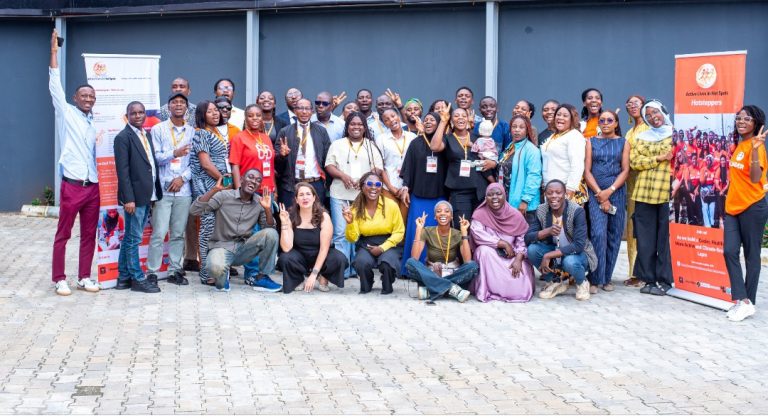
The call was made during a three-day Climate and Health Media Workshop organised under the Active Lives in Hot Spots (Hotsteppers) Project, a three-year research initiative aimed at understanding how extreme heat affects health, mobility and productivity across Lagos State.
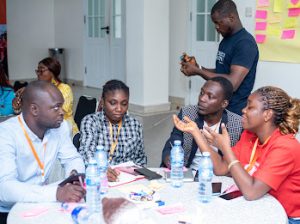
The workshop brought together journalists, researchers, public health experts, urban planners and government officials to build the capacity of media professionals to report accurately on climate-related health issues that often go unnoticed despite affecting millions of residents daily.
Funded by the Wellcome Trust, the Hotsteppers Project is being implemented by a consortium of partners including the University of Cambridge, the University of Lagos, the Lagos Metropolitan Area Transport Authority (LAMATA), the Lagos Urban Development Initiative (LUDI), UrbanBetter and other research institutions.

Speaking during the training, Communications Lead for the Hotsteppers Project, Abimbola Badejo, described extreme heat as one of the least reported consequences of climate change despite its significant impact on public health.
According to her, while flooding and erosion often dominate climate discussions because their effects are immediately visible, heat-related illnesses develop gradually, making them easier to ignore but equally dangerous.
“When people hear climate change, they immediately think about flooding or pollution. But heat is one of the invisible crises we must begin to report because its impacts on health are real and increasing,” she said.

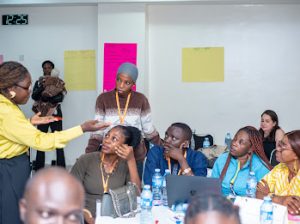
She explained that prolonged exposure to high temperatures can lead to dehydration, heat exhaustion, cardiovascular diseases, worsening respiratory conditions, reduced physical activity, mental fatigue and declining productivity.
Badejo noted that outdoor traders, commercial transport operators, construction workers, street vendors, commuters, traffic officials and others who spend long hours outside remain among the populations most vulnerable to heat stress.
She added that pregnant women, older persons, children, people living with disabilities and individuals with underlying health conditions such as hypertension and asthma also face increased health risks during periods of extreme heat.
The workshop highlighted how Lagos’ rapid urban expansion has intensified the Urban Heat Island effect, where built-up areas become significantly hotter than surrounding locations due to extensive concrete surfaces, asphalt roads, limited vegetation and heavy vehicular emissions.
Also speaking, environmental health expert Barbara Rubiell warned that many heat-related illnesses are often overlooked because their symptoms develop gradually, making them less visible than other climate-related emergencies.
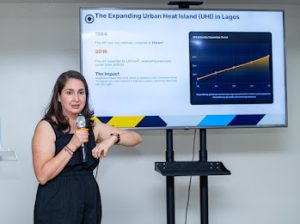
She called for increased public awareness to help people understand the connection between prolonged heat exposure and chronic health conditions.
Researchers explained that these environmental conditions trap heat during the day and release it slowly at night, preventing cities from cooling naturally and increasing residents’ exposure to dangerous temperatures.
To better understand the problem, scientists involved in the Hotsteppers Project are using Geographic Information Systems (GIS), satellite imagery, remote sensing and thermal mapping to identify communities experiencing the highest levels of heat exposure.
Early assessments have identified several Bus Rapid Transit (BRT) corridors, including Ojota, Oshodi and Yaba, as some of the hottest locations because of dense infrastructure and inadequate tree cover.
Researchers are also installing temperature-monitoring devices in communities such as Fadeyi and Yaba to collect real-time environmental data that will support future urban planning decisions.
Project Lead Professor Tolullah Oni, Chair of Global Public Health and Sustainable Urban Development at the University of Cambridge, said the study aims to generate scientific evidence that will help policymakers design healthier and more climate-resilient cities.
According to her, the research will examine how rising temperatures affect hospital admissions, physical activity, public transport use, productivity and the wellbeing of Lagos residents.
Co-Principal Investigator, Professor Peter Elias of the University of Lagos, observed that although flooding and air pollution have received considerable policy attention, the health consequences of extreme heat remain poorly understood and insufficiently addressed.
Participants at the workshop noted that many heat-related illnesses are underreported because symptoms often appear gradually rather than as sudden medical emergencies.
Environmental health experts warned that prolonged exposure to excessive heat can worsen existing non-communicable diseases and increase pressure on already stretched healthcare systems.
Beyond the scientific sessions, facilitators trained journalists on Solutions Journalism, encouraging them to move beyond simply reporting climate disasters to examining how governments, communities and institutions are responding to climate challenges.
Participants were urged to investigate whether climate interventions are producing measurable results, hold policymakers accountable for implementation and amplify practical solutions capable of protecting vulnerable communities.
The workshop also emphasised the importance of community participation, noting that climate adaptation programmes are more sustainable when residents understand the environmental and health benefits of interventions such as tree planting, green spaces and cooling centres.
Closing the training, Project Lead Olamide Udoma-Ejorh announced the establishment of the Hotsteppers Media Network, which will provide journalists with continued access to climate experts, research findings, datasets, thermal maps and specialised training throughout the three-year project.
She said participating journalists would also take part in periodic field reporting exercises across 15 local government areas in Lagos, enabling them to produce evidence-based stories directly from project activities.As climate change continues to drive higher temperatures across Lagos, stakeholders stressed that the media has a critical role in increasing public awareness, influencing policy discussions and ensuring that extreme heat is recognised not merely as uncomfortable weather, but as a growing public health emergency requiring urgent and coordinated action.


Happy
0 %

Sad
0 %

Excited
0 %

Sleepy
0 %

Angry
0 %

Surprise
0 %
 0
0
 0
0