
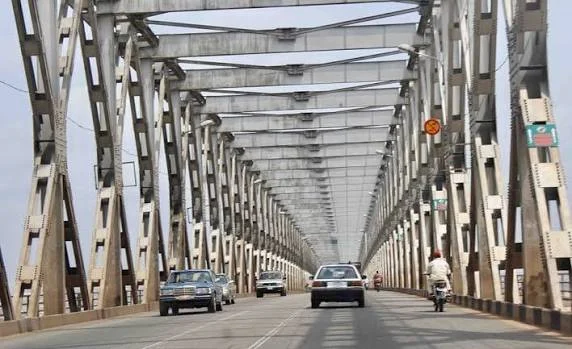
FG ANNOUNCES TWO-WEEK CLOSURE OF FIRST NIGER BRIDGE
Read Time:2 Minute, 22 Second
By:Tajudeen Aminat
The Federal Government has announced the temporary closure of the First Niger Bridge in Onitsha, Anambra State, to enable emergency rehabilitation and maintenance works.
The Federal Ministry of Works, through its Anambra State Field Headquarters, said the bridge would be completely shut to traffic for two weeks, beginning Monday, September 7, 2026.
The Acting Federal Controller of Works in Anambra State, Timothy Emenike, disclosed this in a statement issued on Friday.
According to him, the closure will affect the key link between Anambra and Delta states and is expected to last until Monday, September 21, 2026, when the bridge is scheduled to reopen.
Emenike urged motorists and other road users to use the Second Niger Bridge through Obosi to Asaba in Delta State and other destinations during the period.
He said traffic diversion measures, including road signs, safety barriers, traffic-control personnel and other safety arrangements, would be deployed to minimise disruption and protect motorists, construction workers and other members of the public.
The ministry said the decision followed concerns over the deteriorating condition of the First Niger Bridge, particularly the carriageway surface and some bridge components reportedly affected by vandalism.
It said the Minister of Works, David Umahi, raised concerns about the condition of the bridge during his recent visit to Anambra State and directed that emergency rehabilitation should commence immediately.
Consequently, SKECC, the contractor handling the 0+000–20+000 kilometre section of the Onitsha-Enugu Dual Carriageway, was instructed to commence the rehabilitation works on the bridge.
The intervention will involve removing the deteriorated asphalt surface and laying an approximately 40mm asphalt wearing course, alongside other maintenance and safety works.
The project will also include the installation of solar-powered streetlights and closed-circuit television cameras, as well as traffic-control and diversion infrastructure.
The ministry said the objective was to provide a safer and more durable road surface, improve the bridge’s motorability and ease traffic congestion around the First Niger Bridge axis.
The emergency works are expected to continue day and night to facilitate their speedy completion and reduce the period of disruption.
Motorists have been advised to obey temporary traffic signs and diversion instructions, reduce speed around construction zones, avoid reckless overtaking and follow the directions of traffic-control officials and security agencies.
The Federal Ministry of Works also urged motorists to allow extra travel time and, where possible, make use of the Second Niger Bridge through the Obosi-Asaba route.
It appealed to residents, businesses and other affected stakeholders to cooperate with the traffic-management arrangements, stressing that the temporary inconvenience was necessary to restore the bridge to a safer and more efficient condition.
The ministry expressed regret over the disruption and said the intervention was being undertaken in the public interest to improve traffic flow along the important national transportation corridor.


Happy
0 %

Sad
0 %

Excited
0 %

Sleepy
0 %

Angry
0 %

Surprise
0 %
 0
0
 0
0